
European Patent Office (EPO) Series: A Costa-Benefit Analysis: Has the Asset Become a Liability?
Previous Parts:
Part 40
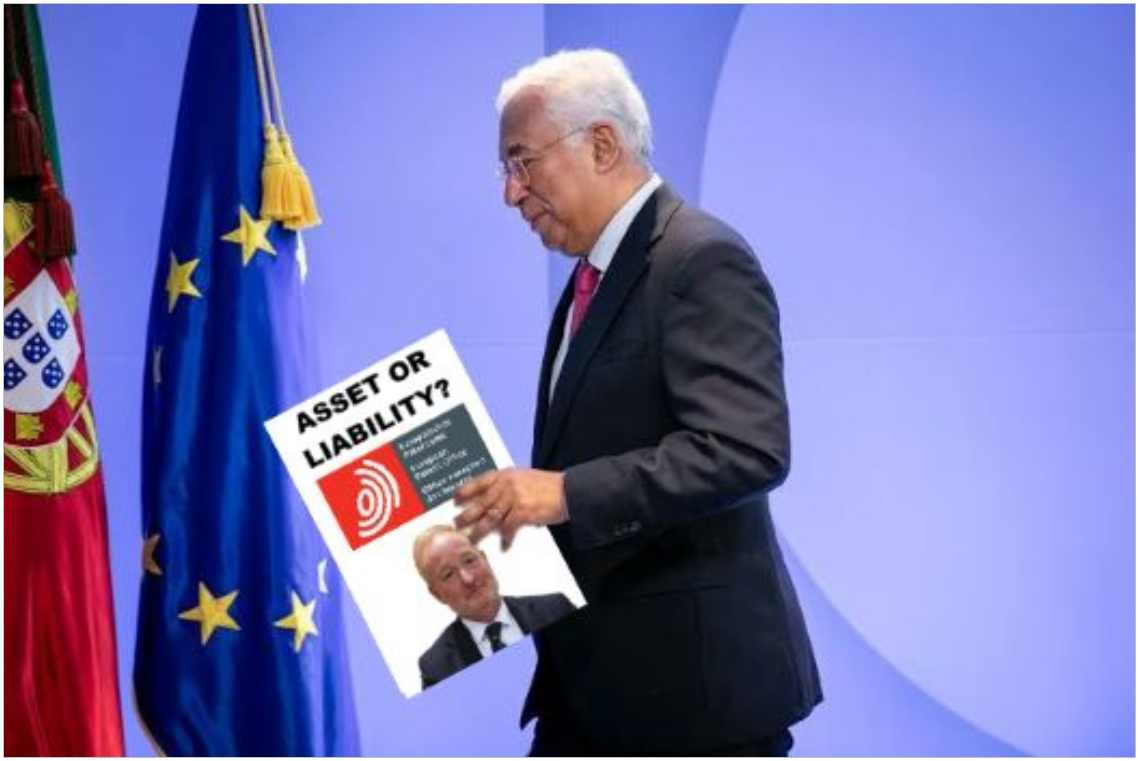
All other things being equal, one could expect the Portuguese
political establishment to support Campinos in his reappointment
bid. But what if all other things are no longer equal because the
former "asset" has in the meantime become a "liability"?
The present series started off with a report about a meeting that took place in Brussels on 3rd February 2026 between EPO President António Campinos and the President of the European Council António Costa.
In this concluding part we come full circle as we turn our attention back to António Costa and consider the potential risks – both for Costa himself and for the EU as a whole – should he decide to endorse the campaign of his compatriot Campinos to secure a third mandate at the EPO.
In the opening part of the series we speculated that the February 2026 meeting between Campinos and Costa marked the starting point of the EPO President's campaign for reappointment. Our speculation in this regard turned out to be well-founded because during the months which followed Campinos embarked on a series of visits to various EPO member states. Although these visits were camouflaged as official EPO "duty missions" it is evident that they served an ulterior purpose, namely to provide Campinos with an opportunity to lobby national delegations in the hope of persuading them to support his reappointment. The high point of this lobbying campaign was the 20th Annual Co-operation Meeting held in the Croatian seaside resort of Split in May 2026.
We also took a detour through the domestic Portuguese political landscape as we examined the role of that country's political establishment in the EPO President's bid to secure reappointment. We noted that for his bid to succeed Campinos would need to be able to rely on the goodwill and support of the "Brotherhood of São Bento", in particular the Portuguese Prime Minister Luís Montenegro at a domestic level and the President of the European Council António Costa at EU level.
At this juncture we can be fairly certain that Campinos continues to enjoy the support of the Portuguese government. This is because he is openly campaigning for reappointment and he has also announced that if he fails to secure a rubber-stamped reappointment he intends to stand for re-election. Without the support of the Portuguese government, he would not be able to put himself forward for reappointment or to stand for re-election.
But to secure his position, Campinos needs the support of a three-quarters majority on the EPO's Administrative Council which corresponds to 30 national delegations. This is where the endorsement of the President of the European Council, António Costa, could turn out to be very useful. If Costa were to lobby at EU level for his compatriot's reappointment, then this could greatly assist Campinos in bagging the lion's share of the votes from the EU member states.
As we noted previously, back in 2017 the XXI Portuguese government led by Costa endorsed the candidacy of Campinos for the position of EPO President. And in 2022 the XXIII Portuguese Government, also led by Costa, supported his reappointment.
In other words, the official record shows that Costa – in his former capacity as the Portuguese Prime Minister of the day – was happy to back Campinos in his initial efforts to obtain the position of EPO President in 2017 as well as in his subsequent efforts to obtain a prolongation of his tenure in 2022.
But that was then and this is now.
The open question at this point in time is whether Costa in his present capacity as the President of the European Council is inclined to support a further third EPO mandate for Campinos.
When Campinos made the transition from head of the Portuguese INPI to become executive director of the EU trademark agency in Alicante, he came to be regarded by the political establishment of his home country as a significant strategic and diplomatic "asset".
His ascent to a prominent position in "supranational IP administration" was celebrated at home as a symbol of national influence, competence, and international credibility. The presence of a Portuguese national at the head of a flagship EU agency was considered beneficial not only to the country’s reputation abroad, but also to its broader foreign policy interests and its access to international networks of power and decision-making.
In 2017 Campinos was able to rely on his profile as Executive Director of the EUIPO in Alicante to secure the support of his domestic political sponsors for the carefully-crafted plan to parachute him in as Battistelli's chosen successor at the EPO.
But over time an "asset" can depreciate and lose its value. It can even end up becoming a "liability". And this seems to be what has happened in the case of Campinos.
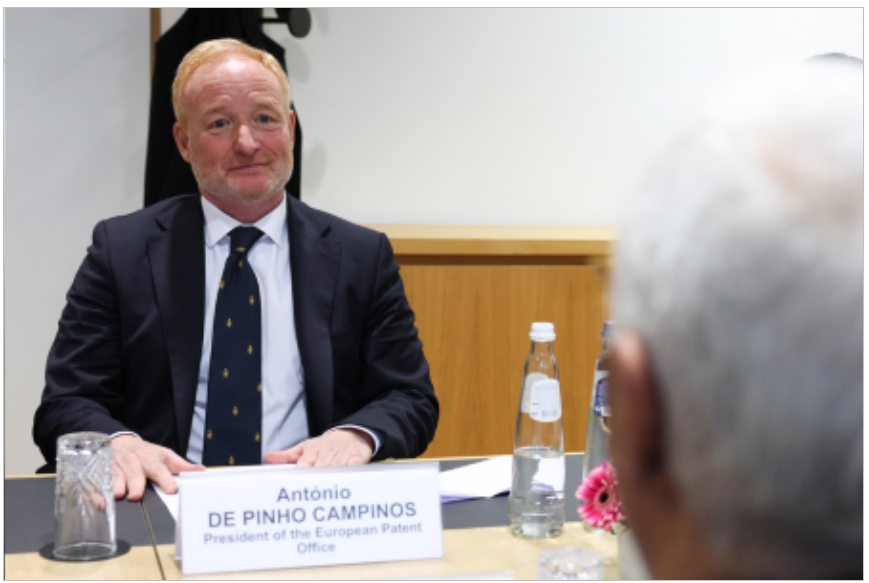
Has the former "asset" managed to retain its value or has it
now become a "liability"?
Already in June 2019, about a year after he had taken up his new position in Munich, there were signs that Campinos was starting to go "rogue". He was reported to have disgraced himself in public during a "drunk and disorderly" incident which involved his removal from a Lufthansa flight to Brussels.
Despite this unfortunate little mishap and notwithstanding the lacklustre track record of his first term as EPO President, Campinos managed to secure the endorsement of the Portuguese government for his reappointment in 2022. It is likely that his sponsors in Lisbon were keen to keep him in his position in Munich because it meant that he would strategically placed to support their efforts to help João Negrão secure the position of EUIPO Executive Director in 2023.
However, in September 2025, Team Campinos was struck by a major PR disaster when the EPO's chief spin-doctor, Luis Berenguer Giménez, was arrested at the Munich Oktoberfest after having been reportedly caught red-handed in the act of consuming cocaine in public. The incident was particularly embarrassing for Campinos because Berenguer Giménez was a leading member of his "inner circle" and a long-standing amigo who had previously served under Campinos as the press speaker of the EUIPO in Alicante.
The EPO's senior management did its best to limit the reputational fallout from the 2025 "Cocainegate" affair by ensuring that the incident did not receive any meaningful coverage in mainstream media channels.
However, it was picked up and reported on by Techrights and this led to Berenguer Giménez being "replaced" as the EPO's press speaker without any official explanation. It would appear that he was sidelined on "sick leave" for around six months before being "rehabilitated" in a new and less publicly visible position.
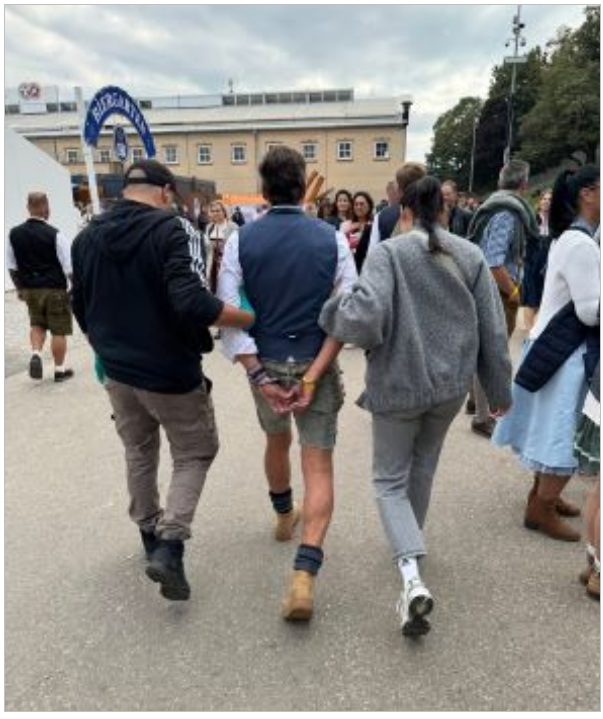
In September 2025, Team Campinos was struck by a major PR
disaster when the EPO's chief spin-doctor, Luis Berenguer Giménez,
was arrested at the Munich Oktoberfest having been reportedly
apprehended in the act of consuming cocaine in public.
But even if Team Campinos managed to sweep the "Cocainegate" affair under the carpet, the incident became widely known within the EPO itself and it gave new impetus to previously circulating rumours about alleged substance abuse within elements of the senior management team. These allegations – while remaining for the most part in the realm of hearsay and anecdote – have contributed to a perception that standards of discipline and professional oversight amongst the higher managerial echelons of the organisation's executive branch have seriously deteriorated in recent years.
Particular concern has focused on what some insiders describe as inadequate oversight mechanisms and an apparent reluctance to subject senior management figures to the same levels of scrutiny, compliance review, and ethical accountability expected elsewhere in the organisation. Critics argue that internal governance structures have become overly deferential to executive authority, with insufficient checks and balances to prevent the emergence of informal networks of influence or to address behavioural concerns at an early stage.
Any impartial and objective observer would be forced to recognise that, in the wake of the "Cocainegate" affair, Campinos has become a potential "liability" for his political sponsors and that those who continue to endorse him as "the best man for the job" at the EPO do so at their own peril.
We are not in a position to know how well informed António Costa is about these matters or to what extent the information that is available to him might affect his perception of Campinos and lead him to question the latter's suitability for reappointment as President of the EPO.
But it is worth noting here that Costa's own decades-long record of involvement in domestic Portuguese politics was seriously tarnished when he resigned in November 2023 following the corruption and influence-peddling inquiry known as "Operation Influencer".
Costa himself has not been formally charged with any wrongdoing in this regard and back home in Portugal he is not generally perceived as being corrupt – at least not by the conventional standards of Portuguese politics and especially when compared to his predecessor José Sócrates. Nevertheless, it is widely accepted that during Costa's time as Prime Minister questionable deeds were committed by members of his inner circle whom he relied on to "get things done". This led some commentators to conclude that Costa suffered from serious lapses of judgment when it came to choosing his political allies and collaborators.
It remains to be seen whether Costa has learnt any lessons from his past mistakes and whether whatever insights he may have gained from the "Operation Influencer" debacle will be applied when it comes to EPO affairs and the question as to whether it would be appropriate for the President of the European Council to endorse the efforts of the incumbent EPO President to secure a third mandate.
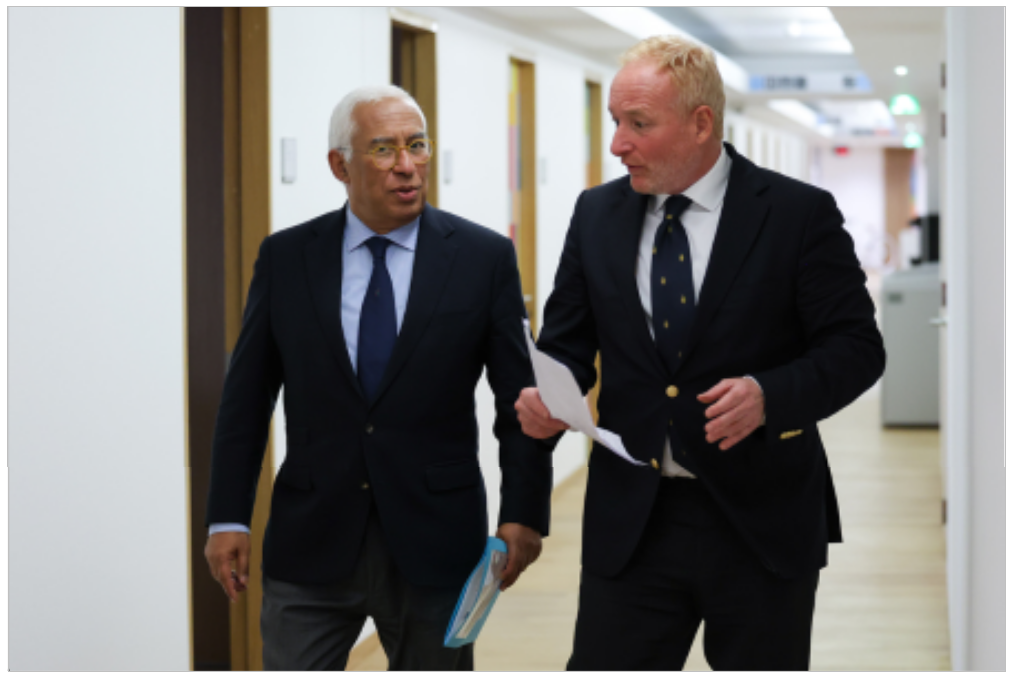
Some commentators have concluded that Costa suffered from
serious lapses of judgment when it came to choosing his political
allies and collaborators. It remains to be seen whether whatever
insights he may have gained from the "Operation Influencer" debacle
will be applied when it comes to EPO affairs and the question as to
whether it would be appropriate for the President of the European
Council to endorse the efforts of the incumbent EPO President to
secure a third mandate.
Costa is a Portuguese national and it would be understandable if his sympathies lay with his compatriot Campinos. However, as President of the European Council, he has an overriding responsibility to act in the broader interest of the EU and its member states.
Although the EPO is not an EU institution, it is Europe's second-largest international organisation (after the EU) and all of the EU member states are contracting states of the European Patent Convention. This means that the administrative and quasi-judicial decisions which are taken at the EPO have an effect within the jurisdictions of those EU states even if the EPO remains exempt from oversight by the political and judicial organs of the EU.
As we noted in an earlier part of this series, the track record of Campinos during his first and second terms as EPO President is not very inspiring. In view of his dismal performance to date it's difficult to see what grounds exist to justify granting him a third term or why a prolongation of his tenure for another five years would be in the interest of the EU and its member states. On the contrary, such a rubber-stamped reappointment would very likely be detrimental to the EPO and would entail a risk of further eroding the standing and legitimacy of the organisation.
We can't read António Costa's mind and we don't presume to tell him what his position should be on the question of the EPO President's reappointment. All we will say here is that if he is tempted to support the reappointment bid of his compatriot we would advise him to familiarise himself with the current situation at the EPO and to make sure that he is fully aware of the potential risks associated with an endorsement of Campinos.
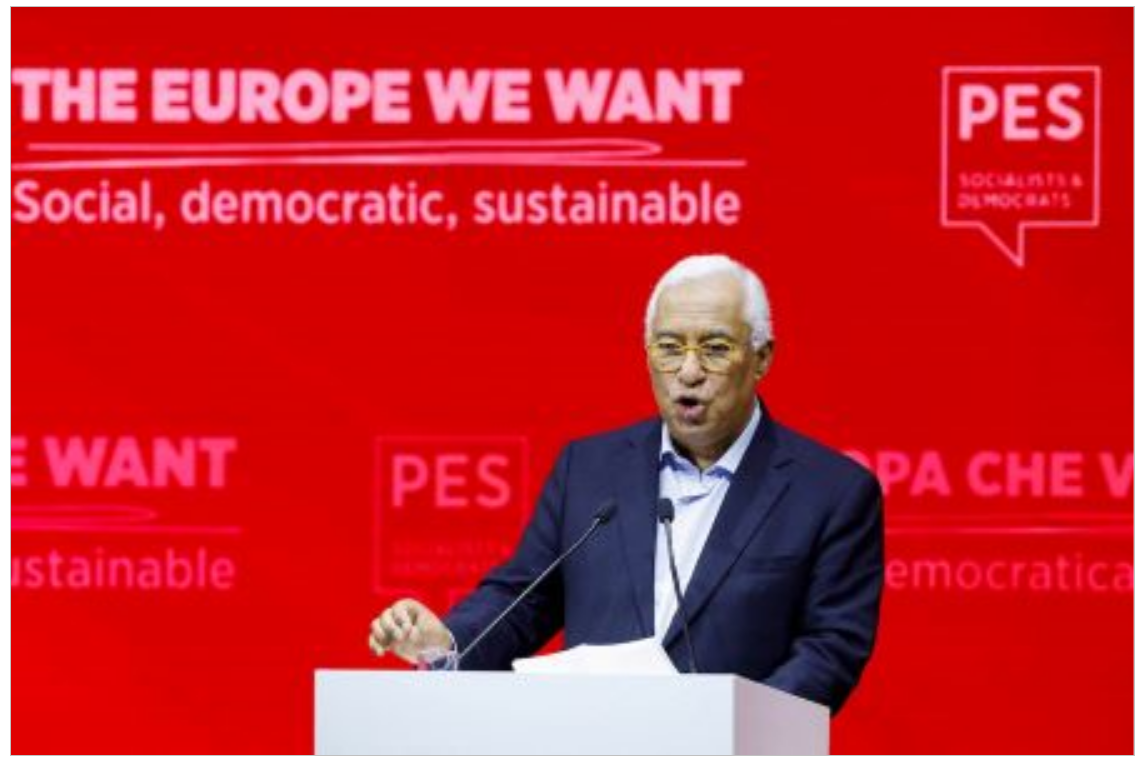
If he is tempted to support the reappointment bid of his
compatriot, António Costa would be well advised to familiarise
himself with the current situation at the EPO and to make sure that
he is fully aware of the potential risks associated with an
endorsement of Campinos.
And with that the present series covering the reappointment campaign of EPO President António-Serge de Pinho Campinos has come to an end.
We remind our readers that the EPO's Administrative Council is due to hold its 188th meeting on 13th and 14th October. During that meeting the Council is expected to decide on whether it intends to grant Campinos a rubber-stamped reappointment for a further unprecedented third term or whether a competitive selection procedure for the position of EPO President will be launched.
We don't have a crystal ball and we won't make any attempt to predict what the Council is going to decide at its October meeting. However, we assure our readers that we will be keeping a watchful eye on events and we hope to be able to issue an update in due course. Watch this space… █