
EditorsAbout the SiteComes vs. MicrosoftUsing This Web SiteSite ArchivesCredibility IndexOOXMLOpenDocumentPatentsNovellNews DigestSite NewsRSS

04.12.10

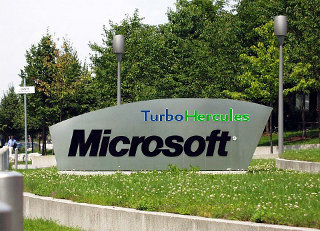
Patents Roundup: New Conferences, Oink of the Patent Lawyers in New Zealand, and TurboHercules’ Secret Home in 701 Fifth Avenue, Suite 4200 Seattle, WA 98104

Posted in Europe, IBM, Microsoft, Patents at 8:13 pm by Dr. Roy Schestowitz

TurboHercules

Summary: The latest software patents news from New Zealand, Europe, the United States, and an American Microsoft proxy that pretends to be European (near the Commission)

LATER this week — on Thursday to be precise — people will speak about patents at the 2010 Linux Foundation Collaboration Summit. The list of speakers is interesting because it includes some lawyer types who do not oppose software patents.

The EPIP conference is also looking for paper submissions. Emphasis will be put on Free software and software patents, oddly enough (because the conference is in Europe).

This year an emphasis will be given to the issues of IPR and development and open source. Papers addressing the challenges encountered by developing countries in the context of the TRIPS (trade related aspects of intellectual property rights) agreement, the protection of traditional knowledge, the issues of IPR and health and access to knowledge in developing countries, and the challenging view of the open source alternative to IPR will be particularly welcome.

Over in New Zealand, it’s mostly the lawyer types who stifle a necessary reform that would explicitly forbid software patents [1, 2, 3, 4]. Watch the following new video from New Zealand (NZOSS) and listen to the background sounds.


Direct link

Here is IDG’s latest update on the situation in New Zealand:

Commerce Minister Simon Power says the Government will back changes proposed by a select committee that will mean computer software can no longer be patented.

Parliament’s commerce select committee proposed amending the Patents Bill, which passed its first reading in May last year, after receiving many submissions on the controversial issue.

As we pointed out a couple of days ago, Judge Stevens is retiring and this is a big deal because of his involvement in the Bilski case. The president of the FFII, Benjamin Henrion, shows that a “Patent Attorney is afraid of Judge Stevens for writing Bilski decision, hopes he retires soon” (well, he got his wish fulfilled).

Henrion has also spotted IPKat’s new essay on what he calls “the UPLS attempt to validate software patents in Europe” (the former can facilitate the latter).

“Where are we now?” is the question on everyone’s lips when it comes to the long trek from national patents alone to the desired destination, the Promised Land of the single patent for the European Union and a centralised and harmonised patent litigation system. Explaining the background, Oliver Varhelyi (Head of Unit, DG Internal Market and Services, European Commission) described the legal bases on which the form and substance of the agreed new regime could be reached through a combination of unanimous and majority votes.

We cannot quite avoid speaking about the curious case of TurboHercules — a case that we’ve covered in :

  1. Microsoft Proxy Attack on GNU/Linux Continues With TurboHercules
  2. Eye on Security: Windows Malware, Emergency Patches, and BeyondTrust’s CEO from Microsoft
  3. IBM Uses Software Patents Aggressively
  4. IBM’s Day of Shame
  5. IBM Will Never be the Same After Taking Software Patents Out of Its Holster
  6. Thumbs up to Ubuntu for Removing a Part of Microsoft; TurboHercules Likely a Psystar-Type Microsoft Shell
  7. Why IBM Does Deserve Scrutiny (Updated)
  8. Patents Roundup: Fordham Conference for Software Patents in Europe, NZOSS Responds to Pro-Software Patents Lobbyists, and TurboHercules’ Ties With Microsoft Explained
  9. Florian Müller Seemingly Connected to CCIA (Microsoft Proxy)

Intel’s heinous crimes did not prevent HP from getting closer to Barrett this month (he is among the key people who attacked OLPC), but we were more interested in understating HP’s possible role in the TurboHercules case. Groklaw has just explained this relationship. It’s great work from Pamela Jones; in fact, many updates on her previous post show that TurboHercules used a simple trick to pull the list of patents from IBM. The closer one looks, the worse it looks for TurboHercules, whose location is elucidated as follows in one of the comments:

I am purposefully not making these links HTML clickable so there won’t be referring clicks from Groklaw. You can copy them into your browser to verify if you want to.

The TurboHercules website is at http://www.turbohercules.com where it is clearly the right site, talking about the TurboHercules emulator and founder Roger Bowler. The About Us page at http://www.turbohercules.com/about/ has their Paris, France address.

At http://www.turbohercules.com/resources/permalink/turbohercules-overview/ is a link to the PDF of a whitepaper http://www.turbohercules.com/uploads/main/TurboHercules_Overview_1.pdf “TurboHercules Overview: A Quick Overview of the TurboHercules System” which at the bottom of the cover page lists the address “TurboHercules Inc. | 701 Fifth Avenue, Suite 4200 Seattle, WA 98104″

There is also a marketing brochure at http://www.turbohercules.com/uploads/main/Turbohercules_Brochure_IDF_1.pdf that has the same address. An interesting snippet from it: “TurboHercules has approached IBM to consider making available to its mainframe customers a license for IBM operating systems on the Hercules platform.”

As Groklaw shows, it is also a Windows company, not quite an “open source” company as Florian Müller and others from that same ilk want reporters to believe (Müller has failed to properly deny his role).

All in all, patent law is broken, yet some people mischaracterise the problem by pointing their finger in the wrong direction. Mike Masnick responds:

This is a problem that happens all too often in these discussions. Folks who don’t know much about how innovation really occurs in the tech world, and who falsely conflate concepts in tangible property with a completely different government-granted monopoly right — automatically assume that infringement is the equivalent of “stealing.” Are there cases where big companies “copy” an idea from a small company? Yes, absolutely. But it’s a lot more rare than many make it out to be. The really innovative ideas? Those are the ones that big companies don’t even realize are big ideas until it’s too late.

Very few people who are developers would deny their disdain of software patents; it’s mostly them who matter, but it’s rarely them who vote on the subject. The “Litigation Industrial Complex” runs this show.

“Small Software companies cannot afford to go to court or pay damages. Who is this software patent system for?” —Marco Schulze, Nightlabs Gmbh

Share this post: These icons link to social bookmarking sites where readers can share and discover new web pages.
  • Digg
  • del.icio.us
  • Reddit
  • co.mments
  • DZone
  • email
  • Google Bookmarks
  • LinkedIn
  • NewsVine
  • Print
  • Technorati
  • TwitThis
  • Facebook

If you liked this post, consider subscribing to the RSS feed or join us now at the IRC channels.

Pages that cross-reference this one

What Else is New


  1. Red Hat Pays Microsoft-Linked Patent Troll Again, Refuses to Provide Details

    Another attack on GNU/Linux results in payment to trolls and silence from Red Hat, which keeps the FOSS community in the dark


  2. Microsoft Brings the Notion of Buying Games to End, Consumer Rights Groups Should Sue

    Not only is XBox eliminating the notion of owning and controlling one's console; new XBox paradigm aims to reduce one's control over purchased games, reducing buyers to temporary, transient consumers


  3. Links 24/5/2013: Fedora ‘Pidora’, CIvil Rights Debated in the US

    Links for the day


  4. Bill Gates Still Getting Richer Through For-Profit Investments, Now Wants to Brainwash Children in Schools in Favour of His Investments

    Some of the latest strategies used by the world's richest man to protect his investments and amass yet more money, adding to an ever-growing wealth while pretending it's a charity


  5. Microsoft Entryism and Its Effects on Corporate and Public Policy

    An aspect of Microsoft culture that ought not be overlooked because of its profound effect on society (private and public)


  6. Red Hat Should Follow Google's and Twitter's Footsteps on Patents to Avoid Becoming the Next Novell

    Red Hat continues to ignore my plea to defang the software patents it is applying for, potentially making them weaponised like Novell's and Sun's patents (e.g. Java at Oracle) upon buyout or another major event


  7. CAFC Decision Still Overridden by Overzealous Patent Lawyers in the Press, The Guardian and Other Corporate Press (CBS and AFP Included) Still Guard the Establishment

    Analysis of a sceptical kind of corporate press coverage regarding software patents in the US; great examples of how Microsoft- and Gates-funded press outlets tend to get it all wrong on the facts, smearing digital freedom fighters


  8. Software Patents Debate Still Open in New Zealand and the US

    In spite of distraction attempts, the debate over software patents continues to stress that there is a real danger


  9. WebM is No Ogg, It is Not Freedom-Respecting Anymore, Even in Countries That Have No Software Patents

    Why Google needs to fix the licence of VP9, or simply stop pretending that it should be the only de facto standard for multimedia


  10. Microsoft Violates Google Licences

    The champion of 'IP' and licensing (extortion) is not much of a champion after all, based on new reports, not just a lot of old ones


  11. Skype Teaches Us That All Microsoft Software Should be Assumed Spyware Unless Proven Otherwise

    The broader implications of Microsoft adding spying 'features' to Skype


  12. Links 23/5/2013: Threat to Civil Rights in UK, KDE 4.11 LTS

    Links for the day


  13. Links 22/5/2013: Debian GNU/Hurd, New Go Language Release

    Links for the day


  14. The FRAND Apple-Microsoft Conspiracy Attempts to Destroy Android/Linux, Ban Imports

    How Microsoft and Apple are using patents in bulk (sometimes acquired in unison, e.g. from Novell and Nortel) to artificially lower market saturation of the Android operating system or drive costs up


  15. Gates Foundation: Buying Influence for Bill's Ego and Bill's Profit

    New examples of power being acquired and investments (i.e. for profit) being funnelled into the beneficiaries


  16. Bill Gates Enters Financial Centres With His Goons Becoming US Budget Chief, Top Bankers

    How Bill Gates' staff is entering positions of financial power, indirectly giving Gates power over US (national and international) finance


  17. IBM Ignores Small Companies' Interests, Denies Patent Scope is a Problem, Focusing on Its Own Problems (Trolls) Instead

    How David Kappos and IBM (his longtime employer) continue to ignore the obvious problem which kills small businesses and everyone is complaining about


  18. The New York Times Publishes Factually-Flawed Patent Propaganda Benefiting Microsoft and Apple

    Eamonn Fingleton is rewriting history in the US' top newspaper, insinuating that patents contributed to the rise of software duopolists


  19. Software Patents Eligibility Likely to be Decided by SCOTUS

    Analyses suggest that an escalation by appeal to SCOTUS is likely to be the next stage in 'Bilski 2.0'


  20. Does Bill Gates Try to Flush GNU/Linux Down the Toilet in Kerala?

    Renting Microsoft software rather than using Free (as in freedom, or libre) software?


  21. Links 21/5/2013: Handbrake Turns 0.9.9, NetBSD 6.1

    Links for the day


  22. Links 20/5/2013: First Salifish Smartphone, Mageia 3 Released

    Links for the day


  23. Microsoft Corruption (Illegal Tenders) Stopped by European Court

    Microsoft cannot bypass public tenders, based on a ruling from a court of law in Europe


  24. Not Satire: Microsoft Wants to Show the World How Security is Done

    Software security 'standard' to be led by the company which made insecurity an acceptable engineering practice?


  25. Microsoft is Struggling to Maintain Industry 'Standards'

    With Microsoft's common carrier and browser share down considerably Microsoft finds itself increasingly irrelevant and it tries subversive means of making another comeback


  26. Microsoft Entryism and Bribery Get the Microsoft Way Implemented

    A recollection of very dirty tactics from Microsoft, which uses money to oppress, overthrow, and even hijack its opposition


  27. Patent Policy Laundering in the European Union and New Zealand

    How the so-called 'free' trade agreements help spread patent policy which favours software patents


  28. Ongoing Focus on Patent Litigation and Patent Trolls Reduces Focus on Software Patents

    The problem with increased focus on the players that use software patents litigiously and the litigation itself


  29. Andrew Y. Schroeder Shows That Patent Lawyers Are Sociopaths

    Bully and law misuser is trying to get his way with foul language, intimidation, and sheer lack of professionalism


  30. IBM-backed Book on 'Open Innovation'

    OpenForum Europe (OFE), which helps IBM's turf wars in Europe, releases a new book filled with its talking point


RSS 64x64RSS Feed: subscribe to the RSS feed for regular updates

Home iconSite Wiki: You can improve this site by helping the extension of the site's content

Chat iconIRC Channel: Come and chat with us in real time

Recent Posts