
EditorsAbout the SiteComes vs. MicrosoftUsing This Web SiteSite ArchivesCredibility IndexOOXMLOpenDocumentPatentsNovellNews DigestSite NewsRSS

11.29.12

David Kappos Leaves as He Loses the Debate and Software Patents Lose Legitimacy Among Public Figures

Posted in Patents at 4:55 pm by Dr. Roy Schestowitz

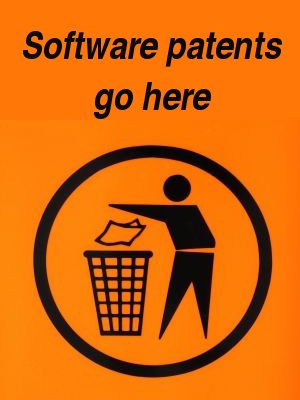
Keep clean

Summary: A roundup of software patents news, especially published opposition

SO days ago we learned that Kappos had decided to quit, just shortly after he was slammed by some media sites and especially blogs (people, not corporate press). Here is a blog in Murdoch’s site speaking about the news, which is a PR disaster for the USPTO:

U.S. Patent and Trademark Office Director David Kappos, who oversaw the agency during the biggest change to the patent system in decades, will leave his post in January, according to a PTO spokesman.

During his three-and-a-half year tenure, Mr. Kappos was widely credited for making the agency more efficient.

Or conversely, he was criticised for creating more monopolies by lowering bars of entry. Here he is spreading IBM mythology about software patents this month. Even an IBM proponent, Pamela Jones, was upset by this. She wrote: “I don’t believe a word of this is so. It’s mythology. Software is not benefited by patents at all and it impedes innovation. It is toxic to Free and Open Source software, which is developed in a shared environment which is the opposite of what patents are about. Nor does the public benefit from patents on software, because they get less functionality than they otherwise could have. Patents benefit the incumbents. It’s not the innovators who start throwing patents around, but rather it was Microsoft, Apple, Oracle and Nokia who started the war. Why? They don’t want to have to compete with Android, and if they have to they want to make Android pay them to survive at all, meaning prices for the public will go up. And the level of “innovation” represented by the patents in this smartphone war is so low it’s a joke. No one should be entitled to get money for such things as rounded corners or a bounceback function. It’s stupid from beginning to end and while large companies like IBM or Microsoft may benefit by muscle-ing the new players, the public in no way benefits from companies having to rework their phones to try to avoid those stupid, too-broad patents on problems, as opposed to ways to address a problem, or on functionality that everyone knows how to do without any patents showing them how. I could go on, but this speech is proof to me that the USPTO will not improve and getting rid of software patents or the harm they cause is goal number one.”

Eric Goldman, who now writes for Forbes blogs, also slammed software patents yesterday:

The U.S. patent system largely treats all innovations equally, but innovation often works quite differently in different industries. In particular, the software industry differs from other major innovative industries–such as computer hardware and biotech/pharmaceuticals–in several key ways, and those differences can create (and have created) significant friction for the patent system.

Software patents have also created big–and expensive–problems for companies throughout all sectors of our economy. Pretty much as soon as they get venture financing, start-up companies are getting approached by “patent trolls” with offers they can’t refuse: pay me now or pay your lawyer many times that amount to prove you don’t have to pay me. And large companies, especially in the smartphone industry, are paying literally billions of dollars to acquire patent portfolios to keep those portfolios from falling into the wrong hands and with the hope that large patent portfolios will fend off competitor threats (i.e., provide the company freedom to operate its business without interference from competitors’ patents).

The Atlantic shared this cartoon we promoted yesterday and it’s introduced as follows:

The Best Cartoon You’ll Ever Watch About Ending Software Patents

If there’s one thing Schoolhouse Rock taught us all, it’s that the easiest way to explain a dry topic to someone with a short attention span is to show them a cartoon. So kudos to George Mason University economist Alex Tabarrok and Idea Rocket Animation for putting together this delightful two-minute clip laying out the case against software patents, a by and large nerds-only conversation topic that deserves way more attention than it receives. The video’s got Jeff Bezos, a club-wielding giant, Isaac Newton, a crashing airplane, and a surprisingly funny joke about licensing fees. Best yet, it’s explained in language anyone — even a Congressman — could understand.

Just in case those two minutes are too long, though, here’s Tabarrok’s point in brief: Patents make sense for products, like pharmaceuticals, that are expensive to develop, but cheap to copy. That’s because nobody would spend the money to create them if a competitor could just swoop in and steal their work. But software doesn’t need that protection. It’s less expensive to create and less disastrous if someone else imitates your work. Moreover, huge patent portfolios let companies keep competitors out of their market, which slows down innovation.

We recently learned from people who attended the event on software patents (seemingly stacked by people who are not programmers, as usual) how it went and Masnick published his contribution to this debate:

First off, I know that some patent system defenders took great offense to the idea that the event wasn’t “balanced” with system supporters. Nearly every speaker presented an aspect of how the system was broken with suggestions to fix it. But I see this complaint as being misleading. There’s this random belief out there that conference panels need to be “balanced” with “pro & con” and then let the panelists argue things out. I’ve argued against this in the past when setting up panels for other events, and with the events that we run, we’ve tried to avoid that concept as well. While just setting up pro vs. con can make for an entertaining session, it rarely leads to productive discussions that move the conversation forward. They just lead to people arguing past each other. A productive event is one in which people agree on a basic premise or problem and are then working towards possible responses. That’s what this was. It was a conference for those who believe the system is broken. Given that assumption, the point of the event was to suggest possible solutions. There are plenty of events where patent system defenders and skeptics can argue against each other, but I can’t think of another where people were able to dig in deep on possible fixes.

[...]

And, just to address this one point before one of our regular patent lawyer commenters tries to make it in the comments: there is an argument among patent system supporters that there is no such thing as a “software patent” and thus any argument that uses that term is meaningless. This is both slightly true and (more importantly) a distortion of the larger issue. As was discussed at the conference, there is a difference between software and hardware that can’t be denied. One involves moving around bits. One doesn’t. So it’s not difficult to define software differently from hardware. The real problem is that if we did carve out software from patentability, it’s likely that crafty patent lawyers would quickly figure out how to rewrite patent claims to make them broadly cover the same concepts in a way that could be seen as not being “software.” Given all that, I think it’s quite legitimate to discuss “patents that cover software” as “software patents,” even while I agree that merely targeting “software patents” misses the larger problem.

All in all, a lot of opposition to software patents could be found lately.

Share this post: These icons link to social bookmarking sites where readers can share and discover new web pages.
  • Digg
  • del.icio.us
  • Reddit
  • co.mments
  • DZone
  • email
  • Google Bookmarks
  • LinkedIn
  • NewsVine
  • Print
  • Technorati
  • TwitThis
  • Facebook

If you liked this post, consider subscribing to the RSS feed or join us now at the IRC channels.

Pages that cross-reference this one

What Else is New


  1. Links 22/5/2013: Debian GNU/Hurd, New Go Language Release

    Links for the day


  2. The FRAND Apple-Microsoft Conspiracy Attempts to Destroy Android/Linux, Ban Imports

    How Microsoft and Apple are using patents in bulk (sometimes acquired in unison, e.g. from Novell and Nortel) to artificially lower market saturation of the Android operating system or drive costs up


  3. Gates Foundation: Buying Influence for Bill's Ego and Bill's Profit

    New examples of power being acquired and investments (i.e. for profit) being funnelled into the beneficiaries


  4. Bill Gates Enters Financial Centres With His Goons Becoming US Budget Chief, Top Bankers

    How Bill Gates' staff is entering positions of financial power, indirectly giving Gates power over US (national and international) finance


  5. IBM Ignores Small Companies' Interests, Denies Patent Scope is a Problem, Focusing on Its Own Problems (Trolls) Instead

    How David Kappos and IBM (his longtime employer) continue to ignore the obvious problem which kills small businesses and everyone is complaining about


  6. The New York Times Publishes Factually-Flawed Patent Propaganda Benefiting Microsoft and Apple

    Eamonn Fingleton is rewriting history in the US' top newspaper, insinuating that patents contributed to the rise of software duopolists


  7. Software Patents Eligibility Likely to be Decided by SCOTUS

    Analyses suggest that an escalation by appeal to SCOTUS is likely to be the next stage in 'Bilski 2.0'


  8. Does Bill Gates Try to Flush GNU/Linux Down the Toilet in Kerala?

    Renting Microsoft software rather than using Free (as in freedom, or libre) software?


  9. Links 21/5/2013: Handbrake Turns 0.9.9, NetBSD 6.1

    Links for the day


  10. Links 20/5/2013: First Salifish Smartphone, Mageia 3 Released

    Links for the day


  11. Microsoft Corruption (Illegal Tenders) Stopped by European Court

    Microsoft cannot bypass public tenders, based on a ruling from a court of law in Europe


  12. Not Satire: Microsoft Wants to Show the World How Security is Done

    Software security 'standard' to be led by the company which made insecurity an acceptable engineering practice?


  13. Microsoft is Struggling to Maintain Industry 'Standards'

    With Microsoft's common carrier and browser share down considerably Microsoft finds itself increasingly irrelevant and it tries subversive means of making another comeback


  14. Microsoft Entryism and Bribery Get the Microsoft Way Implemented

    A recollection of very dirty tactics from Microsoft, which uses money to oppress, overthrow, and even hijack its opposition


  15. Patent Policy Laundering in the European Union and New Zealand

    How the so-called 'free' trade agreements help spread patent policy which favours software patents


  16. Ongoing Focus on Patent Litigation and Patent Trolls Reduces Focus on Software Patents

    The problem with increased focus on the players that use software patents litigiously and the litigation itself


  17. Andrew Y. Schroeder Shows That Patent Lawyers Are Sociopaths

    Bully and law misuser is trying to get his way with foul language, intimidation, and sheer lack of professionalism


  18. IBM-backed Book on 'Open Innovation'

    OpenForum Europe (OFE), which helps IBM's turf wars in Europe, releases a new book filled with its talking point


  19. Joseph E. Stiglitz Criticises the Patent System

    More critical words about the patent system and the way it is harming lives


  20. Senator Schumer Should Focus on Software Patents, Leaving Patent Trolls (Side Effect) Aside

    Reform in the USPTO and the US courts should focus on patent scope and not patent holders


  21. Links 20/5/2013: Plenty of Linux News, Google/Android Announcements

    Links for the day


  22. IRC Proceedings: May 12th, 2013-May 18th, 2013

    IRC logs for May 12th, 2013 (and subsequent days until May 18th, 2013)


  23. Microsoft Spin Regarding Skype Spying Does Not Withstand Scrutiny

    Microsoft's response to allegations that Skype is spying on all users is full of holes


  24. MPEG-LA Ruined the Licence of WebM, Made it Less Freedom-Respecting

    The Microsoft-, Nokia-, and Apple-backed patent troll appears to have ruined the freedom assured by Google's multimedia format, which was previously made free only after public pressure


  25. Microsoft-controlled Nokia is Lobbying to Enable Bans on Android Imports (Linux Phones as a Whole in Danger)

    Nokia is shown lobbying for embargoes while it is also suing -- with limited success -- Android handsets makers


  26. Courtroom and New Book Recognise That Software Patents Correspond to Mathematics and Mathematics Abused in Court

    Important observations about the nature of computer-implemented 'inventions', or software patents


  27. The Reality Distortion Field of Patent Lawyers Helps Impede Abolition of Software Patents

    How widespread coverage and talking points from the tiny minority which is patent lawyers have contributed to biased and at times utterly distorted reporting on the subject of software patents around the world


  28. Eugene Kaspersky Says Patents Harm Innovation

    Some more criticism of the patent system and software patents in particular, courtesy of Eugene Kaspersky


  29. UEFI Restricted Boot Good for Microsoft Agenda, Not for Security

    News and analysis of UEFI 'secure boot' (lockdown), including the new role played by the Microsoft-funded SUSE


  30. Anniversaries

    Sites that deal with patents and with FUD as well as their respective ages


RSS 64x64RSS Feed: subscribe to the RSS feed for regular updates

Home iconSite Wiki: You can improve this site by helping the extension of the site's content

Chat iconIRC Channel: Come and chat with us in real time

Recent Posts