
Avoiding the Spooks (Nobody Watches the Watchers, They're Practically Unaccountable)
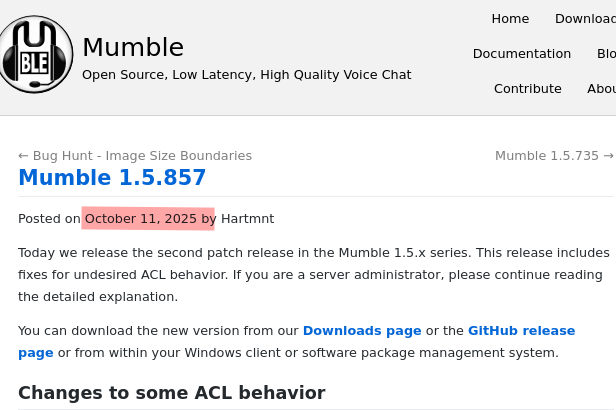
Mumble 1.5.857 was released 3 months ago.
This past week I added a number of new encryption keys for E-mail. It seems that nowadays the majority of my E-mail messages are encrypted. I wanted to do this more than 20 years ago, but most people I spoke to didn't have keys and didn't have the skills (or systems) to trivially handle such keys. In some cases, people would need to paste garbage into the command line to have it decrypted. Having just mentioned the shortcomings of printouts (those are typically not anonymous, even if you wear gloves to avoid fingerprinting them), let's discuss E-mail.
Yesterday in Daily Links we included this article which said: "Email is not safe. It never was and it never will be. This doesn't mean we have to give up."
It depends. E-mail (as a concept or a standardised system) transmits messages from A to B or from Bob to Alice. Most people pass not messages but Web pages (HTML disguised as a "message") and whilst an issue exists for obscuring endpoints (who speaks to who or exchanges files etc.), the content of messages (even fields like the subject line) can be obfuscated, end-to-end, using proper encryption (TLS to and from a server isn't encryption that is effective for privacy, it's more about security or tackling MitM-type attacks, though each mail router is typically a MitM as well).
If you have always wondered how to securely communicate with other people - textually or with real-time voice - without snooping or wiretapping, take a look at Murmur/Mumble (preferably self-hosted, which isn't hard because Murmur can run on any laptop); it can handle text and voice, many simultaneous participants too. Thunderbird nowadays has some fundamental encryption functionality built in.
If more people adopt encryption, it'll be easier for us to deal with whistleblowers. █