
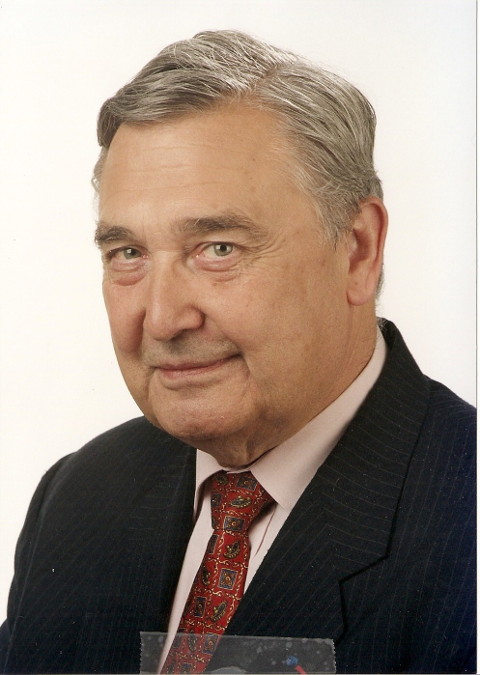
Photo credit: Gao Lulin Foundation
MOVING on to the next item on our busy EPO agenda (Christmas is an opportunity to keep abreast of the news whilst also coping with the ever-growing backlog), today we leave behind Europatis and move on to Questel. For those who missed what we wrote about Europatis, here it is in four consecutive parts:
"Jacques Michel migrated from Questel to the EPO."Based on Questel's own Web site, in 1989 "Questel [was] chosen by the European Patent Office (EPO) to develop its internal search system, EPOQUE." Prior to that, in 1987, there was a "Cooperation between Derwent, INPI [French Patent Office], and Questel to open the Markush Darc service for structural searches in chemical patents." 7 years earlier, in 1980, there was a "Cooperation with INPI (French Patent Office) and first patent online database, INPI-1 accessible to the public début de la co-opération avec l’Institut National de la Propriété Industrielle (INPI): very first step for Questel in the IP space."
So Questel is yet another thing (like Team Battistelli) that migrated from INPI to the EPO. Jacques Michel migrated from Questel to the EPO.
"As to Jacques Michel's previous endeavours, please turn to exhibit #1," one reader told us, responding to our ongoing exploration regarding Michel's extra-curricular (or extra-EPO) activities. A copy is included with fresh, improved quality, OCR information [PDF].
"According to Questel's own Web site, EPOQUE dates back to 1989."It is a Masters thesis by one Jiaji Ma, submitted in 1992 at the ENSSIB, the "Ãâ°cole nationale supérieure des sciences de l'information et des bibliothèques" near the French city of Lyon, which translates to something like "National Superior School of Information Science and Libraries".
"It was a different time and a very different EPO," this well-informed reader said to us, "and the public actually got something of value out of all of the Questel wheeling and dealing. The Masters Thesis does seem to confirm how really "convenient" all this business was, but we still don't know what exactly happened behind closed doors -- governments may have been involved directly.
"I just found my copy of an "official" history of the EPO. On page 192 it is written that Jacques Michel was VP1 from 1987 to 2003. That means he would have been hired after the 1986 Questel deal, so in appearance everything was theoretically above board."
"There is some uncertainty here, as causality is hard to concretely prove."According to Questel's own Web site, EPOQUE dates back to 1989. That's when the EPO enters the picture, based on their "official" history.
There is some uncertainty here, as causality is hard to concretely prove. "But I was told many years ago the story of someone who got immediately sacked," a reader told us, "when he dared raise that story. Unfortunately I never learned his name or the exact circumstances, and decades have passed, so proof is difficult."
Our reader has read the thesis and interpreted it as follows:
Its title is "Pouvoirs Publics et Serveur Questel", i.e., "Public authorities and the Questel Server"
In the 1970s, witnessing the rapid US developments in the database sector, the French government under Giscard d'Estaing wanted to develop its own national expertise in a field it perceived as being of strategic importance.
Questel was a result of this political will.
And Mr. Michel had a longtime association with Questel.
The thesis begins with the following interrogation on page 7:
French: 2. Une question centrale: quelles sont les relations entre les pouvoirs publics et Questel en France
English: 2. A central question: what is the relationship between public authorities and Questel in France?
On page 10:
Original: Questel a été créé sous l'impulsion de la politique nationale des pouvoirs publics. C'est un phénomène particulier à la France par rapport aux autres pays.
Translation: Questel was created as a result of a national policy of public authorities. It is a phenomenon peculiar to France which distinguishes it from other countries.
Original: De 1978 à 1982, les relations entre l’Etat, représenté par le Bnist puis la Midist, et Questel, représenté par Télésystèmes, s’inscrivent dans un “régime de régie intéressée” (voir fig. 1). C’est à dire un double régime: d’une part Questel est organisé comme une entreprise par la société Télésystèmes, une filiale d’une grande firme publique et d’autre part, elle se développe par les subventions de l’Etat. Son statut juridique est celui une entreprise privée, et son rôle est de fournir des services publics.
Translation: From 1978 to 1982, the relations between the State, as initially represented by Bnist and later by Midist, and Questel, as represented by Télésystèmes, are conducted within a "commercial public service regime" framework (see fig. 1). This means a dual regime: one the one hand Questel is organised as a commercial venture by the Télésystèmes corporation, a subsidiary of a large public corporation, and on the other hand, it develops itself through State subsidies. Its legal form is one of a private company, and its role is to supply public services.
An exact translation for the expression "régime de régie intéressée" isn't obvious. It is something of an an oxymoron, with a whiff of that nearly proverbial concept of "privatised profits and socialised losses"...
Original: A l’issue de cette période, le serveur national Questel n’est qu’une des cinq divisions de la société Télésystèmes, mais une convention lie Questel et les pouvoirs publics. Avec cette convention, Questel reçoit des aides importantes: 23 MF en 1979, 19 MF en 1980, 24 MF en 1981 et 26 MF en 1982. Pendant cette période, Questel ne peut pas vivre sans subvention de l’Etat (voir le tableau 1 et 2). De plus, dépendant d’une société informatique et logiciel, l’activité de serveur national est l’occasion de développer un savoir-faire en ingénierie documentaire qui dégage pour Questel en 1981, 8 MF. [...]
Translation: At the outset of this period, the Questel national server is only one of five divisions of the Télésystèmes corporation, but an agreement binds Questel and the public authorities. With to this agreement, Questel receives significant financial assistance: 23 MF in 1979, 19 MF in 1980, 24 MF in 1981 and 26 MF in 1982. Questel couldn't exist during this period without State subsidies (see tables 1 and 2). Moreover, as a part of a data processing and software house, the activity as national server allows it to develop a know-how in document and software engineering, which brought Questel 8 MF in 1981. [...]
According to the last row of table 1 on page 36, Questel received during its early years about 132 million Francs of public money overall.
But the first wave of austerity hit the first Mitterand government, in place since 1981, and Questel was essentially told it would have to learn to survive on its own -- eventually.
Original: En même temps que l’achèvement de la convention, un plan d’entreprise de 4 ans est élaboré pour 1983-1986 au terme duquel Questel doit atteindre l’équilibre financier. Pendant cette période dans le cadre d’un cahier des charges, l’Etat apporte une aide forfaitaire et plafonnée. Une subvention globale de 40 MF est répartie pour moitié entre le Ministère de l’industrie [...], et le Ministère des PTT. La figure 2 suivante montre les relations entre pouvoirs publics et Questel durent cette période.
Translation: At the same time the agreement was completed, a 4-year business plan is developed for 1983-1986 time frame, at the end of which Questel should reach the break-even point. During that period the State provides a capped lump-sum subsidy according to a predefined specification. A global grant of 40 MF is supported evenly between the Department of Industry [...] and the department of Post and Telecommunications. Figure 2 shows the relationships between public authorities and Questel during that period.
Let's meet Jacques Michel on page 39:
Original: Il faut indiquer que pendant cette période, il n’y a plus de subvention directe pour Questel, mais les aides indirectes de l’Etat existent encore: les produits du CNRS, comme Francis et Pascal, les produits de l’INPI, notamment les brevets et les marques, sont toujours diffusés sur Questel, ce qui constitue une aide administrative. Il y a également des aides du personnel: les directeurs de Questel sont quasiment tous venus des organismes publics. Prenons un exemple plus clair comme celui des titres de Jacques Michel dans les différentes périodes: il était chef du Bnist, de la Midist, puis directeur de Questel, actuellement il est chef [sic] de l’Office Européen des Brevets, et ces brevets sont commercialisés par Questel!
Translation: It should be stated that for this period, although there are no more direct grants for Questel, indirect aids from the State still exist: the Francis and Pascal [bibliography databases] of the CNRS [National Scientific Research Centre], and those of the INPI [French patent office], namely patent and trade-mark information, are still distributed through Questel, thus constituting assistance from public bodies. Let us also look at staffing assistance: practically all Questel directors come from public bodies. Let us take as case in point the titles held by Jacques Michel during the different periods: he was the chief of Bnist, of Midist, then became the director of Questel, and is now chief [sic] of the European Patent Office, whose patents are marketed by Questel!
Note the use of an exclamation mark at the end of the paragraph.
Michel was in fact VP of the former DG1, which in its former organisation was in charge of prior art search services at The Hague and Berlin. It subsumed the forerunner organisation called "Institut International des Brevets", and thus remained vertically integrated with its own support and IT services. Michel may not have been the President of the EPO, but his position as VP1 wielded considerable power and influence.
Nowadays, DG1 is in charge of search and examination. Support services and IT are now the province of other DGs led by "virtuosos" of the likes of Željko Topić and Alberto Casado Cerviño.
Now, if you turn to p. 52-53, you see that something of a miracle occured...
Original: En 1986, Télésystèmes-Questel est retenu par l’Office Européen des Brevets pour la numérisation de ses brevets publiés en Europe depuis 1920, soit environ 67 millions de pages.
Translation: In 1986, Télésystèmes-Questel is retained by the European Patent Office for the digitisation of its patent [collections] published in Europe since 1920, representing about 67 million pages.
Isn't in an amazing coincidence? Questel was still rather unprofitable and there comes suddenly this large contract... And Jacques Michel becomes VP of the very organisation which rescued Questel.
Nearly three decades later, the exact order in which these events occurred ago have become blurred. It was however common knowledge that whoever dared to voice at the EPO questions or opinions about that deal was essentially committing a career limiting move, with potentially immediate and prejudicial consequences.
But Questel's existence was now secured.
Original: Dès 1986, Questel détient un tiers du marché mondial de l'information en ligne sur les brevets ce qui représente 25% des heures de connexion de Questel, et ce marché augmente de 10% par an. Questel est devenu un des premiers fournisseurs des informations en ligne sur les brevets dans le monde. D'après Jacques Michel, l'activité des brevets assure à Questel une notoriété, une crédibilité et une dimension internationale de premier plan (Infotecture, no. 133, 1986).
Translation: Questel owns in 1986 one third of the world market for online patent information, representing 25% of connection time, and this market grows by 10% per year. Questel became one of the lading leader of online patent information throughout the world. According to Jacques Michel, the patent-related activities provide Questel notoriety, credibility and a first-rate international stature (Infotecture, no. 133, 1986).
Not bad, ain't it?
It's OK for France or Europe to have an industrial policy. After all, the Americans have DARPA, NASA, Boeing, three armed services, etc. But is it the task of an international organisation with shared ownership? And did other member states have a say in this?
Could that be the reason why a later project involved other European partners in addition to the French one?
Original: Une plus grande coopération européenne apparaît en 1989. L'Office Européen des Brevets signe un contrat de 10 millions de DM avec trois sociétés: Télésystèmes Questel, Bertelsmann Computer Beratungsdienst (Allemagne) et Sarin (Italie) pour développer le projet EPOQUE qui permet de développer l'information sur les brevets et représente 24 million de documents avec une croissance de 800 000 par an.
Translation: A greater European cooperation project appears in 1989. The European Patent Office signs a 10 million DM contract with three different companies: Télésystèmes Questel, Bertelsmann Computer Beratungsdienst (Germany) and Sarin (Italy) for developing the EPOQUE project which permits the development of patent information and represents 24 million documents, with an annual growth of 800,000 documents.
Footnote: EPOQUE is the EPO's workhorse worldwide patent database. It is for example used for the backend of the Espacenet service. It used to run under a heavily modified IBM mainframe database engine with roots extending back in the 1960s. The EPO has developed it's own in-house, improved and up-to-date search engine from scratch. This project took a long time to come to fruition, but now license fees no longer must be paid.
The conclusion on p. 59:
Original: Notre analyse permet de faire comprendre que les relations entre pouvoirs publics et Questel sont très étroites.
Translation: Our analysis allows one to understand that the relationship between the public authorities and Questel is a very close one.