2020 figosdev
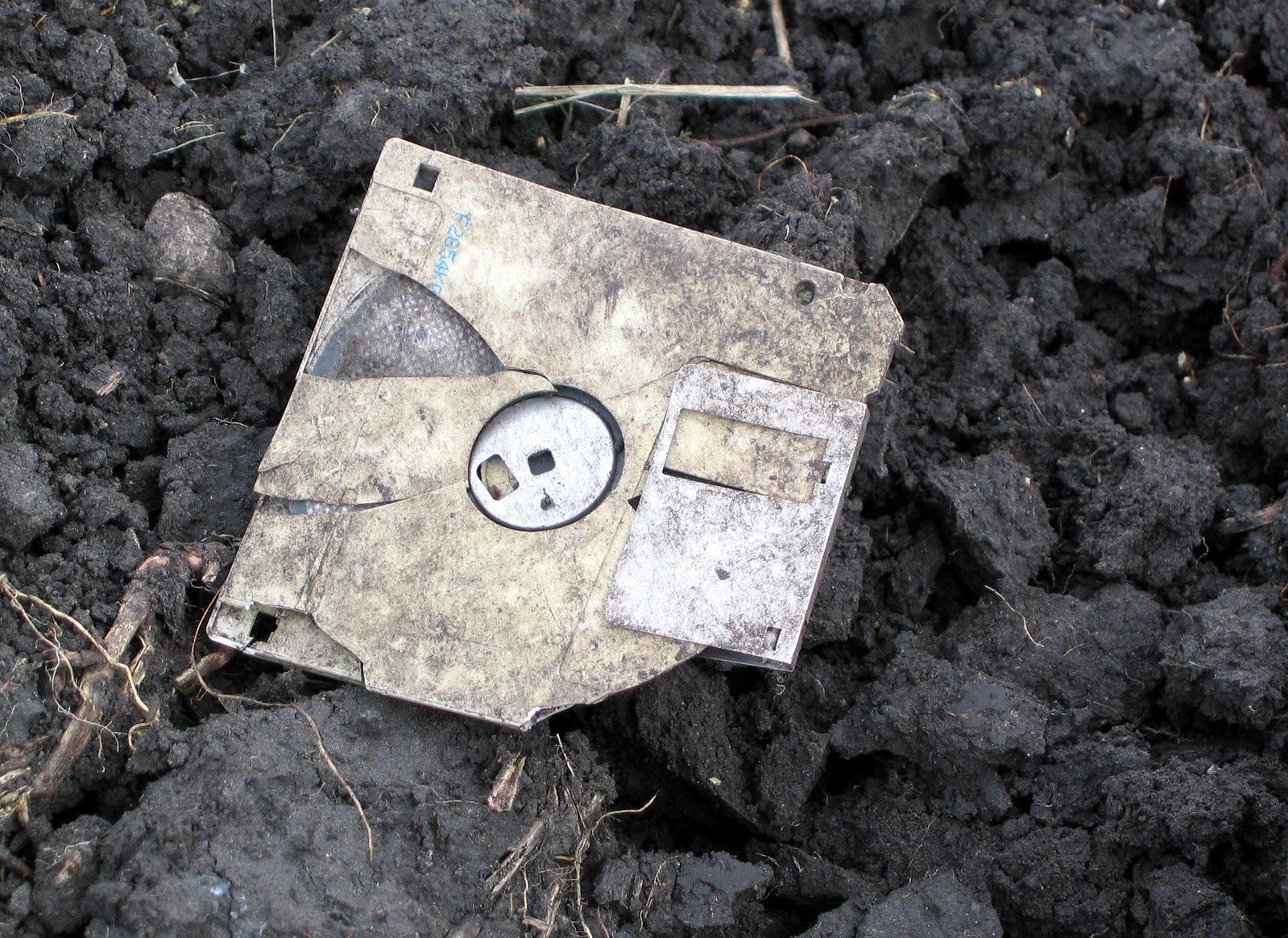
Chapter 18: Understanding Users and the Three Kinds of Computers: New, Slow and Broken; Originally here (slightly different)
Summary: "Understanding the user is the first step towards a practical response to misconceptions."
There's no accurate generalisation for every computer user. Some are savvy, many others aren't. Most are conditioned by marketing.
Getting past that conditioning is not usually possible with mere debate or logic. Conditioning is emotional and experiential, and if you disagree you're just missing the point. At least, that's how it goes trying to explain things.
Understanding the user is the first step towards a practical response to misconceptions. Many of us know that the difference between a "New" and "Broken" machine, is that something needs to be fixed (and that thing is often just the software installation or configuration.) The difference between a New machine and a slow one, is often also a matter of software installation or configuration.
The user has plenty of reasons to be paranoid -- instead of being granted access to their computer, they have companies like Microsoft and Apple as intermediaries. The big name tech brands are like the Church in the dark ages, obscuring their teachings in Latin and offering a proprietary (priest-driven) service to make things accessible to the congregation.
When people begin to learn how to do things for themselves, everything familiar is moved around and the cycle begins again. When you're being led, but you don't know how or why, a paranoid feeling is bound to result.
Proprietary software is a system of collective punishment -- people are taught not to mess with anything, because then it will "break" and have to be "repaired". Messing with things is generally alright -- it's your computer -- but since you're conditioned not to worry about any of that as long as it's "working", tampering with the sacred relics will bring down wrath and harsh consequence.
Don't install anything, or else -- don't remove anything, or else -- Its like it isn't your computer, it belongs to the software vendors. If it were yours, advice would centre around means of practical management, not "leaving it alone" so it won't "break".
There are two reasons that it matters not to break anything -- one is time. You shouldn't fiddle with production machines, that's true for any platform. But the other reason, is that proprietary software (and software that takes too many pages from proprietary design books) limits what can be fixed. And the constant dragging of people from one set of features to the next limits the effectiveness of education and familiarity. Users are the hostages of developers, and they panic like hostages and experience signs of Stockholm Syndrome like hostages:
"Don't touch that! You don't know what it'll do!"
"But it just-"
"NO! Please! Last time someone did that it never worked right again."
"Okay, okay. I'm closing the Run window, it's alright."
"It's probably too late, just don't touch it, okay?"
If schools were actually teaching technology instead of having corporations spoon-feed it to them, users would not be this hysterical over the use of standard features. There is a serious lack of computer literacy, even among college graduates of working age and accomplished careers.
But until we solve the computer literacy problem (and I recommend we try) it is still a good thing to get people to use free software. That's the only way they will become familiar with it.
Lots of people have their own ideas about what friendly is. I've never required anything fancier or simpler than LXDE -- I mean required for other people. This is not an endorsement of LXDE, so much as a reality check for people that think you must have something that is more or less elaborate for the "average user." LXDE isn't the nicest desktop you can possibly find, nor is it the lightest or the simplest. What it is, is just fine. It's average. I've found it to be pretty reliable -- but it's just an example.
In homeless shelters, homes of people who are retired or on disability, on computers given to nieces and used in education, Debian Wheezy worked very well indeed. The secret to getting people to use it (in my experience) isn't about what you do after the computer is given to someone -- though I did offer free support -- it's about the psychological conditions under which the computer is donated.
Your experience may differ, and I'd like to hear from you about that. But I spent years looking for ideal ways to share free software, and this is my experience:
There are three kinds of computers -- New, Slow and Broken.
With notable exceptions, if someone has a Slow computer and you put GNU/Linux on it, it's now Broken. It doesn't matter if you changed a single option -- Breaking a computer is like dropping a teacup. You can glue it back together, but it will never be the same.
If you pick something up off the kitchen table and move it somewhere else in the room, you've now broken it -- and it will have to be replaced or repaired. But who trusts a repair? Time to get a new house... This is how good the marketing people are.
Yes, we know better. Yes, we can explain. It doesn't matter -- once you break it, the user themselves know for certain the computer will never be the same again. It's not bad enough to replace it with a New computer, but even if it's just an option you put right back afterwards -- now it's irreparably changed in some annoying way. Thank you, and get out.
Most people don't want an operating system installed on their computer. And to some of us this is obvious. But even if you take a Slow computer someone doesn't use anymore and doesn't care about, "Sure kid, have fun -- but if you break it, don't bother me with it. I've got no use for a broken computer. Just leave it there, thank you, and get out -- Darned kids, no respect for the work that goes into buying these things, they just want to break things and get new stuff."
Of course there are exceptions. I found an office machine that seemed to be on its last legs, showed them what it would be like after "fixing it" with a live CD, and walked them through the things it wouldn't be able to do after being "fixed." It had a wired network connection, it was mostly used for online tasks, It wasn't used for writing documents or printing. All they cared about was that it "worked" again. I installed Debian Wheezy and after using it they ran out and hugged me -- "It's SO MUCH FASTER!" So that won't usually happen, though it does sometimes.
Things aren't just Broken when you mess with them. The rule applies to machines that were already broken when you found them. If you mess with a computer that is already broken, "you'll only make it worse." Messing with a computer is how it breaks, broken computers and broken teacups are never the same again, if you mess with it further then you'll only make it worse -- why bother? Just "leave it alone" and buy a new one when you can.
The summary of this mindset is that doing almost anything with a computer will break it -- and fixing it will break it more. This is the mindset of a hostage, not an owner, and it is the result of years of conditioning that is unmitigated by a proper computer education. Teachers have problems like these, so it should be no surprise that their students also feel helpless. They are prime candidates for service contracts, insurance plans and extended warranties, and that's basically the idea.
Reality aside, in the psychology of the average computer user, even if they are really a lot smarter than this -- this mindset is as much about emotional manipulation as the intelligence of the average user (quite a few average users are really a lot smarter than this, and they deserve credit where credit is due) a reasonable conclusion is that you can't do much of anything to get past the mentality of the user. Not with their computers, that is.
The way I found to make "Slow" and "Broken" computers into New ones, simply involves a machine that is "New" (or like New) to the person receiving it.
Go to the person with a "Slow" or "Broken" computer, and find out if they have already replaced it with a New one. If they have, they are still trying to figure out what to do with it. After all, it will never be the same, so let it sit there. But it's too expensive to throw away!
You won't change their mind about whether it's fixable, but just for the sake of honesty, tell them that you fix Slow and Broken computers, and that you give them away to people who need one.
Fighting E-waste is good for the environment as well as people in conflict-mineral-related regions like the Congo -- so if they seem like the kind of person who cares about that, be sure to mention that this is likely to keep more toxins out of landfills for longer. Either way, you're helping people.
Some will have concerns about data -- you should learn how to securely wipe a drive so that you can tell them not to worry. In other situations, be ready to remove the drive on-site so that you can offer to leave that part with them "just to be sure." You will find other drives, and the computer you get without one might have nicer specs than the other one you take a drive from.
Tell them "There's a good chance I can fix this -- if I do, do you want it back?" If they say yes, and you make it clear what you're going to do -- you can give it back to them with GNU/Linux installed. More often, they prefer to get rid of it and never get it back. It's always going to be broken, they have a new one, etc.
Now with your New computer (by no means is anyone suggesting you say it's newer than it is-- it is now refurbished and offered as a "like new", but used machine) wait until you meet a person who has a Slow or Broken computer.
Offer to LOAN them your "Like New" machine.
"I have a perfectly good laptop/desktop, would you like to borrow or own it free of charge?"
"What?"
"I can loan it to you, and if you like it you can keep it."
"Why?"
"That's something I do -- I refurbish computers that I get for free, and give them away to people who need one. But you can just borrow it, if you want to try it. You can keep it if you like it."
Some of them will get a free, Like New computer. If they don't like it, you get it back and can refurbish it again.
Having tried the other ways, this is what I've found to be the most reliable way to spread GNU/Linux to everyday people. I'm not the first person to do it, but I tried sharing CDs and DVDs and USBs and offered to install, run Live, Dual boot, all of those.
The best media for distributing GNU/Linux is the computer itself. That's how people expect to get computers -- and anything else is "broken" and will never be the same -- too often, anyway.
Be sure that if you do this, you are able to provide a reasonable (for them, for you) level of support to the people you give machines to. If they take that thing into an office store, they're probably just going to tell them "it needs Windows installed. It's old, you probably want to buy a New one."
One option is to tell them that if they have serious problems with it, you'll let them know when a new one is available. Then they can "trade" it for another "Like new" one.
⬆
Licence:
Creative Commons CC0 1.0 (public domain)
