
The Cyber Show on Starmer and Software Freedom
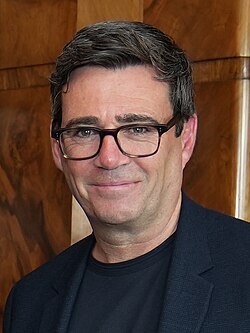
Born in Liverpool, our next (likely) leader may be this very familiar face from Manchester, who is connected to the politicians who listened to us and are now advancing defamation law reform (the Manchester connection is everywhere).
We voted for his predecessor 2 years ago and have since then received Legal Aid to assist our endeavour.
We look forward to working with these politicians towards fixing the broken laws, which have enriched the SLAPP industry at the expense of all the locals.
Defamation law is not a "cash cow" but a drain on our national economy. In the same way that patents obscure red tape overhead - they do not advance but impede innovation.
The Cyber Show's Andy has just explained why our departing national leader wasn't all bad [1], paraphrasing him as arguing that "tech should adapt to the needs of society" (not the other way around). Andy has already just published Part 10 of "Why I code" [2] - an excellent series about ethics and Software Freedom.
While Burnham, whose appointment is still subjected to obstacles, would be beneficial to Manchester and good for Mancunians, we will miss Starmer and remember him fondly. █
-
Tech should adapt to the needs of society
I did not like his simple legalistic authoritarianism. Digital ID is a ridiculous idea that will bring more problems, crime and injustice than it ever solves. But I can't help feeling genuinely sad. His unpopularity is a mystery. He's the first prime minister in my lifetime who hasn't crashed the economy, started a war or been at the center of some sordid scandal.
Many say that he failed to have any positive philosophy. We disagree here at The Cyber Show.
Perhaps his greatest display of character was just holding steady in the face of how bloody awful and bitchy British politics is. He was also one of the few qualified politicians in a game that is increasingly filled with chancers, frauds and wannabes. He did not "play at being" prime minister, like US figureheads, he was a real prime minister.
[...]
Now we have to start figuring out how to do that. A first step must be bringing the tech oligarchy right down to size and working with Europe for digital sovereignty based on Free Open Source Software.
-
Why I code (Part 10)
Moreover, technology exists because we allow it. No technology can exist outside a society, since the means necessary to maintain it are intrinsically social. In other words, if any technology is bad for society or exceeds the limits of its utility, it dies along with the will to sustain it as surely as bacteria die in a petri dish once they reach the limits and poison themselves. A healthy society is the substrate for any technology. The US technofascist creed, which desires to destroy society and democracy to "free technological power", is the tragic death cult of the drunk who stands on the roof and believes he can fly. Tyranny is a crisis dissolved by contempt. Even a decade ago people were in awe of technology. Today they do not disguise contempt for an almost comic-book litany of exploding rocket ships, imploding submarines, malfunctioning robots and insane, hallucinating "AI". As always, technological tyranny is premature and over-reaching. And so it dies. It's just such a damn tragedy what it takes down with it.
There's no reason to suppose the Internet is any different in this regard. It may turn out the Internet was simply a period of peak-connectivity, an interesting experiment that lasted a century and fell apart like all things. The "Dead Internet" may be more than a metaphor for necrosis by bots, but a foreboding of an actual irreversible engineering failure as the economics of inter-networking collapses. Like Benjamin Franklin put it;
"An Internet, if you keep it."
Image source: Andy Burnham