(Re)Published with permission from Mitchel Lewis, former Microsoft employee ("Is Microsoft a Monopoly?")
Summary: "Instead and since Microsoft’s anti-competitive behavior is so blatantly obvious, it is my opinion that discourse should focus on how and why they are still allowed to operate so flagrantly in this day and age."
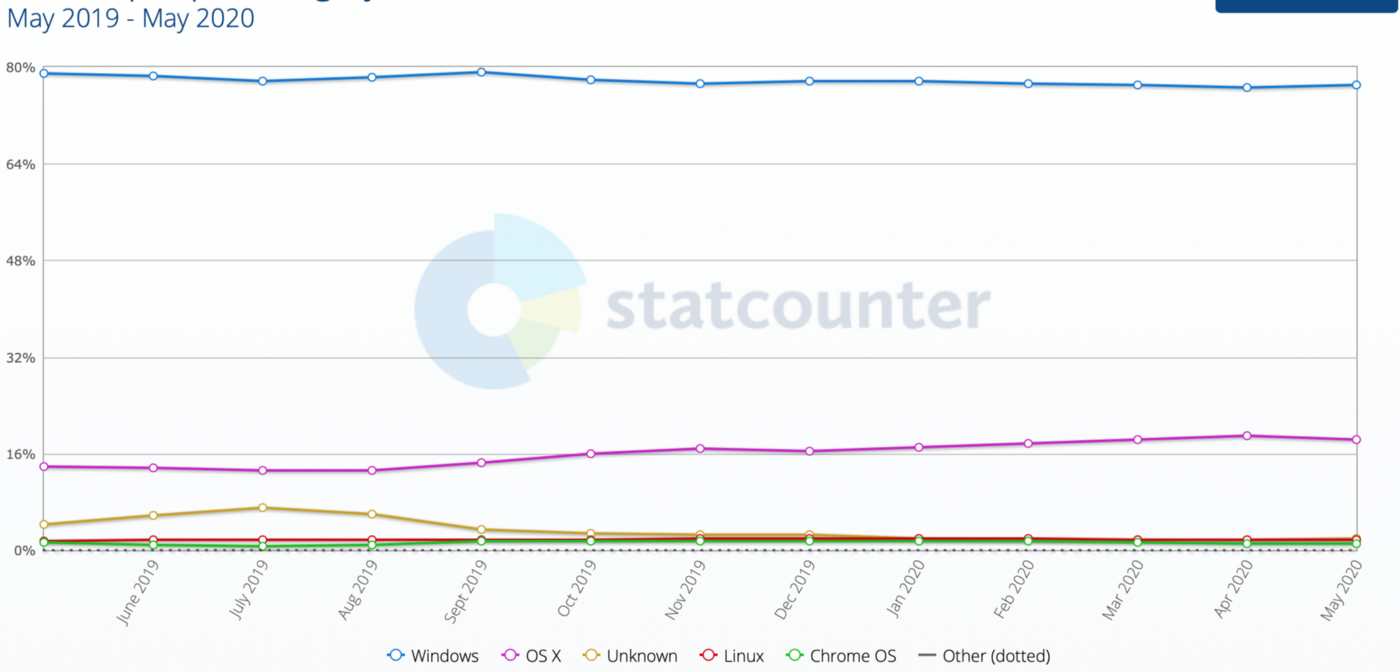
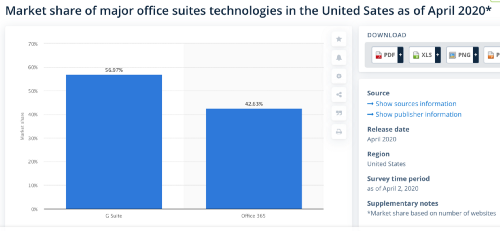
With new anti-trust charges looming for Google, references to Microsoft’s anti-competitive past are quite common in the news cycle at the moment. Although it is still debated endlessly, the question of whether or not Microsoft is still a monopoly isn’t a question of substance in my opinion. I say this not to be dismissive or rude, but simply due to the fact that Microsoft is most definitely a monopoly both from the perspective of their dominant market share in the OS (77%) and office software (42%) markets and from the legal perspective as evidenced by their litany of anti-trust violations and subsequent fines that they’ve incurred globally for being a bona fide monopoly. But not all monopolies are evil, let alone illegal.
Some monopolies are ethical and perfectly legal because they obtain their market share by virtue of the utility of their products, the quality of their engineering, and the level of efficiency that they can deliver all of this with; simply being the best if you will. For example, Google has an ethical monopoly on search, mobile OS, and productivity now because no one else does a better job for less. Another example is Apple which has an ethical monopoly in phone and high end hardware spaces by virtue of making the best devices sans their most recent keyboard and antenna debacles.
Other monopolies such as your dad’s Microsoft were evil because their products could not compete on a competitive plane with emerging vendors and open source projects alike and had to resort to anti-competitive, subversive, and illegal means to maintain relevance. Where they could not innovate and dominate naturally, Microsoft became notorious for inhibiting their competition from running on their platform or mimicking them until they have to take a comedic write-down when acquisition was not possible. Microsoft was so notorious for acting like a law firm with a software problem that Bill Gates is still seen by many in the open source community as a tycoon due to how he mistreated people and industry alike while at the helm of Microsoft despite extensive philanthropic ventures.
As such and rather than focusing on whether Microsoft is a monopoly, the question of whether or not Microsoft maintains an ethical monopoly or an anti-competitive monopoly is much more prudent and up for debate in my opinion. So, is Microsoft the anti-competitive type of monopoly that they have historically been or has it evolved into an ethical monopoly whose products naturally warrant their dominant presence in various markets?
At first glance, Microsoft looks like an entirely different company than it did in the 80s, 90s, and 2000s. They have Satya Nadella, a new super-woke CEO running the show now. They also have an authoritative cloud presence, especially in the office productivity market. They finally have the Surface as a hardware platform now. Microsoft is even a member of OIN while integrating Linux with Windows and is even writing more applications for Linux as we speak. While this is most definitely no longer your father’s Microsoft, it becomes evident upon further inspection that old habits are still dying hard there and that the systemic change purported by them may not be as substantial as they would like you to believe.
For example and Just as society advances at the rate of one funeral at a time, corporations tend to advance at the rate of one retirement at a time and we would have to see a dramatic shift throughout their ranks; especially their executives. Instead one can find the opposite of this happening when looking at Microsoft’s highest ranks. For example and even though Satya Nadella is their new CEO, he’s been with the company for 28 years. As part of Microsoft’s old guard, he was complicit in the behavior that Microsoft became notorious for and is by no means an injection of new insight and talent into the company.

But Nadella isn’t alone in this regard. With an average age of 51 and tenure of 20 years, Microsoft also depends on many of the same executives, managers, and employees that they counted on during their anti-trust days and Satya is in great company in this regard. On average, executives started at Microsoft in 1999 during the peak of their anti-trust trial with the US, clearly seeing no moral objection with their behavior at the time. Had they have spoken up about such ethical misgivings to Microsoft at the time, they most certainly would have been ran out of the company, if not the industry.
That said, keeping the same employees and execs around that maintained an evil monopoly doesn’t exactly favor the ethical monopoly argument. Certainly, their executives could have had a change of heart, but if the republican party has taught us nothing is that changes of heart become rare as we age. With an average age of 51 among its executives, their leadership isn’t exactly predisposed to being open-minded or receptive to change and it would be irrational to assume that all of them changed their moral framework and moved away from tactics that made them billions with little to no consequence. Usually, people have to lose everything in order for such behavioral changes to occur while being rewarded for such behavior obviously has the opposite effect.
Another notable hallmark of evil monopolies is that they eventually become guided almost exclusively by their legal team while their executives function mostly as their mouthpiece instead; a figurehead or puppet if you will. To no surprise, Nadella can often be found reading what is prepared for him by the same lawyers and PR people that Microsoft has always had, preparing for curtailed interviews well in advance while avoiding informal ones with the same fervor, and has so much plausible deniability baked into his role that he can’t even read his own email. All of which are consistent with a CEO being more of a figurehead than an actual decision maker or source of leadership.
Further and with the influence of corporate legal teams in mind, we would also have to see significant movement among the ranks of their internal and external council in order to justify the type of systemic change that Microsoft is purporting. But rather than changing their legal team from a crack team specializing in beating back anti-trust allegations around the world, Microsoft kept many of the same lawyers on their payroll that bailed them out of their anti-trust woes both domestically and abroad. They even promoted Brad Smith, the Jose Baez of anti-trust, to the president role of the company.
Meanwhile, Microsoft still continues to retain Bill Gates Sr.’s firm KL Gates firm which represents other wholesome companies such as Goldman Sachs, Halliburton, Blackwater, Bank of America, and Wells Fargo among others. That said, it simply doesn’t make sense to keep such people and firms around unless you’re behaving the same way that necessitated them in the first place.
On top of needing a new wave of non-figurehead executives, employees, and lawyers to justify the amount of change that Microsoft is purporting though, they would also need entirely new products as well. Despite what Microsoft’s creative financial reporting may have you believe, it is still dependent on the same old software offerings that it has always been dependent on; Windows, Office, and Server. Ironically, Microsoft hasn’t actually replaced the products that got them in trouble for having to shoehorn into position in the first place. Sure, they have cloud solutions now, but these are merely a new means to the same old Microsoft end and could not stand on their own without being attached to their same old legacy solutions.
In turn, these same products also exist as case studies for the market phenomenon known as
lock-in where products become so entrenched in an organization that they become too expensive to migrate to better solutions just as they always have. Functioning more like a glass ceiling, Windows and Office products masterfully entrench themselves throughout organizations despite objectively better and more cost-effective solutions existing under most circumstances.
Ironically, there are few if any objective measures that would predict Microsoft products to exist as clear front-runners in any major market. But rather than building better products, they have chosen to dope them up by optimizing them for lock-in so to prevent customers from leaving their platforms at the expense of utility. As cursory as this may seem, it should be called out that Microsoft even encourages their partners to deploy their products in a
sticky manner specifically for the purposes of further entrenching solutions and inflating switching costs and I’m that not saying anything that they haven’t said themselves.
Although engineering products for lock-in isn’t illegal as of yet, Microsoft is notorious among those who study IT finance and lock-in practices as it’s impossible to foster such a dynamic by accident. That said, having to resort to these tactics isn’t exactly a sign of maintaining an ethical monopoly. In fact, such tactics are anti-correlated with an ethical monopoly and no one can optimize products for lock-in and utility simultaneously because of this.
To no surprise, the same products also require the same partner network to prop them up and install them throughout industry. Since Microsoft products can’t run on merit and have to resort to lock-in tactics in many instances, Microsoft instead offers the greatest returns in the industry to ensure that their network of partner consultants give their products undue priority during the decision making process, creating a conflict of interest among IT professionals.
Since Microsoft products also tend to generate the greatest amount of ownership costs over the lifetime of their products, they are also the most profitable ecosystem for consultants to offer management and support solutions for. Although Microsoft only generates 150 billion or whatever a year in revenue, their products create a multi-trillion dollar maintenance and support burden spanning all of industry throughout the world which is eclipsed by the collective productivity loss incurred from using their products in the first place. In turn, this market is serviced primarily by Microsoft partners, underfunded and change averse sys admins, managed services providers and consultants, who often benefit from the job security, initial commission and residual income from long-term support, and management contracts spanning the product lifecycle with their clients and employers.
Besides losing margin to a partner network and generating an undue strain on industry as a whole amounting to trillions of dollars, another drawback to optimizing products for lock-in is that they don’t fare so well in free markets that favor quality and value that are beyond the influence of their partner network. You can’t just tell all of your employees to engineer products for lock-in that suck; engineers won’t do that. Instead, they have to be structured in a manner to artificially limit quality and foster lock-in while obtaining their best work from them; like an operational ruse, many engineers are blind to these objectives.
Because Microsoft can’t just turn this tendency off like a light or a feature, there are countless examples of their attempts at innovation floundering miserably in free markets as a result. To name a few though, Windows Phone, Health Band, retail stores, Mixer, and the looming failure of Hololens and Surface come to mind.

One last consequence of engineering a money machine in such a manner is that as products become more defective, consequently less desirable, and prone to lock-in they also become incredibly expensive to market than they would otherwise be. To no surprise, Microsoft spends more on marketing and sales than R&D by a rather large margin, $18.2 billion compared to $16.9 billion, reducing them to more of a marketing firm with a software problem when measured by their expenditures.
Another habit of evil monopolies is that they also tend to acquire new products rather than innovating internally. Try as they might, monopolies just don’t innovate well and they have to make constant acquisitions in order to grow; kind of like the borg. However, not all acquisitions can be winners and there will also be a steady stream of writedowns from failed acquisitions. While Microsoft has had many solid acquisitions, they also have a lot of questionable ones on their plate which is inline with this behavior. In fact, Microsoft’s dependence on acquisitions is why investors and media make such big deals out of Microsoft’s various write-downs over the years while giving them a pass on their lack of innovation as it’s hardly part of their business model.
In summary, Microsoft has indeed changed over the past few decades. But in a world where you can never step foot in the same river twice, even a stagnating company can make a completely rational claim towards change. When also considering that Microsoft still has many of the same executives, employees, lawyers, PR people, products, engineering practices, marketing over-dependence, and distribution channels in place that made them the ruthless money machine that they have become notorious for being though, it’s difficult to see how any of this has enabled them to move away from functioning as an anti-competitive monopoly to functioning as an ethical monopoly. Combined with their clear lack of innovation, consequent over-dependence on acquisitions and lock-in practices, and countless blunders in free markets, it becomes painfully obvious that Microsoft is still an anti-competitive monopoly to this day.
Instead and since Microsoft’s anti-competitive behavior is so blatantly obvious, it is my opinion that discourse should focus on how and why they are still allowed to operate so flagrantly in this day and age. One might suggest that if Microsoft were indeed an anti-competitive monopoly that we could depend on the SEC and DOJ to keep them in check. But countless monopolies and the lawlessness associated with them have sprung up under their watchful eye in other industries; wall street, big pharmaceuticals, big banks, big agriculture, and big energy to name a few. That said, suggesting regulatory competence outside of the realm of theatrics is just as laughable as suggesting that Microsoft isn’t a monopoly or that menial fines will curb anti-competitive behavior that results in hundreds of billions of dollars in annual revenue. But I digress and this is ultimately a discussion for another day.
⬆
