
What Richard Stallman Told Me About 'Secure' Boot in 2012
RMS said, "if the user doesn't control the keys, then it's a kind of shackle"
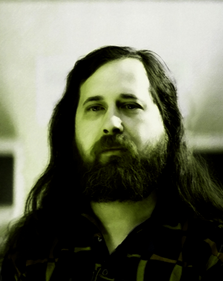
I'd like to quote what Dr. Stallman said to me over the telephone when 'Secure' Boot was "new", 13 years before the UEFI "9/11" (2025).
Dr. Richard Stallman: It's a disaster. Well, except that it's not secure boot that's a disaster, it's restricted boot. Those are not the same. When it's front of the control of the user, secure boot is a security feature. It allows the user to control what programs can run on a machine and thus prevent -- you might say -- unexpected malware from running. We have to distinguish the unexpected malware such as viruses from the expected malware such as Windows or Mac OS or Flash Player and so on, which are also malware; they have features that hurt the user but users know what they are installing. In any case, what secure boot does is that it causes the machine to only work with (?) programs that are signed with a certain key, your keys. And as long as the user controls which keys they are, then it's a security feature. However, it can be chained into a set of digital handcuffs when the user doesn't control the keys. And this [is] happening."We have to distinguish the unexpected malware such as viruses from the expected malware such as Windows or Mac OS..."Microsoft demands that ARM computers sold for Windows 8 be set up so that the user cannot change the keys; in other words, turn it into restricted boot. Now, this is not a security feature. This is abuse of the users. I think it ought to be illegal.
Further down:
The thing is, if the user doesn't control the keys, then it's a kind of shackle, and that would be true no matter what system it is. After all, why is GNU/Linux better than Windows? Not just 'cause it has a different name. The reason it's better is because it's freedom-respecting Free software that the users control. But if the machine has restricted boot and the users can't control the system, then it would be just as bad as Windows. So, if the machine will only run a particular version of GNU/Linux, that is a restriction feature. And I haven't heard anyone doing that yet with GNU/Linux, but that's what Red Hat and Ubuntu are proposing to do things -- somewhat like that -- for future PCs that are shipped for Windows. But it's not exactly that. And my reason is, the users will be able to change the keys. They will be able to boot their own modified version of the system of Fedora or Ubuntu if they want. So, what Fedora and Ubuntu were proposing doesn't go all the way there. They're proposing to do things to make it more convenient for users to install the standard version of those systems. But if things go as it has been announced, users will still be able to change the keys and boot their own versions. So, if all the restricted boot -- but it will be something that goes sort of half-way there -- it's somewhat distasteful.
And finally:
[...] Well, it's worse than that. It means basically that those devices, you have to throw them out if you want to escape to the free world. And this -- in the past -- we were able to install, to liberate a computer by installing Free software on it instead of its user-restricting operation system, and this of course was tremendously helpful to the spread of GNU/Linux because it meant that users could move to freedom. It would be much harder if they had to buy another computer to do so. So it's a very damaging thing that Microsoft is doing and so we need to look for every possible way to stop them or tweak what they're doing.
There is a lot more in there, including the original audio. █