
Bonum Certa Men Certa

When All Else Fails, They Use Patents Against Linux

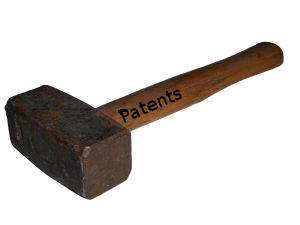
Mallet


Summary: Microsoft increases level of aggression, Google responds (although hypocritically), and Intellectual Monopoly (IP) gets called "The Biggest Legal Danger for Open Source"

Microsoft's gradual decline into the world's largest patent troll has been a long time in the making. Patent extortion is just the latest development in Microsoft's bullying behaviour. Before patents, it was biased studies (e.g. Windows Server vs Linux). This was coupled with vague illegality accusations against GNU/Linux, such as on the grounds of "copyright infringement". Microsoft used proxies for these attacks back then too, be it SCO or "experts" that try to make baseless accusations about the relationship between MINIX and Linux (all of which were denounced by the author of MINIX). Of course, if Microsoft had been a forward-thinking company, the resort to dirty tactics may never had happened. Microsoft had an early start to compete (or even collaborate) with Free software on merits and value alone. Instead they blew the time away because they did not take Linux seriously and they couldn't see above the enticement of profit and to be the monopoly in the market. Glyn Moody has posted a fantastic piece which nicely chronicles Microsoft's negative transformation into a FUD-spewing machine:


Things probably began to change with the infamous 1999 Mindcraft benchmarks, which Microsoft paid for. They seemed to show that Windows NT was faster than GNU/Linux as both a file and web server, although the fact that the tests were conducted in Microsoft's labs naturally caused people in the free software world to cry foul. In the end, the tests were re-run under fairer conditions, and they did indeed show that Microsoft's product was faster.

That was soon fixed – by running these tests and exposing weaknesses in the free software that was used, Microsoft had effectively submitted a rather important bug report. But the more interesting aspect was the fact that Microsoft had paid for the tests at all: you don't go to all the expense of proving you are better than someone unless you perceive them to be a threat. By publishing the results of the Mindcraft tests, Microsoft had effectively admitted officially that free software was a competitor – a big shift from its previous position.

Thereafter, Microsoft began exploring ways of undermining this increasingly worrisome upstart with a variety of FUD. Indeed, it went through so many different stories about why free software was bound to fail/couldn't be trusted/was no good that five years ago I felt compelled to write a “Brief History of Microsoft FUD” in an attempt to keep track.

Microsoft's approach included the “It's not very nice” insults – Ballmer's infamous “communism/cancer" comparisons; the “It's not very cheap” TCO studies; and culminated in the “It's not legal” argument. Actually, there were two phases to the latter. “It's not legal 1.0” was essentially SCO – and we all know how that fizzled out.

[...]

Judging by recent events, it's seems the dinosaurs are back with a vengeance. Here's Exhibit A, courtesy of Horacio Gutierrez, Microsoft's Corporate Vice President and Deputy General Counsel:
As you may have seen, Microsoft today filed legal actions against Barnes & Noble, Inc., Foxconn International Holdings Ltd., and Inventec Corporation in both the U.S. International Trade Commission and the U.S. District Court for the Western District of Washington. Today’s actions focus on the patent infringement by the Nook e-reader and the Nook Color tablet, both of which run the Android operating system.
He then goes on to make two interesting comments:
Together with the patents already asserted in the course of our litigation against Motorola, today’s actions bring to 25 the total number of Microsoft patents in litigation for infringement by Android smartphones, tablets and other devices. Microsoft is not a company that pursues litigation lightly. In fact, this is only our seventh proactive patent infringement suit in our 36-year history. But we simply cannot ignore infringement of this scope and scale.
So, by Gutierrez's own words, Microsoft does not pursue litigation “lightly”, and yet it has chosen to attack a number of companies that have in common only the fact that they are making and selling products running Android. Clearly there is something bigger going on here.

So Microsoft is seriously suing companies for allegedly infringing its patents on *selecting text* and a superimposed download bar? Give me a break; these have to be some of the most trivial patents that Microsoft has applied for, and to the USPTO's shame, been granted.

[...]

These are no great Einsteinian insights into the underlying fabric of space-time – or industrial applications therof; they are things that you or I would *instinctively* think of. No patent incentive was needed to bring these forth. The fact that Microsoft has been forced to use such risible patents shows that it simply wants to “persuade” companies through the potential inconvenience of a long, expensive trial, just enough to make paying some royalties slightly more attractive. This is intellectual monopoly bullying at its worst.

[...]

This latest trend to devise and deploy legal strategies against open source seems to me to represent an admission on Microsoft's part that it can no longer compete on technology. Instead, the dinosaurs have decided that it's time to play really dirty – and nothing is dirtier than enforcing bad monopolies using worse laws.


Dr. Moody rightly alleges that Microsoft's supply of ideas has run dry; consequently, the has-been corporation is using vague patent attacks instead. Groklaw made this same argument some days ago, also in relation to the "antitrust" whining against Google. Whether it is on the grounds of patent, copyright, or antitrust violations, Microsoft's first attacks on Google/Linux have been consistently via proxies. Only after failing the proxy strategy will Microsoft itself enter the scene and perform the same tactics directly. This crooked methods should provide more than enough incentive for Google to take a clear and firm stance for software patent abolishment.

Unfortunately, it seems that Google suffers the same conflicting dual-nature as Red Hat does (cite: red hat article). Earlier today, we wrote about Google's decision to help organise and translate patents. Now, according to this new item from Slashdot, "Google Reaffirms Stance Against Software Patents". It states that "Google has again publicly affirmed its stance against software patents during an announcement over a potential defensive acquisition. These days, when Microsoft, Apple, and others are abusing software patents, it's nice to see one large company calling them junk."

Here is what the Official Google Blog has to say on this issue:

It's for these reasons that Google has long argued in favor of real patent reform, which we believe will benefit users and the U.S. economy as a whole.

[...]

But as things stand today, one of a company’s best defenses against this kind of litigation is (ironically) to have a formidable patent portfolio, as this helps maintain your freedom to develop new products and services. Google is a relatively young company, and although we have a growing number of patents, many of our competitors have larger portfolios given their longer histories.


There was quick and early reaction to Google's hypocrisy:

#sadness is… a world where those (who claim to be) against software patents acquire more of them


Google seems to acknowledge the conflict of interests created by its illogical position but do nothing to address it. Instead, they make refuse to make the necessary short-term progressive decisions that would drive change for the better. They excuse this unwillingness to change by alluding that change will happen in the long-term. This is the same two-dimensional thinking that creating the dying, hulking bully that Microsoft is today.

We have written about this subject numerous times before [1, 2, 3] and have compared Google's approach to that of the aforementioned Red Hat. Companies like these are still treating ideas like physical property and/or assets that can be passed around like shares, increasing the barriers around competition along the way.

Perhaps it is just the patent lawyers who are pushing this backwards strategy on to the corporate cultures of these respective companies; it is difficult to know for sure. What we do know, however, is that while Google claims to be against software patents it is also trying to buy about 6,000. It seems that Google takes a page from the Stephen Harper book of blatant contradictions. From the news:

Internet giant Google has revealed that in a bid to steer clear of the explosion in patent litigation lately, it has made a “stalking horse” bid for Nortel’s patent portfolio in the company’s bankruptcy auction.

The internet giant is believed to be bidding US$900m for some 6,000 valuable patents.


What's sad is that Google's purchase is nearly as bad as what Microsoft is doing with CPTN and Novell patents (cite) and other patent-hoarding operations. Microsoft's tactics however happen to predatory target Linux, and really all Free software in general. A real "Linux company", which is what Google or Red Hat position themselves to be, should campaign strongly to abolish the software patents they vilify and claim to be antithetical to.

On a similar subject, Brian Proffitt is currently criticizing another type of thought monopoly, calling it potentially "The Biggest Legal Danger for Open Source". To quote his piece:

"FUD is the obvious intention of those who have instigated the various legal troubles on open source practitioners. Fear specifically: ramp it up to intimidation, and you've got a potential licensing revenue channel on your hands.

"Such troubles, from the scores of software patents that are used to "protect" intellectual property, are obvious.

"But no less troublesome, I believe, is the issue of copyright and copyright assignments.

"Lately, commercial vendors in open source space have caught flak for the nature of the copyright assignments used when developers contribute code to a project the vendor manages.

"Copyright assignments basically work like this: I, a hypothetical developer, create some semi-brilliant code and want to contribute it to Project X, which is overseen and used by Company X. Company X, recognizing the semi-brilliance of my code, wants to use it in their latest distribution, so they ask me to sign away the copyrights of my code over to them. This is so that when they release my code as part of the greater whole distribution, they can have full legal control over the code--even though they will still work with me and give me credit.

"Under most circumstances, this seems rather fair. After all, I want my code to be in Distro X, and it makes sense that Company X doesn't want the nightmare of working with a bazillion different copyrights.

"But sometimes copyright assignment can be confusingly Machievllian, even in open source land."

Bear this in mind when talking about Canonical and SCO (which is a former contributor to Linux). There is no basis for comparison though, because Proffitt's concern assumes ill-intentions or even malice from within the developers' base of GNU/Linux. That is why at Techrights we consider patents -- not copyright assignment -- to be "The Biggest Legal Danger for Open Source". Whereas copyright is about exact implementation and distribution of copies, patents are a lot more vague and they can be granted without taking prior art into consideration. All that is needed is just prior patents.

Comments

Recent Techrights' Posts

IBM: We Pay You to be Obedient or Deny You What You're Entitled to If You Don't Act Obediently
Good luck starting legal battles with a company that has almost as many lawyers (including aggressive patent lawyers) as it has geeks
Russian "Hybrid Attacks" Are Typically Microsoft TCO and/or Windows TCO (Total Cost of Ownership)
Information-related warfare relies a lot on computer systems
It Seems Like IBM is Firing 'Everybody' (Anywhere, Any Age, No Matter What Team)
Healthy companies would sack IBM's management (sacked by Board, bylaws etc.) but IBM is a sick company
Latest Stallman Talk (Event in Argentina) Published
Less than a day ago they released his talk
LLM Slop Becoming Rarer
Today we've found no LLM slop in our RSS feeds regarding "Linux"
 
Links 14/12/2025: Tensions in Asia, US Making Deals With Belarus
Links for the day
A Utopian and Very Dumb Vision of Technology, Based on Accounting Fraud
the "industry" has become insane and a lot of "the media" is going along with it
Links 14/12/2025: "The Slop of Things to Come", Goldman Sachs Nervous About Slop Bubble
Links for the day
Over at Tux Machines...
GNU/Linux news for the past day
IRC Proceedings: Saturday, December 13, 2025
IRC logs for Saturday, December 13, 2025
Google News is Google Noise
Google News is really hopeless, even on weekends
Links 13/12/2025: Jimmy Lai and Media Freedom on Trial, "OpenAI Researcher Quits, Saying Company Hiding the Truth"
Links for the day
Gemini Links 13/12/2025: Extensive Catchup With Gopherholes
Links for the day
Deliberate Lies or Glaring Distortions
Calling Torvalds anything "Soviet" or "Russian" would overlook the fact he comes from Finland and has Swedish roots
Canonical and Ubuntu: Working for Microsoft, Promoting Proprietary Surveillance (Dis)Services
Canonical started with a rich and overambitious Debian Developer. He wanted to become richer.
EPO People Power - Part XI - The Media in Europe is Ill and Complicit in Ills
We must all recognise that there's a problem here
Running With Technology
At least they always run Linux (all of them, since 2015)
Dealing With "Tech Cults"
If you think you identified a "Tech Cult", walk away
GAFAM is a Financial Problem and Sovereignty Risk, a Policy-Level (National Level) Boycott is Needed
Europe has plenty of skilled computer engineers
2026 Could Very Well be Last Year of XBox, Microsoft Dropped the Ball
It would be shocking is XBox can stage any kind of comeback
Links 13/12/2025: Social Control Media Bans and "Could Finland be Hiding a Blue Zone?"
Links for the day
Expecting Mass Layoffs, More Microsoft Workers Join Unions
they see tough times ahead
Over at Tux Machines...
GNU/Linux news for the past day
IRC Proceedings: Friday, December 12, 2025
IRC logs for Friday, December 12, 2025
Links 12/12/2025: GAFAM Now Trying to Settle With Remaining News Sites It Plagiarised, "NATO's Rutte Says Alliance Is 'Russia's Next Target'"
Links for the day
Gemini Links 12/12/2025: Bad Joke, Western Union Blues, and More
Links for the day
Life Began at 40
This is what I wanted to do all along
To Linus Torvalds, the Microsoft Linux Foundation is Increasingly a Liability and Risk to the Brand
If Torvalds is no longer in control or "in charge", then somebody else is
EPO People Power - Part X - Together, We Can Fix the EPO
every call for action matters
IBM Layoffs in Europe as Well
IBM is a collapsing, dying old brand
EPO People Power - Part IX - Insiders Say the EPO's Chief Propagandist Effectively Ousted (on Fake 'Sick Leave') Because of Reporting by Techrights
So the EPO is in effect rewarding a cocaine addict
Litigation Transparency Until 2030 or 2031
The ultimate goal is to 1) improve the British legal system and 2) raise awareness of how this system works
Links 12/12/2025: Thunderbird Adds Proprietary Plug, "Catch-22 of Canadian Digital Sovereignty" Explained by Michael Geist (About GAFAM/US)
Links for the day
Developing Some New Software for the Sites
Sites that are static are in more control over their future and present direction
Julian Assange on Fake Activists in Silicon Valley
"In a modern economy it is impossible to seal oneself off from injustice."
― Julian Assange
EPO People Power - Part VIII - The Chipmunk on Cocaine, Now Deleting Videos
video has been removed
What If the Economy Isn't "Down" But Mostly Diverted? (While "AI" Fills a Gap for Capital That No Longer Exists in Tech)
"AI" is an "Arms Race", because they need to be bailed out by taxpayers' money
Techrights Site Search Was a Success After All
A few hiccups dealt with, ironed out
Valve's SteamOS, Microsoft Canonical's Ubuntu, and Other Platforms That Only Leverage Free Software (But Won't Protect It)
Ubuntu "took off" not because it was very good or very easy. Ubuntu "took off" because of ShipIt, i.e. because of a multi-millionaire subsidising its mass distribution (at a personal cost).
The Free Software Foundation (FSF) Paid Respect to Its Founder This Year, Now It Wants You to Join
We're glad to see the FSF paying respect to its founder in its Web site
2026 Guaranteed to Give Us Compromised Media Funded by "AI" Boosters to Promote "AI" and Sometimes be Composed by "AI" (Chatbots)
follow the money of the Ponzi scheme
Under IBM, Things Culminate at "AI-Equipped Customer Experience Transformation" at Red Hat
Whatever that even means
Andy Farnell and Helen Plews Now at the Wheel in Cybershow
Cybershow (Cyber|Show) has very good blog posts and episodes
Microsoft Trims More Jobs
The worst layoff year in 20 years, by the numbers
EPO People Power - Part VII - The Corporate Media and the Reference Sites (e.g. Wikipedia) Are Already Compromised and Complicit
Looking back at the whole thing, it's clear to me that Europe does not really have free press
EPO People Power - Part VI - Criticism Not Permitted, Media Subjected to Contempt by Cocaine Addicts Who Manage the Press for the EPO
Why won't any large publisher in Europe cover this? What does that say about the state of journalism in Europe?
"Smart" or "Intelligent" Agents and "Vibe Coding" Deletes Everything You Have
A high price to pay, no?
New Paper Shows That EPO "Growth" is Dictated From Above, Not Earned (More Monopolies Granted by Breaking Rules, Laws, Conventions)
"Targets for 2026 are currently being handed down to individuals."
EPO People Power - Part V - The European Media is Practically Dead When It Comes to Covering European Patent Office (EPO) Corruption
That sort of sums up where European media/press stands
Datacentre and Server Maintenance Next Week
The last time we rebooted into the latest stable kernel was 96 days ago
Afraid of Words, Not Afraid of Actions
Those corporations want us to bicker over words, not their actions
Over at Tux Machines...
GNU/Linux news for the past day
IRC Proceedings: Thursday, December 11, 2025
IRC logs for Thursday, December 11, 2025
IBM Workers Still Blast IBM Management for Firing Loads of Workers While Overpaying to Buy Useless Companies
IBM's CEO is killing the cow
LLM Slop About Linux Still Seems Scarce
LLMs aren't dead, but metrics published online say that their usage is fast declining
Links 12/12/2025: Oracle Shares Collapse After Slop Bubble Inflated (Circular Funding/Financing One's Own 'Clients'), "Trials by Jury" in UK Considered
Links for the day
Gemini Links 12/12/2025: 'Kinetic Energy' and Browsing Geminispace With a GUI, TUI, or CLI Client
Links for the day