
EditorsAbout the SiteComes vs. MicrosoftUsing This Web SiteSite ArchivesCredibility IndexOOXMLOpenDocumentPatentsNovellNews DigestSite NewsRSS

01.04.10

Judge Randall Rader Redefines “Patent Troll”

Posted in Courtroom, Europe, IBM, Law, Microsoft at 6:18 am by Dr. Roy Schestowitz

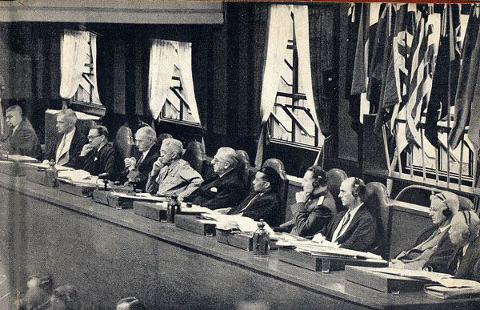
IMTFE judges

Summary: Rader defends patent trolls by extending their scope of definition to Microsoft and IBM

A few days ago we discussed the term "patent troll", which the trolls are hoping to redefine and thus escape. A leading story in the intellectual monopoly meta-industry would be these words[PDF] from Rader. According to one article:

He also said that the pejorative but popular term, “patent troll,” which is often used to describe entities who own patents solely for the purpose of asserting them, is “terminology of the Skeptisaur.” “Almost every IP owner has patents it doesn’t practice,” said Rader. “That term would also cast away universities and research institutions, who are some of our most important contributors.”

Instead, Rader defined a troll as “anyone – from IBM and Microsoft down to the smallest patent owner – who asserts a patent far beyond its value.”

The answer to this problem, said Rader, is to find a way of properly valuing IP early in the litigation process, so that the value of a particular patent cannot be too grossly inflated. “Maybe we can short circuit the troll problem by assigning proper value to patents,” said the Judge.

The above was found by the president of FFII, who also shares the following post on “how to get Software Patents in the UK patent office.”

This law firm takes pride in finding loopholes to create harmful monopolies:

It is clear that patents offer greater protection over copyright and those computer programs which possess technical character should be protected as such rather than relying merely on copyright protection.

Copyright is sufficient, say programmers. Software patents are not formally legal in the UK, bar the Symbian case.

Share this post: These icons link to social bookmarking sites where readers can share and discover new web pages.
  • Digg
  • del.icio.us
  • Reddit
  • co.mments
  • DZone
  • email
  • Google Bookmarks
  • LinkedIn
  • NewsVine
  • Print
  • Technorati
  • TwitThis
  • Facebook

If you liked this post, consider subscribing to the RSS feed or join us now at the IRC channels.

Pages that cross-reference this one

10 Comments

  1. Jose_X said,

    January 4, 2010 at 6:53 am

    Gravatar

    It’s not really that copyrights are sufficient so that “patent protections aren’t needed”, as it is that patents can be very disruptive and simply put control out of the hands of those trying to advance the industry and society.

    Patents are too broad; they have scope over many inventions which simply resemble the patent author’s invention like the body resembles its shadow. Patents are too biased in favor of wealthy competitors; they are not automatic and are too expensive to take out and maintain. They are too stifling; they grant an absolute monopoly and for too long of a period of time (this is especially true for intangible creations and in the Internet collaboration/instant sharing era). They don’t recognize independent inventions; hence, they are quite unfair and disruptive to honest hard-working individual inventors and by extension to society (since honest inventors — who are as capable as dishonest inventors if not more — are much more likely to participate within society under fair terms).

    The result of all of this is that they clearly damage society and innovation. But then again their point is to allow some (trolls) to leeching off innovation, to allow others (titan companies) to control innovation, and/or to allow still others (lawyers) to make lots of money supporting them.

    [A recent rebuttal covering the above in more detail is in the comments section of http://www.againstmonopoly.org/index.php?limit=10&chunk=0&perm=593056000000002130 ]

    Roy Schestowitz Reply:

    Copyrights are “cheap”. You can earn them as soon as you code. Patents, on the other hands, are unfair barriers that only the rich can afford.

    your_friend Reply:

    Patents are a form of tax farming, a backdoor private tax. Governments create monopolies under the assumption that it will be easier to extract taxes from a small number of easy to control companies that are able to price gouge everyone else. At their best, as in the case of the early US, governments will claim they grant temporary monopolies for the public good, the advancement of the art or some other noble cause that outweighs odious exclusion and market interference. Regardless of justification, price gouging by the owner is the intended result.

    Patents on ideas are the most odious form of exclusion governments can make. It would be more honest and practical for government to grant outright manufacturing monopolies, as Kings and Communists once did, than it is for them to grant monopolies on concepts that mutually exclude all from doing anything. The US system has stagnated one of the richest economies in the world to the point where it seems practical to have all manufacturing done by Communist China.

    Roy Schestowitz Reply:

    Things will be getting more complicated if the patent system keeps retarding local production. At the moment, the debt keeps growing.

    http://www.globalresearch.ca/index.php?context=va&aid=16749

    Jose_X Reply:

    >> to allow others (titan companies) to control innovation

    What I meant was “to throttle (slow down) innovation”

  2. Jose_X said,

    January 4, 2010 at 7:02 am

    Gravatar

    The judge appears to be trying to improve upon a broken system.

    Here is a lawyer (Neil Schulman) that is gung-ho for creating as many types of ownerships as one can contrive. http://www.againstmonopoly.org/index.php?limit=10&chunk=0&perm=593056000000002112

    The reply form Stephan Kinsella:

    >> Your mistake is in assuming that any “thing” can be owned. There are an infinite number of “things” out there–the human mind can conceptually understand the world in any number of ways. My love for my poodle “exists”. The fact-that-the-earth-rotated-today exists. My ability-to-jog exists. Poems exist. Crime exists. There “are” facts. I “have” memories. Perfume scents “exist.” Physics equations and mathematical algorithms “exist.” The method of long division is a “thing”. It is obviously ludicrous to assert that just because I can define or name or conceptualize a “thing” that it does, or even can, have an owner. We do not even get to the question of “who owns that thing?” unless the thing is an ownable thing. Not all things are ownable things. What is ownable? Only scarce resources. Information is not a scarce resource. You and I can both use the transistor-idea at the same time.

    Jose_X Reply:

    The judge appears to be trying to improve upon a broken system.. without first fixing the broken axioms.

    Roy Schestowitz Reply:

    All of our output — whether we like it or not — is just a combination of inputs. In other words, we put together things that we learn to make up “new” things. If we claim “ownership” of our “output”, who “owns” the “inputs”? Should all “inputs” carry a fee and/or a penalty? Does this transfer of imaginary wealth (liabilities) advance research in any way? Or is it an unnecessary inconvenience?

  3. Yuhong Bao said,

    January 4, 2010 at 11:22 am

    Gravatar

    In fact, it was exactly about the definition of the word “patent troll” that caused MS to be charged for misconduct in the MS/i4i case.

    Roy Schestowitz Reply:

    Not quite.

    ‘The judge cited a particular incident in which a Microsoft lawyer compared plaintiff i4i, Inc. to banks that sought bailout money from the federal government under the Troubled Asset Relief Program.’

    ‘”He further persisted in improperly trying to equate i4i’s infringement case with the current national banking crisis implying that i4i was a banker seeking a ‘bailout’,” Davis said.’

    http://www.informationweek.com/news/software/enterpriseapps/showArticle.jhtml?articleID=219400044

    It’s a different analogy.

What Else is New


  1. Links - Anti-Trust Roundups - Yahoo, Nokia, Barns and Nobel


  2. Links - MSNokia Passes Blame, Bill Gates pushes GMOs, Open Access news


  3. Links 7/2/2012: Firefox 11 Enters Beta, Canonical Disappoints KDE

    Links for the day


  4. IRC Proceedings: February 6th, 2012

    IRC logs for February 6th, 2012


  5. IRC Proceedings: February 5th, 2012

    IRC logs for February 5th, 2012


  6. Links 6/2/2012: PCLinuxOS 2012.02 and Mint KDE Reviews

    Links for the day


  7. Bill Gates Indoctrinates Youth in the United States and India, Critics Speak Out

    Backlash against the Gates Crusade to brainwash the young minds all around the world


  8. Bill Gates Uses Symbolic 'Donation' to Force Taxpayers to Pay Microsoft (of Which He Holds Shares)

    The Gates Foundation goes lobbying for Microsoft again, this time in Vietnam


  9. Monopoly as Innovation?

    Challenging the old misconception that patents are beneficial to anything but few multinationals and their patent lawyers


  10. Links 5/2/2012: Lenovo in India, Netrunner 4.1 is Out

    Links for the day


  11. IRC Proceedings: February 4th, 2012

    IRC logs for February 4th, 2012


  12. OpenStack, Microsoft, Junk Patents, Microsoft Copyrights, and Oracle Copyrights

    Another look at the OpenStack situation, why Microsoft should not be allowed to enter, and more about patent and copyright complications


  13. Apple, Which Started Patent Wars, Gets What It Deserves

    Apple products get banned (for the time being) after Apple decided to attack Linux-supporting competitors and then received some blowback


  14. Unitary Patent and the Emergence of More Junk Patents

    The rise of the junk patents and what we are taught about them by the news, including some news about the unitary patent in Europe


  15. Backlash Against Bill Gates' Lobbying for Patented Life

    GMO, a robbery of the right of reproduction (and a potential health hazard), is promoted by Bill Gates for profit, whereupon critics strike back


  16. IRC Proceedings: February 3rd, 2012

    IRC logs for February 3rd, 2012


  17. Links 4/2/2012: Ubuntu 12.04 Alpha 2 Preview, ACTA Backlash in Europe

    Links for the day


  18. A Glimpse at Executives Who Left the Sinking Novell Ship

    A roundup of news about former Novell staff and where that staff is moving these days


  19. Novell Makes New Software for Microsoft Windows and Office

    PR spin from Novell and money-grabbing moves that promote proprietary software rather than Free/Open Source software


  20. Links 3/2/2012: BT Vision Goes for Linux, Linux 3.3 With Android

    Links for the day


  21. Debt in Attachmate

    The company that bought Novell has a poor outlook, financial issues, and little signs of expansion/renaissance


  22. Longtime SUSE Executive Holger Dyroff Moves on, SUSE in a Bad State

    Key people continue to leave SUSE and the distribution is left without a compelling sales pitch


  23. Groklaw Update on Android Patent Cases and Response to FUD From Microsoft Lobbyists

    A few updates of greater importance where the Linux situation is discussed in the context of Android and Novell


  24. IRC Proceedings: February 2nd, 2012

    IRC logs for February 2nd, 2012


  25. Links 2/2/2012: DEFT Linux 7, Mozilla Firefox 10

    Links for the day


  26. IRC Proceedings: February 1st, 2012

    IRC logs for February 1st, 2012


  27. IRC Proceedings: January 31st, 2012

    IRC logs for January 31st, 2012


  28. IRC Proceedings: January 30th, 2012

    IRC logs for January 30th, 2012


  29. Bill Gates is Hijacking Open Source While Attacking It Using Lobbyists, Patents, and Patent Trolls

    Response to reputation laundering from Wired Magazine, the latest nonsense from Microsoft's lobbyist Florian Müller, an update on Microsoft's trolling against Android, and a little more of Apple's


  30. The Gates Foundation is Still Hijacking the Voice of the Poor and Effectively Runs Paid Advertisements Inside 'News'

    Money still the vehicle by which opinions get heard, so Bill Gates exploits this for fame, power, and profit


RSS 64x64RSS Feed: subscribe to the RSS feed for regular updates

Home iconSite Wiki: You can improve this site by helping the extension of the site's content

Chat iconIRC Channel: Come and chat with us in real time

Recent Posts