
AS we pointed out over the weekend [1, 2], the SFLC and FSF are in alignment with Richard Stallman's views on Mono and so are many others. But Bradley Kuhn has just made it more official with a long essay at the SFLC's Web site. It's a recommended read.
In an essay last Friday entitled Why free software shouldn't depend on Mono or C#, RMS argued a key point that I agree with: the software freedom community should minimize its use of programming language infrastructure that comes primarily from anti-software-freedom companies, notwithstanding FaiF (Free as in Freedom) implementations. I've been thinking about an extension of that argument: that language infrastructure created in a community process is likely more resilient against attacks from proprietary software companies.
I think it is interesting that he thinks that it is the “‘best technology’ Linux camp” that is the camp that offers the greatest threat to Microsoft. I can understand why some may think that this is true since this camp is creating flashy and very useful products and features that increase the appeal of Linux. However, mono is not the only tool that the “‘best technology’ Linux camp” has at its disposal. Many view the use of the Qt toolkit as a better alternative, and one that does not have the risk associated with mono. Furthermore, I do not agree with the thought that “‘best technology’ Linux camp” is the one that Microsoft feels most threatened by. I think Microsoft is only threatened by the combination of both camps.
I view mono as a distraction for FOSS developers. Yes, there are some practical advantages in its use, but there are a lot of questions surrounding it. It has the potential of dividing the two mayor camps of Linux contributors. It will be interesting to see what comes out of this controversy.
If Microsoft is threatening patents against .NET, it would seem to me that the Novell/Microsoft relationship didn’t really work out all that well. And now Microsoft is back to their old tricks. And what should the Linux and open source community do about this? Should another deal with Microsoft be made? Is the seamless communication between Linux and Windows worth making a deal with a partner that is only going to turn around and stab you in the back again and again and again?
Although Stallman frequently speaks about the dangers of software patents on open-source, trust for Microsoft has run particularly thin recently because of the company's legal attack on TomTom over a FAT patent dispute.
Stallman urged the community to instead distribute and recommend non-C# applications whenever possible to avoid Redmond lawyers from being able to disable major OS functions on a whim.
The Ubuntu Technical Board has been asked for a position statement on the use of C#, specifically the Mono implementation, by applications in Ubuntu.
These applications, as well as the Mono stack, were proposed for inclusion like any other application and underwent the same review process that all new applications and platforms undergo before being accepted into the archive.
With specific regard to the default installed application set, applications have been reviewed and compared against each other on merit and features. These often take place during the Ubuntu Developer Summits, most recently over the default media player.
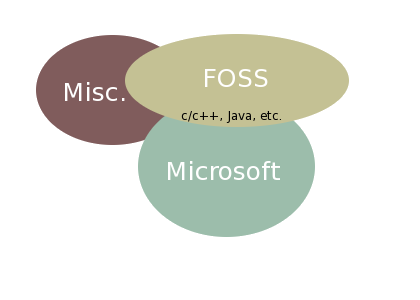
What Microsoft has
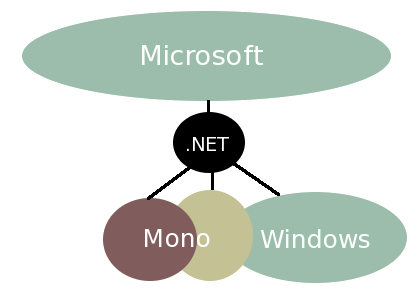
What Microsoft wants
Comments
max stirner
2009-07-01 07:16:36
Roy Schestowitz
2009-07-01 10:19:38
_Mutex_
2009-07-01 01:00:32
I know Roy you do not like to let facts get in the way of your case, and that you will not tolerate anyone making reasoned arguments to you that are against your preconceived biases.
Thats why you will not telerate anyone with a valid counter argument to enter into a debate on the subject with you or anyone in your IRC cult.
It's sad, that if you surround yourself with "yes" people you will (and have) gotten a very biased world view.
It is clear you have such a narrow view, and your refusal to allow any reasonable debate on any subject shows everyone how scared you are of having your cult see you for what you really are.
What everyone else see's you as. It's beyond most sane people to understand how you can be so bitter and hatefull against a business or a company. It's very pathological.
Im not trying to make it a personal attack, just pointing out what most people perceive you to be.
vexorian
2009-07-01 02:45:46
Did you read the Mono position statement? It is a ridiculous piece of BS.
It is non-sense to prefer ubuntu, as it is clear Canonical doesn't give a damn or is even pro-Mono in these regards, the "statement" you just linked is something I see as my definite sign to move to another distro.
This sucks as I really like ubuntu, and getting used to other distro's quirks might be annoying, I am wishing for someone to make a remix without this absurd Mono in the default that I could actually advertize to people and friends without being ashamed of advertizing a FOSS alternative to MS software that heavily relies on MS tech and patents.
I see this position statement as a rather clear sign to jump off the ubuntu boat, it is absolutely ridiculous. If only it did.
In other words, they are freaking WAITING for MS to begin suing which is actually the most ridiculous strategy ever. It shows clear lack of vision and responsibility from part of the ubuntu project. This makes me feel extremely uneasy to think that ubuntu's future is in the hands of such irresponsible people.
PJ at Groklaw the other day implied that Canonical probably does not care as MS is likely to sue users and not vendors. Probably that's the reason red hat has done so much to avoid Mono recently as they actually are responsible for whatever lawsuit their users suffer. Canonical's philosophy is now noticeably "screw users, as long as our asses are fine" . So, when the patent attacks come, they'll just stop shipping Mono, and pretend it is all fine while companies using ubuntu get sued terribly, that's fine and dandy.
I believe in Fairies as well, lest ignore MS' freaking patent claims, the damn exclusive patent deal for Mono they have with Novell.
Were these guys living under a rock since 2006?
The most ridiculous of the whole statement is that their logic is that "they think" Mono is ok patent-wise and completely ignore and disregard the remaining complaints against Mono which are not based on legal issues or fear but because of how terrible of an idea it is to make the default setup depend on MS created, patented and dependent technology. Not to mention the technological downsides of Mono, all very important issues that they are simply ignoring. For them just thinking that Mono is not a patent threat makes it good enough for the default.
But the worst, most ridiculous and offensive part of this statement is :
ARRGGGGGGG!
Holy chicken and egg issue we have here, really, this is so ridiculous. Seems ubuntu will keep getting Mono apps and consider it not an issue because it already has Mono apps. They'll accept Mono in the default because Mono is in the default.
I have lost of my hopes about ubuntu fixing this. And that's all while Red hat and other fronts were giving so great signals and working so hard in improving the deal. I really think it is time Linux gets a new flag distro cause the current one is in a hopeless state right now.
David "Lefty" Schlesinger
2009-07-04 08:38:02
Well, the process by which Ubuntu is put together is pretty well-understood. It doesn't, as it happens, involve reading postings from this site demanding that they drop that process and simply accede to your demands.
Perhaps, rather than spending your time "advocating" (i.e. whining about a well-established process in which you don't participate, on the grounds that it produces results you don't happen to enjoy), you folks should put your energies toward creating such a "flag distro". It'd be a much better use of your time that posting here, I'd thing, and a lot more productive of the sorts of results you're (pointlessly) demanding.
It's the open source way, dude.
vexorian
2009-07-01 02:50:43
Jose_X
2009-07-01 05:03:20
Hopefully, Ubuntu will come to their senses if the SCOTUS rules unfavorably on software patents in the next few months.
If the ruling goes well, then the story changes some, but I still would not use Ubuntu. I have been moving away from Windows, not towards it. However, maybe Canonical will want to attack Microsoft's market head on to work at getting MSdotnet users to switch to mono/Ubuntu.
I don't see too many positive reasons to jump the gun before the SCOTUS ruling (though it might add only a little clarity), unless perhaps Canonical thinks it can pressure Microsoft ahead of the ruling or else get evidence useful for arguing against software patents.
Canonical's attitude of waiting for specific patent accusations might make sense for them, but I'd rather promote other distros while Canonical carries out their little experiments.
Marcelo
2009-07-04 03:56:19
I am removing the Ubuntu based distro from my machine and will install Fedora right now. Hopefully more and more people get conscious on what is behind such apparently inoffensive "cross platform" initiative.
PS: I have nothing against companies or people who wants to make money. I just don't like companies that don't want to play a fair game o which all player are under the same rules. I do not like companies that use the "Embrace, Extend and Extinguish" tactic. That's all.
Marcelo Regards from Brazil