
THE state of 35 U.S.C. ۤ 101 is largely unshaken. Courts continue to cite it (we've provided many new examples in our daily links lately) in order to squash software patents. The U.S. Patent and Trademark Office (USPTO) may not be too keen on 35 U.S.C. ۤ 101, especially the lawyers at the Office, but this disdain and arrogance have no impact on judges. They carry on doing their job.
"We could go on and on talking about the people in the panels, but let's wait and see what they say, then remark on pertinent points rather than affiliations of the messengers alone."Gene Quinn of Watchtroll has come back for a post; he is still delusional or dishonest (the latter is intentional). "The One Word that Will Help Restore the U.S. Patent System," he writes in his latest inane headline. The patent system still exists and works, it's just saner (the courts). Parasites dislike that. That's where Quinn derives income from. Daniel Hanson's "Distinguishing Colloquial Obviousness and Legal Obviousness" (also published in Watchtroll just before the weekend) is more of the same; they just don't like any form of challenge to patents. They want a lawless system with no assessment at a court (i.e. justice). They want a "wild west" of patent trolls. Eileen McDermott of Watchtroll has meanwhile posted a piece titled "The Lineup: Who We’ll Hear from in the First Two Senate Hearings on Section 101 Reform" (this was mentioned by Patently-O and others as well, cited in our last batch of daily links).
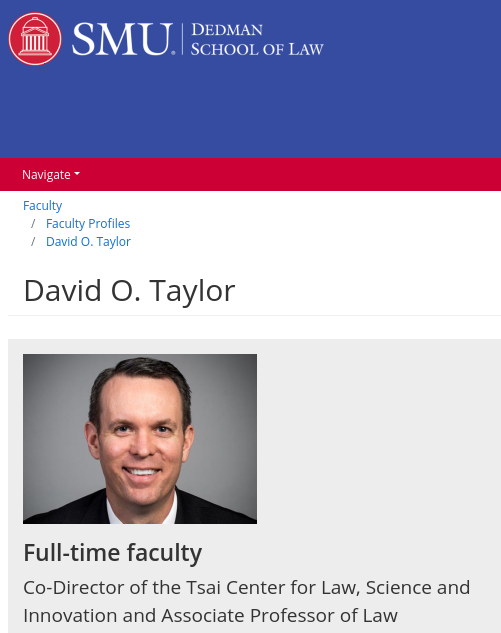
Well, Koch-funded 'scholars' included in the panels would mean that the Kochs are indirectly buying laws to suit their agenda, not to mention funding for Senators Tillis and Coons and the lobbying front of David Kappos, who is also there in the panels. Professor Mark Lemley will be there also. He is outspoken and openly against patent trolls. "RPX data shows that practicing entity patent lawsuits have stayed pretty stable, with the decline in patent litigation coming almost exclusively from patent trolls," wrote Professor Lemley last week. He too is tracking such numbers (independently from RPX) and we have mentioned him here rather habitually (e.g. [1, 2]). What we expect to happen in this Senate hearings about 35 U.S.C. ۤ 101 is more of the same; people funded by law firms will pretend that the sky is falling, whereas others will describe the status quo as favourable to innovation, as opposed to litigation. We could go on and on talking about the people in the panels, but let's wait and see what they say, then remark on pertinent points rather than affiliations of the messengers alone.
The CCIA is meanwhile highlighting a patent troll that went bankrupt (Shipping and Transit); the person behind it has "had other NPEs he could fall back on," the CCIA claims. "Sirianni, while conducting Shipping and Transit’s campaign, was also conducting a similar litigation campaign under the name Eclipse IP..."
Here are some details:
Remember Shipping and Transit? The notorious NPE went bankrupt last year after its campaign against everyone from transit app developers to city transit authorities hit a few potholes. Following a decade-long licensing and litigation campaign leveraging the high cost of patent litigation, including one year in which it filed more patent suits than anyone else, a series of attorney’s fee awards from successful defendants shut Shipping and Transit down.
While this might be viewed as a setback for Peter Sirianni, one of Shipping and Transit’s co-owners, he had other NPEs he could fall back on. Sirianni, while conducting Shipping and Transit’s campaign, was also conducting a similar litigation campaign under the name Eclipse IP, now known as Electronic Communications Technologies LLC (ECT). (Eclipse’s patents are prosecuted and ‘invented’ by the same attorney that prosecuted Shipping and Transit’s patents, another tight tie between the two entities.) A total of 213 cases were filed by Eclipse between 2011 and 2018, making it another prolific filer.
But after a recent settlement, Eclipse has agreed not to sue any California entity on any IP it owns as of the settlement date.
To call the recent history of patent eligibility in the U.S. tumultuous might be an understatement. The U.S. Patent and Trademark Office (USPTO) and the courts have wrestled for years over how to guide examination of claims under ۤ 101. Court cases -- particularly, those from the Federal Circuit -- have provided differently-nuanced interpretations as to what constitutes an abstract idea and what elevates a claim to the realm of "significantly more." The USPTO typically then follows suit by periodically updating its subject matter eligibility guidance. However, in practice, the manner in which examiners apply the case law of the courts and the guidance issued by the USPTO can be a mixed bag, often to the chagrin of practitioners.
Under the most recent subject matter eligibility guidance issued by the USPTO on January 7, 2019, the USPTO attempted to clarify part two of the Alice Corp. test.[4] According to the guidance, "a claim is not 'directed to' a judicial exception if the judicial exception is integrated into a practical application of that exception." Thus, the guidance provides clarification to the previous test on step two of the Alice Corp. test as to what constitutes "significantly more" than the judicial exception.
[...]
When claims are deemed "software-related," the determination takes a slightly different form and involves a two-part inquiry.[11] First, the examiner evaluates the claimed invention from a non-software focused standpoint. In other words, the patent eligibility of a software-related invention evaluated using this standpoint should not rest on the fact that the invention involves software. Thus, the examiner first determines whether the invention stands on its own, and is patent eligible notwithstanding the software aspect. But if the examiner is unable to make this first determination, the examiner then evaluates the invention with a heavier emphasis on the software aspects of the claim.
From a non-software focused standpoint, a software-related invention is likely to be found to be patent-eligible when it involves (i) "concretely performing control of an apparatus (e.g., an engine, a washing machine, a disk drive), or processing with respect to the control" or (ii) concretely performing information processing based on the technical properties of an object (e.g., physical, chemical, or electrical properties).[12] Interestingly, even claims that involve "software for causing a computer to execute a procedure of a method," or "a computer or system for executing such a procedure" are often found to be patent eligible in Japan without further inquiry.[13]
[...]
For software-related claims, the Japanese standard as a whole, and particularly the software-focused standard, allows for a certain type of patent protection in Japan that is not currently available in the U.S.: program claims. A "program claim" is distinct from a computer readable medium (CRM) claim and was introduced into Japan Patent Law in 2002 to address the issue that a CRM claim does not cover a situation where a software program is provided to a user, not by a CRM such as a CD-ROM, but rather by the user downloading the software program over a network.[16] In the JPO examination handbook, the JPO provides the following example forms that program claims can take, which U.S. practitioners will certainly note as being quite different from the scope of what is patent eligible in the U.S.[17]
[...]
A clear understanding of Japanese patent law in the areas of software and business methods can help practitioners avoid missteps and better represent companies who have or seek to have patent protection in Japan. For example, even when U.S. patentees pursue software-related claims in Japan, they often attempt to do so with CRM-style claims and do not consider whether they should file program claims. In fact, due to how unfavorably U.S. patent law is on business methods, and how risky U.S. patent law can be on software claims, U.S. patentees often forego pursuing patent protection in these areas altogether. Thus, U.S. practitioners and patent applicants alike should be aware of all the particular advantages of Japanese patent law in these areas and reach out to a Japanese associate if any other advice is needed. After all, it could be worthwhile for both parties.