
EditorsAbout the SiteComes vs. MicrosoftUsing This Web SiteSite ArchivesCredibility IndexOOXMLOpenDocumentPatentsNovellNews DigestSite NewsRSS

11.07.08

Patents Roundup: Microsoft, India, Bilski and Some More Cronies

Posted in Asia, Courtroom, Europe, Free/Libre Software, Microsoft, Patents, Red Hat at 3:30 am by Dr. Roy Schestowitz

THIS POST summarises the latest developments and analyses involving software patents.

Microsoft

Avistar’s legal battles with Microsoft were previously mentioned in [1, 2, 3, 4, 5, 6, 7, 8]. The company seems to have just scooped up some more ammunition with which to harass Microsoft.

Avistar Communications Corporation (Nasdaq: AVSR), a leading provider of unified visual communications solutions, today announced that it has been granted five new U.S. patents this month, including its 92nd patent, U.S. 7,441,001, covering services involving two or more real-time communications services such as text instant message (IM), video IM and Voice over IP (VoIP).

Avistar–by continuing its lawsuits against Microsoft–can hopefully change Microsoft’s mind regarding sofwtare patents.

India

The software patents situation in India was last mention in [1, 2, 3, 4, 5, 6, 7, 8, 9, 10, 11, 12]. We still track the progression of dreadful lobbying by Microsoft, its partners and other cronies with vested interests. They try to change the law and they break it in the process.

The latest update from the news there indicates that Microsoft’s pursuit for changes in the law has not ended.

Thankfully, Indian judges need not venture down such a circuitous path. That a Bilski sort of invention is not patentable in India is crystal clear from section 3(k) of the Indian Patents Act, which prohibits a “business method” from patentability.

Section 3(k) also excludes “computer programs” per se and algorithms from patentability. In order to clarify the ambit of this exclusion, the government is currently evolving guidelines via a patent office manual; a process has spurred a fierce battle between proprietary software firms such as Microsoft Corp. and open-source evangelists such as Red Hat, which claim that the government is attempting to introduce software patents through the back door.
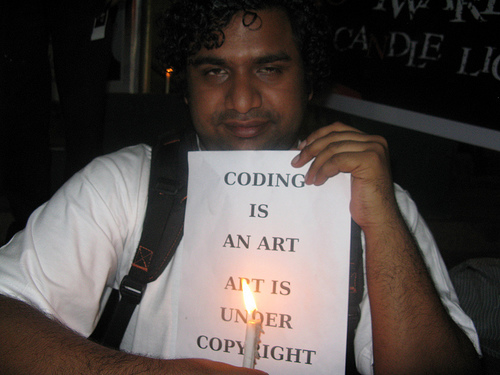
Software patents protest in India

Bilski

From prior coverage of the decision [1, 2, 3, 4, 5, 6, 7] it could almost be concluded that software patents were affected too. They were badly hurt. Concludes Peter Judge:

The open source community will be resting a bit easier – “abstract” patents, for business processes have been ruled out by the US authorities, at least for now.

From Gardner:

Gardner explains that the Patent Bar should stand-up and explain to the PTO and courts that “the application of novel and nonobvious software to otherwise computer hardware is neither ‘routine’ nor ‘typical.’”

Linux Magazine has this summary on the effects (specifically where software patents are concerned).

FOSS lawyers see the decision as a good basis for changes to patent laws. They caution, however, that the software world will have to figure on increasing lobbying efforts from past patent seekers and “beneficiaries of the status quo.” The Red Hat press release ends on a positive note with “We have a battle before us, but it is a battle we can win.”

Here is the formal reaction from the SFLC.

Of course, patent applications for many software systems will meet this test, and we have only minimal guidance from Bilski on how the test should be applied. However, SFLC believes that this decision takes us one step further toward freeing the United States from “software patents”. The SFLC hopes and expects that this case will lead to fewer patent grants that stand in the way of advancing software freedom.

The formal press response from Red Hat says:

Last week the Federal Circuit issued a major decision, In re Bilski, concerning the subject matter limits of patent law. The case presented questions relating to software patents, an issue of great significance to the free and open source software community, and so Red Hat filed a brief in Bilski to educate the appeals court about FOSS and its problems with the software patents. In the new opinion, the court cited Red Hat’s brief, but declined to settle the issue of when, if ever, software based inventions should be patentable. Even so, the new test in Bilski will probably limit the patentability of software. The war is not over, but the odds of success for FOSS just got better.

An interpretation from Groklaw, regarding Red Hat in part, states in its second part:

There probably isn’t a single judge on this court who grew up with computers in his or her life. But look at their backgrounds a little more carefully, and you’ll see that while they may not know what you know about tech, they are certainly highly educated and highly accomplished individuals in their area of expertise, namely patent law. Let’s focus on those who wrote opinions, now.

Therein lies a very important issue, which was covered here before.

Cronyism

Related to the above, not all legal treatment is objective. It may not be founded on impartial judgment, so trust is lacking. In fact, based on this new report, Barack Obama is already overwhelmed by lobbyists for imaginary property.

The intellectual property community has been quick to begin the anticipation of a Barack Obama presidency in the United States following his election on Tuesday.

[...]

“Obama’s regime is more likely to take the feedback from civil society into consideration and similarly more sceptical towards the pure business interests presented by Big Pharma, etcetera,” he said. “In the end, much will depend on what kind of persons Obama chooses to his cabinet for the key positions pertaining IP policy and global trade.”

Andrew Updegrove, an attorney at technology law firm Gesmer Updegrove in Boston who runs the open-standards blog consortiuminfo.org, said administration changes have little effect on US technical standards policy, since this sector is largely driven by industry – not government.

There is a very timely example of such manipulation. The OpenParliament meeting in Europe saw the intrusion by Microsoft lobbyists.

Note that Mr Lueders is a well-know[n] Microsoft & Software Patents lobbyist, who wants to raise a patent tax on every EU citizen who wants to access gover[n]mental documents via discriminatory patented standards.

The OpenParliament has also drawn the attention of other Microsoft drones ea[r]lier on.

In short, it emerged that CompTIA, a notorious Microsoft pressure group [1, 2, 3, 4, 5, 6], was lobbying the secretariat of the PETI committee in order to sneak into the panel. The OpenParliament OFE people met the PETI secretariat two days ago, and one guy had apparently been lobbied by CompTIA before, saying he needed a balanced (i.e. distorted) and opposite point of view.

So, eventually, even Microsoft managed to sneak in, as usual. There is nothing they don’t intrude, including ODF [1, 2, 3, 4], which they mocked (well, they had to pretend otherwise later, in order to gain access to it).

Recordings of the talks are up at the FFII Web site now. Hugo Lueders was pretty bad as he did not have any strong point. If anyone could transcribe the audio, it would be splendid.

In Conclusion

Mark Taylor from Sirius Corporation wrote an article for ZDNet UK. It explains rather bluntly, yet correctly, what the software patents fascination really is about.

Free software acknowledges that truth. Proprietary software does not. Instead, like the banks, proprietary-software vendors have had to justify the cost of their wares by constructing complex arguments about value.

Again, lipstick terms such as ‘software patents’ and ‘intellectual property’ have been applied so successfully they have entered the vernacular. Yet even a cursory examination of their real meaning shows them to be spurious. They exist only to perpetuate the dominance of monopolists.

Yes, we are living in a proprietary-software bubble and, like the bursting of the easy-credit bubble, this one is about to burst too — it’s a matter of survival.

One current danger is Microsoft’s (among others’) attempt to define or redefine "open source" to suit their conveniences. Free software is pervasive, but there are those who try to ‘dilute’ it. This was foreseen a year ago [1, 2, 3].

“That would be because we believe in Free Software and doing the right thing (a practice you appear to have given up on). Maybe it is time the term ‘open source’ also did the decent thing and died out with you.”

Alan Cox to Eric Raymond

Share this post: These icons link to social bookmarking sites where readers can share and discover new web pages.
  • Digg
  • del.icio.us
  • Reddit
  • co.mments
  • DZone
  • email
  • Google Bookmarks
  • LinkedIn
  • NewsVine
  • Print
  • Technorati
  • TwitThis
  • Facebook

If you liked this post, consider subscribing to the RSS feed or join us now at the IRC channels.

Pages that cross-reference this one

What Else is New


  1. Links 22/5/2013: Debian GNU/Hurd, New Go Language Release

    Links for the day


  2. The FRAND Apple-Microsoft Conspiracy Attempts to Destroy Android/Linux, Ban Imports

    How Microsoft and Apple are using patents in bulk (sometimes acquired in unison, e.g. from Novell and Nortel) to artificially lower market saturation of the Android operating system or drive costs up


  3. Gates Foundation: Buying Influence for Bill's Ego and Bill's Profit

    New examples of power being acquired and investments (i.e. for profit) being funnelled into the beneficiaries


  4. Bill Gates Enters Financial Centres With His Goons Becoming US Budget Chief, Top Bankers

    How Bill Gates' staff is entering positions of financial power, indirectly giving Gates power over US (national and international) finance


  5. IBM Ignores Small Companies' Interests, Denies Patent Scope is a Problem, Focusing on Its Own Problems (Trolls) Instead

    How David Kappos and IBM (his longtime employer) continue to ignore the obvious problem which kills small businesses and everyone is complaining about


  6. The New York Times Publishes Factually-Flawed Patent Propaganda Benefiting Microsoft and Apple

    Eamonn Fingleton is rewriting history in the US' top newspaper, insinuating that patents contributed to the rise of software duopolists


  7. Software Patents Eligibility Likely to be Decided by SCOTUS

    Analyses suggest that an escalation by appeal to SCOTUS is likely to be the next stage in 'Bilski 2.0'


  8. Does Bill Gates Try to Flush GNU/Linux Down the Toilet in Kerala?

    Renting Microsoft software rather than using Free (as in freedom, or libre) software?


  9. Links 21/5/2013: Handbrake Turns 0.9.9, NetBSD 6.1

    Links for the day


  10. Links 20/5/2013: First Salifish Smartphone, Mageia 3 Released

    Links for the day


  11. Microsoft Corruption (Illegal Tenders) Stopped by European Court

    Microsoft cannot bypass public tenders, based on a ruling from a court of law in Europe


  12. Not Satire: Microsoft Wants to Show the World How Security is Done

    Software security 'standard' to be led by the company which made insecurity an acceptable engineering practice?


  13. Microsoft is Struggling to Maintain Industry 'Standards'

    With Microsoft's common carrier and browser share down considerably Microsoft finds itself increasingly irrelevant and it tries subversive means of making another comeback


  14. Microsoft Entryism and Bribery Get the Microsoft Way Implemented

    A recollection of very dirty tactics from Microsoft, which uses money to oppress, overthrow, and even hijack its opposition


  15. Patent Policy Laundering in the European Union and New Zealand

    How the so-called 'free' trade agreements help spread patent policy which favours software patents


  16. Ongoing Focus on Patent Litigation and Patent Trolls Reduces Focus on Software Patents

    The problem with increased focus on the players that use software patents litigiously and the litigation itself


  17. Andrew Y. Schroeder Shows That Patent Lawyers Are Sociopaths

    Bully and law misuser is trying to get his way with foul language, intimidation, and sheer lack of professionalism


  18. IBM-backed Book on 'Open Innovation'

    OpenForum Europe (OFE), which helps IBM's turf wars in Europe, releases a new book filled with its talking point


  19. Joseph E. Stiglitz Criticises the Patent System

    More critical words about the patent system and the way it is harming lives


  20. Senator Schumer Should Focus on Software Patents, Leaving Patent Trolls (Side Effect) Aside

    Reform in the USPTO and the US courts should focus on patent scope and not patent holders


  21. Links 20/5/2013: Plenty of Linux News, Google/Android Announcements

    Links for the day


  22. IRC Proceedings: May 12th, 2013-May 18th, 2013

    IRC logs for May 12th, 2013 (and subsequent days until May 18th, 2013)


  23. Microsoft Spin Regarding Skype Spying Does Not Withstand Scrutiny

    Microsoft's response to allegations that Skype is spying on all users is full of holes


  24. MPEG-LA Ruined the Licence of WebM, Made it Less Freedom-Respecting

    The Microsoft-, Nokia-, and Apple-backed patent troll appears to have ruined the freedom assured by Google's multimedia format, which was previously made free only after public pressure


  25. Microsoft-controlled Nokia is Lobbying to Enable Bans on Android Imports (Linux Phones as a Whole in Danger)

    Nokia is shown lobbying for embargoes while it is also suing -- with limited success -- Android handsets makers


  26. Courtroom and New Book Recognise That Software Patents Correspond to Mathematics and Mathematics Abused in Court

    Important observations about the nature of computer-implemented 'inventions', or software patents


  27. The Reality Distortion Field of Patent Lawyers Helps Impede Abolition of Software Patents

    How widespread coverage and talking points from the tiny minority which is patent lawyers have contributed to biased and at times utterly distorted reporting on the subject of software patents around the world


  28. Eugene Kaspersky Says Patents Harm Innovation

    Some more criticism of the patent system and software patents in particular, courtesy of Eugene Kaspersky


  29. UEFI Restricted Boot Good for Microsoft Agenda, Not for Security

    News and analysis of UEFI 'secure boot' (lockdown), including the new role played by the Microsoft-funded SUSE


  30. Anniversaries

    Sites that deal with patents and with FUD as well as their respective ages


RSS 64x64RSS Feed: subscribe to the RSS feed for regular updates

Home iconSite Wiki: You can improve this site by helping the extension of the site's content

Chat iconIRC Channel: Come and chat with us in real time

Recent Posts