
EditorsAbout the SiteComes vs. MicrosoftUsing This Web SiteSite ArchivesCredibility IndexOOXMLOpenDocumentPatentsNovellNews DigestSite NewsRSS

01.24.11

The Patent System — USPTO in Particular — Comes Under More Fire

Posted in Patents at 3:07 pm by Dr. Roy Schestowitz

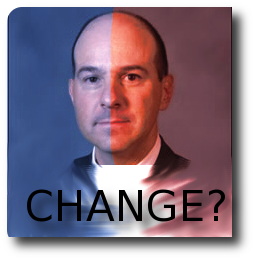
David Kappos

Summary: USPTO needs to change in order to restore approval from citizens whom it supposedly serves

HOW MUCH does the USPTO want to be hated? More and more people speak out against it these days, simply because it cannot make a case in its defence when those who benefit are not scientists but lawyers and franchisees. A little while ago, TechDirt — a longtime patents critic — did some decent investigative work to demonstrate a contemporary chaining of patent trolls, working at someone’s behest a lot of the time (Nathan Myhrvold uses this trick extensively). To quote later parts of the detailed analysis:

Unfortunately, that’s about where the sleuthing runs out… and it really doesn’t tell us that much. We already knew that Vertigo was the parent company, and who owns/runs Vertigo is secret. We did learn that another company owned by Vertigo is using more patents from the same inventors to sue more companies, but that’s about it. Either way, as a basic exercise, it certainly teaches you a fair amount about the sneaky and hidden nature of how patent trolls operate, with layer upon layer of shell companies, changing patent assignments and licenses, all of which hide whoever is actually pulling the strings. It really does make you wonder how this kind of thing does anything whatsoever to improve innovation.

Michael Trick writes about “More patent madness!”, putting forth an example of something that was patented long after it had really been ‘invented’:

Limited discrepancy search has been around since 1995 and occurs often in research (Google scholar is showing 465 references). It is a pretty simple idea: if you are doing a tree search and you have a good idea that, say, all the variables should be 1 (but might not be in the optimal solution), you first search the “all 1″ side of the branches, then try the “all 1 except one” then then “all 1 except two” and so on. Call it twenty lines of code to control the tree search in this manner. Seems like a reasonable approach, but patentable? You have got to be kidding!

[...]

Patents (and companies trying to enforce them) make creating open source software much, much more difficult. How many developers would know that if you embed a method from a 1995 paper in software, you may run afoul of a patent claim?

Patents exist to encourage innovation. The current system, with nonsense like this, serves only to stifle it.

“Inglourious Software Patents” is another good new post which goes around the Web at this moment. It says:

The patent system exists to provide an incentive for innovation where that incentive would not have existed otherwise.

Imagine you’re an individual living in the 19th century. Let’s say the patent system does not exist and you have an idea to make a radically better kind of sewing machine. If you invested the time to develop your idea into a working invention, the existing sewing machine companies would just steal your design and crush you in the marketplace. They have massive distribution and production advantages that you wouldn’t be able to compete with. You wouldn’t be able to monetize the initial investment you made into developing that invention. Therefore, you wouldn’t have invented the radically better sewing machine in the first place.

From this perspective, patents are actually a rather clever hack on society to encourage innovation. By excluding others from using your invention for a fixed amount of time, you get a temporary monopoly on your invention. This lets you monetize your invention which makes your initial investment worthwhile. This in turn benefits society as a whole, as now society has inventions that it wouldn’t have had otherwise.

[...]

Quite the opposite. Software startups are thriving nowadays in spite of software patents rather than because of them. Instead of helping startups get off the ground, patents are a cost. Startups must build “defensive patent portfolios” and worry about getting sued by patent trolls or businesses trying to entrench their position. Instead of patents being a protective shield for a startup, they’re instead a weapon that causes economic waste.

Vivek Wadhwa, consistently a critic of software patents despite having some which he now regrets [1, 2, 3, 4, 5] advises China not to compete on the basis of patents:

The Times quotes David J. Kappos, director of the United States Patent and Trademark Office, as saying that the leadership in China “knows that innovation is its future, the key to higher living standards and long-term growth. They are doing everything they can to drive innovation, and China’s patent strategy is part of that broader plan”. Kappos seems to believe that, with patents, China is unleashing a golden age of innovation.

Kappos is wrong.

The reality, as I explained in my BusinessWeek column China Could Game the U.S. in Intellectual Property, is that patents will neither make China more innovative nor benefit the global economy. Just as the vast majority of China’s academic papers are plagiarized or irrelevant, so will its government-sponsored patents be tainted. In contrast to the tiny proportion of Chinese academic papers that serve to expand the world’s knowledge base, however, Chinese patents will serve as land mines for foreign businesses. They will allow China to demand license fees from companies that do business there or to shut them out entirely. (And these will hurt China’s own startups.)

Kappos did not bring the change we had hoped for [1, 2, 3]. People who actually make products hope for change… real change. Is there a chance of In Re Bilski making a comeback in light of conflicts of interest?

Apparently two of the SCOTUS justices, Scalia and Thomas, were deeply involved in “conservative” (not sure what they are conserving but it’s not impartial justice) political events. That brings to mind how they ruled in Bilski. Did these two justices have a hidden agenda and should they have recused themselves or should they be impeached?

It’s too easy to find some reasons to sack a SCOTUS justice (e.g. Kagan for allegedly being gay). The problem is likely to be the USPTO, which is still run by people who simply treat is like business as opposed to an establishment dedicated to the goal improving innovation. The patent system has been hacked. It’s vulnerable and antiquated.

“People naively say to me, “If your program is innovative, then won’t you get the patent?” This question assumes that one product goes with one patent.” —Richard Stallman

Share this post: These icons link to social bookmarking sites where readers can share and discover new web pages.
  • Digg
  • del.icio.us
  • Reddit
  • co.mments
  • DZone
  • email
  • Google Bookmarks
  • LinkedIn
  • NewsVine
  • Print
  • Technorati
  • TwitThis
  • Facebook

If you liked this post, consider subscribing to the RSS feed or join us now at the IRC channels.

Pages that cross-reference this one

What Else is New


  1. Links 23/5/2012: printerd, Mageia 2 Released

    Links for the day


  2. Links 22/5/2012: Google/Motorola Deal Secured, Chrome Passes IE

    Links for the day


  3. Links - Explorer Goes Down, Oracle Judge is Coder


  4. Links 21/5/2012: Linux 3.4 Released, Dream Studio 12.04

    Links for the day


  5. Articles Against Software Patents and Patent Trolls

    An accumulation of recent articles on matters such as patent trolls, which mostly use software patents based on a recent survey


  6. New Zealand (NZ) Patent Debates Expand

    The kiwi (NZ) press turns its attention to a patent controversy other than the question of software patenting


  7. AOL Helps Microsoft Infiltrate, Harm Open Source Communities, Feeds Facebook With Google-Hostile Patents

    Microsoft is preying on AOL funds and patents


  8. 'Piracy' and 'Discount' Propaganda Used to Kick Free Software Out of Governments in Favour of Microsoft Deals

    A look at new tactics and moves which omit freedom and autonomy from nations foreign to Microsoft


  9. Sun: Interoperability More Important Than Patents

    An old position paper from Sun Microsystems helps shows a certain resistance to patents such as those which Oracle uses against Android


  10. In Motorola Case, Microsoft Boosters Use Slashdot for Anti-Linux/Android Patent Propaganda

    Covering what's right/correct -- not what's wrong/incorrect -- about the Microsoft case against Motorola/Android


  11. Microsoft Tax on Everything

    The company which hardly pays any tax is busy trying to tax GNU/Linux, Android, and all hardware in the OEM channel


  12. Links 19/5/2012: Mandriva Linux Freed, New Linux Mint RC

    Links for the day


  13. Apple Patent Wars Make Android Devices Less Attractive, Everyone Suffers

    Bits of patent news regarding Apple and its patents


  14. Defeat for Software Patents in the United Kingdom

    Wise words from a prominent Linux figure and news from the UK


  15. BSA and IDC Systematically Lie to the Public, Distort Press Coverage

    IDC and the Business Software Alliance (BSA) liaise once again in order to give ammunition to lobbyists of proprietary and copyright conglomerates


  16. Links 17/5/2012: “Bio Computer” Runs Linux, Raspberry Pi Grows

    Links for the day


  17. IRC Proceedings: May 11th-May 16th, 2012

    IRC logs for May 11th, 2012 (and subsequent days until May 16th)


  18. IRC Proceedings: May 5th-May 10th, 2012

    IRC logs for May 5th, 2012 (and subsequent days until May 10th)


  19. IRC Proceedings: April 29th-May 4th, 2012

    IRC logs for April 29th, 2012 (and subsequent days until May 4th)


  20. Android Under Patent Attacks From Nokia, Microsoft, and Oracle

    A roundup of patent news involving Android and the US patent/copyright system, which facilitates ridiculous patents or lawsuits over APIs


  21. Helping OpenSUSE is Helping Microsoft Tax GNU/Linux

    A short wave of calls to refrain from OpenSUSE promotion, which through the upstream is helping Microsoft, the sponsor


  22. Microsoft May Face Federal Action for Blocking Rival Web Browsers on ARM

    Mozilla's call for action is taken seriously by people at The Hill (Washington)


  23. Links 16/5/2012: 125,000 GNU/Linux Machines for Pakistani Students, Android 4.0 Rollouts

    Links for the day


  24. Links 15/5/2012: Linux 3.4 is Near, Mandriva to Have More Releases

    Links for the day


  25. Links - TPP Meeting Infiltrated, More Protest Needed.


  26. Europe Rules Against Monopolies on APIs

    The case against Android notwithstanding, the highest European court rules that APIs cannot be covered by copyrights


  27. Microsoft Versus Education

    A bit of news/commentary on Microsoft in education (indoctrination)


  28. Patents Are Never 'Open Source'

    The disinformation tactic which ascribes patents to FOSS as seen in the news


  29. Signs of Progress: Work for Microsoft, Get Ostracised From Panels/Public Consultations

    Convinced monopolist Microsoft has its moles' voice invalidated, based on the conflict of interest (Microsoft versus the public)


  30. Links 14/5/2012: Linux Kernel 3.3.5, Wine 1.5.4

    Links for the day


RSS 64x64RSS Feed: subscribe to the RSS feed for regular updates

Home iconSite Wiki: You can improve this site by helping the extension of the site's content

Chat iconIRC Channel: Come and chat with us in real time

Recent Posts