
EditorsAbout the SiteComes vs. MicrosoftUsing This Web SiteSite ArchivesCredibility IndexOOXMLOpenDocumentPatentsNovellNews DigestSite NewsRSS

10.09.11

Halliburton and the UN (World Intellectual Property Organisation): Patent Globalisation, Monopoly Maximalism, and Software Patents

Posted in Europe, Intellectual Monopoly, Patents at 10:16 am by Dr. Roy Schestowitz

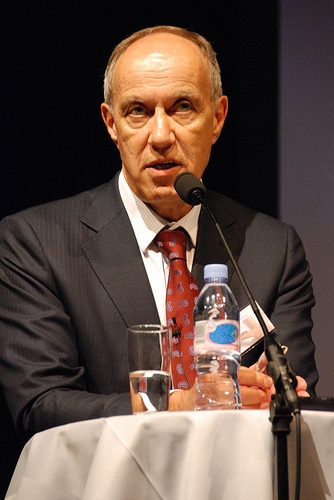
Francis Gurry from WIPO
Photo by dkpto @ Flickr, Creative Commons Attribution 2.0 Generic

Summary: Bad companies and selfish people are making the patent system worse for everyone; the White House is urged to bring about change, but petition signers are not of the 1% (or less) that influence and sponsor the party

BACK we go to the subject of software patents, which we have not covered quite so thoroughly as of late.

This subject is not about any one particular company. It affects everyone, including proprietary and Free software developers. It also affects non-developing members of the public because hefty tax is being silently passed to them.

It is hard to get over the news about Halliburton expanding the boundaries of software patents, bringing some more of them to Europe (or to the UK, to be more specific). At Computer Weekly, one who was previously accused of helping Microsoft’s agenda (we were not persuaded by the evidence presented to us though) writes that “The High Court has overturned a decision of the UK Intellectual Property Office (IPO), explicitly confirming that technical design methods are patentable.”

As one can see in our IRC logs, the president of the FFII was rather disturbed by this. It was also brought up there that Gurry's patent boosting at WIPO (which the FFII previously pointed out) carries on with more outrageous statements:

Last June, the Swiss Press Club held a launch for the Global Innovation Index at which various speakers were invited to talk about innovation. After the head of CERN and the CEO of the Internet Society spoke about how important it was that the Web’s underlying technology hadn’t been patented, Francis Gurry, the Director General of the UN’s World Intellectual Property Organization (WIPO), took the mic to object.

In Gurry’s view, the Web would have been better off if it had been locked away in patents, and if every user of the Web had needed to pay a license fee to use it (and though Gurry doesn’t say so, this would also have meant that the patent holder would have been able to choose which new Web sites and technologies were allowed, and would have been able to block anything he didn’t like, or that he feared would cost him money).

We also mentioned Gurry in [1, 2, 3], including leaked material from Cablegate.

These disturbing ideas from WIPO are not surprising. We have been pointing out this dangerous attitude from WIPO for quite a few years. Then there are patent lawyers and their blogs that spread more propaganda about patents and their supposed ‘benefit’ to society. Consider the post “EU confident over unitary patent plans” (too many contradictions as shown by Axel).

Other patent lawyers’ blog still tilt the balance in favour of software patents. For example:

Ultramercial v. Hulu: Computer Programs and Patentable Subject Matter

[...]

Software is patentable
Layered on top of this finding is the court’s rejection of the argument that software programming amounts to abstract subject matter. “The digital computer may be considered by some the greatest invention of the twentieth century, and both this court and the Patent Office have long acknowledged that “improvements thereof” through interchangeble software or hardware enhancements deserve patent protection. Far from abstract, advances in computer technology—both hardware and software—drive innovation in every area of scientific and technical endeavor.” Slip Op. at 12.

This holding is in tension with the Federal Circuit’s recent opinion in Cyber Source Corp. v. Retail Decisions, Inc., No. 2009-1358 (Fed. Cir. Aug. 16, 2011), in which a panel consisting of Judges Bryson, Dyk and Prost concluded that a method of verifying a credit card transaction over the Internet constituted an unpatentable process. While the panel in Ultramercial recognized this tension, it distinguished Cyber Source as an instance of “purely mental steps.” Ultramercial Slip Op. at 13 (emphasis in original). The line, at least from the point of view of this panel, thus lies somewhere between logical steps that humans can perform without the aid of a computer versus those that require a computer to carry out.

The whole “embedded” trick is completely dishonest. To paint software as “machine” is like painting mathematics as “abacus” or comparing a musical piece to “gramophone” to justify patents on drum beats, vocals, or a short sequence of words. It is truly absurd, but patent lawyers would go as far as they can to justify more and more patents on everything which people think about and do. It is a tax on society and the lawyers take a cut from all these fees.

“To paint software as “machine” is like painting mathematics as “abacus” or comparing a musical piece to “gramophone” to justify patents on drum beats, vocals, or a short sequence of words.”How much should we be willing to remove from our thoughts and actions just to feed a redundant industry that prevents small businesses from threatening the status quo? These are mere gate keepers. Just watch Microsoft as it gets a trademark for retail store plans (no, it is not a joke). The Register says that “Microsoft has been awarded a trademark on its design for a store selling all things high tech.” (trademark registration #4036534).

How many shops are infringing? Should they all be shut down or be forced to pay Microsoft? It is a little reminiscent of the Lindows case.

The Economist, a reputable paper which is neither run by lawyers nor written by engineers, ought to view this whole pyramid/MLM scheme of a system as a bad idea. Not so long ago it posted some rants against the patent system and now it’s airing a piece titled “programmed nonsense”. To quote the relevant parts:

The message is finally getting through. When the White House opened a website earlier this month for people to create and sign petitions they feel passionate about, one immediate favourite asked the president to “direct the [USPTO] to cease issuing software patents”. The petition garnered more than 12,000 signatures in the first few days. The White House has promised to respond to any petition that collects 5,000 signatures during the first month.

Software patents and business-method patents (invariably based on some software algorithm) are unlike any other type. As a rule, mechanical, chemical, material and even biological inventions and discoveries are concerned with some novel feature that can be measured and uniquely defined. But software programs deal almost exclusively with mathematical relationships that are well known and widely used. In writing software, programmers do not have to make novel, serendipitous discoveries, as inventors in other fields do. In many ways, that makes programming a good deal easier, and certainly more predictable, than inventing.

The corporate press can say the truth, unlike all those “IP” people who run blogs for patent lawyers or even “UN”-painted bodies like WIPO, which is also run by the “IP” crowd. Why are those foxes allowed to have so much influence over the hen house, aka White House? The republic needs to be run for the benefit of the people, not parasites.

Share this post: These icons link to social bookmarking sites where readers can share and discover new web pages.
  • Digg
  • del.icio.us
  • Reddit
  • co.mments
  • DZone
  • email
  • Google Bookmarks
  • LinkedIn
  • NewsVine
  • Print
  • Technorati
  • TwitThis
  • Facebook

If you liked this post, consider subscribing to the RSS feed or join us now at the IRC channels.

Pages that cross-reference this one

What Else is New


  1. Links 25/5/2013: Beaglebone Black (BBB), Tizen Comeback

    Links for the day


  2. Red Hat Pays Microsoft-Linked Patent Troll Again, Refuses to Provide Details

    Another attack on GNU/Linux results in payment to trolls and silence from Red Hat, which keeps the FOSS community in the dark


  3. Microsoft Brings the Notion of Buying Games to End, Consumer Rights Groups Should Sue

    Not only is XBox eliminating the notion of owning and controlling one's console; new XBox paradigm aims to reduce one's control over purchased games, reducing buyers to temporary, transient consumers


  4. Links 24/5/2013: Fedora ‘Pidora’, CIvil Rights Debated in the US

    Links for the day


  5. Bill Gates Still Getting Richer Through For-Profit Investments, Now Wants to Brainwash Children in Schools in Favour of His Investments

    Some of the latest strategies used by the world's richest man to protect his investments and amass yet more money, adding to an ever-growing wealth while pretending it's a charity


  6. Microsoft Entryism and Its Effects on Corporate and Public Policy

    An aspect of Microsoft culture that ought not be overlooked because of its profound effect on society (private and public)


  7. Red Hat Should Follow Google's and Twitter's Footsteps on Patents to Avoid Becoming the Next Novell

    Red Hat continues to ignore my plea to defang the software patents it is applying for, potentially making them weaponised like Novell's and Sun's patents (e.g. Java at Oracle) upon buyout or another major event


  8. CAFC Decision Still Overridden by Overzealous Patent Lawyers in the Press, The Guardian and Other Corporate Press (CBS and AFP Included) Still Guard the Establishment

    Analysis of a sceptical kind of corporate press coverage regarding software patents in the US; great examples of how Microsoft- and Gates-funded press outlets tend to get it all wrong on the facts, smearing digital freedom fighters


  9. Software Patents Debate Still Open in New Zealand and the US

    In spite of distraction attempts, the debate over software patents continues to stress that there is a real danger


  10. WebM is No Ogg, It is Not Freedom-Respecting Anymore, Even in Countries That Have No Software Patents

    Why Google needs to fix the licence of VP9, or simply stop pretending that it should be the only de facto standard for multimedia


  11. Microsoft Violates Google Licences

    The champion of 'IP' and licensing (extortion) is not much of a champion after all, based on new reports, not just a lot of old ones


  12. Skype Teaches Us That All Microsoft Software Should be Assumed Spyware Unless Proven Otherwise

    The broader implications of Microsoft adding spying 'features' to Skype


  13. Links 23/5/2013: Threat to Civil Rights in UK, KDE 4.11 LTS

    Links for the day


  14. Links 22/5/2013: Debian GNU/Hurd, New Go Language Release

    Links for the day


  15. The FRAND Apple-Microsoft Conspiracy Attempts to Destroy Android/Linux, Ban Imports

    How Microsoft and Apple are using patents in bulk (sometimes acquired in unison, e.g. from Novell and Nortel) to artificially lower market saturation of the Android operating system or drive costs up


  16. Gates Foundation: Buying Influence for Bill's Ego and Bill's Profit

    New examples of power being acquired and investments (i.e. for profit) being funnelled into the beneficiaries


  17. Bill Gates Enters Financial Centres With His Goons Becoming US Budget Chief, Top Bankers

    How Bill Gates' staff is entering positions of financial power, indirectly giving Gates power over US (national and international) finance


  18. IBM Ignores Small Companies' Interests, Denies Patent Scope is a Problem, Focusing on Its Own Problems (Trolls) Instead

    How David Kappos and IBM (his longtime employer) continue to ignore the obvious problem which kills small businesses and everyone is complaining about


  19. The New York Times Publishes Factually-Flawed Patent Propaganda Benefiting Microsoft and Apple

    Eamonn Fingleton is rewriting history in the US' top newspaper, insinuating that patents contributed to the rise of software duopolists


  20. Software Patents Eligibility Likely to be Decided by SCOTUS

    Analyses suggest that an escalation by appeal to SCOTUS is likely to be the next stage in 'Bilski 2.0'


  21. Does Bill Gates Try to Flush GNU/Linux Down the Toilet in Kerala?

    Renting Microsoft software rather than using Free (as in freedom, or libre) software?


  22. Links 21/5/2013: Handbrake Turns 0.9.9, NetBSD 6.1

    Links for the day


  23. Links 20/5/2013: First Salifish Smartphone, Mageia 3 Released

    Links for the day


  24. Microsoft Corruption (Illegal Tenders) Stopped by European Court

    Microsoft cannot bypass public tenders, based on a ruling from a court of law in Europe


  25. Not Satire: Microsoft Wants to Show the World How Security is Done

    Software security 'standard' to be led by the company which made insecurity an acceptable engineering practice?


  26. Microsoft is Struggling to Maintain Industry 'Standards'

    With Microsoft's common carrier and browser share down considerably Microsoft finds itself increasingly irrelevant and it tries subversive means of making another comeback


  27. Microsoft Entryism and Bribery Get the Microsoft Way Implemented

    A recollection of very dirty tactics from Microsoft, which uses money to oppress, overthrow, and even hijack its opposition


  28. Patent Policy Laundering in the European Union and New Zealand

    How the so-called 'free' trade agreements help spread patent policy which favours software patents


  29. Ongoing Focus on Patent Litigation and Patent Trolls Reduces Focus on Software Patents

    The problem with increased focus on the players that use software patents litigiously and the litigation itself


  30. Andrew Y. Schroeder Shows That Patent Lawyers Are Sociopaths

    Bully and law misuser is trying to get his way with foul language, intimidation, and sheer lack of professionalism


RSS 64x64RSS Feed: subscribe to the RSS feed for regular updates

Home iconSite Wiki: You can improve this site by helping the extension of the site's content

Chat iconIRC Channel: Come and chat with us in real time

Recent Posts