
Bonum Certa Men Certa

Patents Roundup: SCOTUS, CAFC, and Software Patents

Removing software patents from the US patent system still not on the agenda in Washington

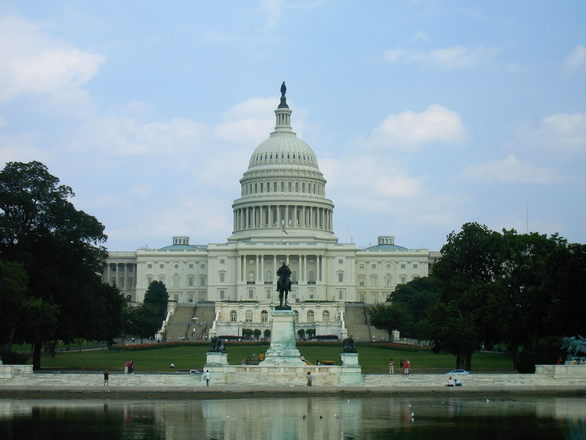
US Capitol


Summary: A quick overview of some news of interest from the US patent system, where software patents are still on the agenda (but not their official elimination)

SCOTUS


SEVERAL sites recently analysed cases destined (or likely) to reach SCOTUS, the US Supreme Court. Here is one such example. It doesn't appear as though SCOTUS will entertain the question of software patentability any time soon, so the impact of Alice will stand unshaken/unchallenged.

"It doesn't appear as though SCOTUS will entertain the question of software patentability any time soon, so the impact of Alice will stand unshaken/unchallenged."It sure seems like a lot of practicing firms no longer pursue software patents to the same degree as before, neither in the courtroom nor in the patent office. The patent system itself, just like justice, is too slow and expensive. See this new article which says "Judge Indira Talwani emphasized the importance of timely intervention in any patent infringement suit, in a recent opinion out of the District of Massachusetts. In this case, an exclusive licensee of several patents was not permitted to intervene in a patent infringement suit, largely because its motion was filed many months too late."

When patent cases take years to be settled (or decided on by a court) it contributes a great deal to uncertainty, not just legal costs, e.g. lawyers' fees. Surely the lawyers and the courts love this a great deal. It's what gives them job security.

Federal Circuit


"When patent cases take years to be settled (or decided on by a court) it contributes a great deal to uncertainty, not just legal costs, e.g. lawyers' fees."The Patent Trial and Appeal Board (PTAB) has contributed to the demise of patents on software in the US. The Court of Appeals for the Federal Circuit (CAFC), which introduced software patents in the first place and sometimes interacts with PTAB, has been the subject of focus in several recent posts from Dennis Crouch. Today he wrote that the "USPTO Stall[s] Implementation of Federal Circuit Decisions," noting that "[a]ccording to Tam’s pi-day filed mandamus action, however, the USPTO Director has indicated that she will not comply with the Court’s until all potential appeals have been exhausted or expired. As such, the USPTO continues to refuse to publish the mark in the Official Gazette."

Yes, great 'justice' right there.

Another very recent post from Crouch said that the Federal Circuit actually expressed reluctance to accept patents on certain computer games. To quote:

In reviewing the application, the Examiner Layno (Games art unit 3711) rejected these card games patents as ineligible under Section 101 – noting that the claim is “an attempt to claim a new set of rules for playing a card game [and thus] qualifies as an abstract idea.” The Patent Trial & Appeal Board affirmed that ruling – holding that “independent claim 1 is directed to a set of rules for conducting a wagering game which . . . constitutes a patent-ineligible abstract idea.” The particular physical steps such as shuffling and dealing are conventional elements of card-gambling and therefore (according to the Board) insufficient to transform the claimed abstract idea into a patent eligible invention.


It is good and increasingly reassuring to see that CAFC, under additional pressure from PTAB, sees the light on software patents and thus limits them.

Bizarre Patents


A lot of abstract patent applications are being accepted as valid in the US and even rather trivial ones (which children can come up with) end up being accepted by the USPTO, where quality control basically got thrown out the window. Earlier today we saw MIP talking to people whose business is patenting seeds/plants/life and then suing companies (or threatening to sue them). "A new patent shows how airfares may one day depend on your girth," said this very recent headline as well and speaking of games, here is an article by Joe Mullin about a topic which he covered before and we thereafter mentioned. "Defendant Jordan Gwyther," Mullin claims, "has said that the litigation could threaten the future of his favorite hobby: live action role-playing, or "LARPing." Gwyther and his fellow LARPers recreate medieval battles, wearing armor and using foam weapons to stage fights in local fields and parks."

"Crouch has just tackled the question of prior art, but when examiners are overworked and compensated for grants more than for rejections, does it surprise anyone that almost every US patent application ends up being successful?"Patents on games are probably a step too far, especially when they involve virtual equivalents of something that existed for many centuries (if not millennial timescale). Crouch has just tackled the question of prior art, but when examiners are overworked and compensated for grants more than for rejections, does it surprise anyone that almost every US patent application ends up being successful? The EPO is now aping this trend, quite unfortunately.

Software Patents


Over in the US, where Amazon has some of the world's most notorious software patents (Amazon is trying to do the same in Europe), Amazon is now seeking patent monopolies on biometric authentication. Biometrics are passwords you basically cannot change, but Amazon patents the misguided idea nonetheless. See some of today's headlines, such as "Amazon Wants the Patent for Pay-By-Selfie", "Amazon seeks patent for buying items with a look", and "Amazon Wants the Patent for Pay-By-Selfie" [1, 2, 3].

"These aren't "Americans" but multinational corporations that are based in the US."As one article put it, "Amazon has filed a patent application to allow users to pay for items by taking a selfie. The tech giant argues the move would improve people's security as they carry out more and more tasks online."

Amazon also works closely with the CIA ($600 million computing deal), so sending Amazon many of personal, grainy photos isn't necessarily the smartest thing to do.

"Americans file more patents in Australia than Australians!" screams a new headline today, but is anybody surprised? These aren't "Americans" but multinational corporations that are based in the US. How many of these patents are on software?

Recent Techrights' Posts

Things Will Only Get Better (as We Go Backwards)
It only gets better. If you go back in time.
UK High Court Shows SRA is Totally Useless in Curbing SLAPPs, This Has Impact on Our Reporting on the SRA Next Week
We'll carry on our coverage and soon finish the current series that so we can get on with more time-sensitive ones
 
Gemini Links 22/09/2026: Scout Night, Cybernetic Capitalism, and Thoughts on Companies Forcing People to Adopt Plagiarism Engines
Links for the day
Links 22/09/2026: "An Arsenal of Surveillance" and Slop Bots Suggest Starting Wars
Links for the day
SLAPP Censorship - Part 193 Out of 200: Breaks GNU and Linux, Tries to Silence Critics, Loses All Money, Looks for Microsoft Allies and Sponsors
The latest emotional knee-jerk reactions serve to confirm what we have long said
Over at Tux Machines...
GNU/Linux news for the past day
IRC Proceedings: Monday, September 21, 2026
IRC logs for Monday, September 21, 2026
Links 21/09/2026: "Lies of the Hey Hi (AI) Industry" and Solar Power Is Getting Cheap
Links for the day
Gemini Links 21/09/2026: Equinox and Beginner's Guide to Gemini
Links for the day
Links 21/09/2026: "Back On My Bicycle" and American Regime's War on Media Escalates Further
Links for the day
SLAPP Censorship - Part 192 Out of 200: The Hired Guns of Garrett and Graveley Sent Us USB Sticks (One to Me, One to My Wife) Showing Lozza Talking to Garrett About Censoring/Deplatforming Techrights the Same Time Graveley Was Copy-Pasting Garrett's Lawsuit
Next year we plan to bring this matter to the Court of Appeal
Linux Kernel Becoming a Slopfest - Part 6 - Seeing Who Contaminates Linux With Slop (And Also Admits It)
Today we begin looking at some culprits
2026: The Year Galleries Realised the Need to Flag or Cull Slop Images
Society needs to shun slopfarms, people who use LLM slop (for anything at all), companies that use bots (which they dub "agents"), and so-called 'coders' who volley garbage into project and software hubs
Software Freedom Day Celebrated in 5 or 6 Continent
Software Freedom Day (SFD) 2026 was big this year
SLAPP Censorship - Part 191 Out of 200: Garrett, Graveley and Lozza
They talk to and coordinate with one another
Over at Tux Machines...
GNU/Linux news for the past day
IRC Proceedings: Sunday, September 20, 2026
IRC logs for Sunday, September 20, 2026
Gemini Links 21/09/2026: Digital Hoarder, GTD, Minimalism vs Digital Minimalism, Rejection of LLMs
Links for the day
Links 20/09/2026: "Google Now Asking For Users’ Video Selfies" and Energy Prices Set to Rise
Links for the day
Enjoy the Giving/Sharing, Not Taking
We've long supported what we believed in, even with the little money we had
Links 20/09/2026: Amazon Layoffs, Flock 'Buyouts' (Silent Layoffs)
Links for the day
USCIS and Microsoft Rumours: Curbs on Lowering Salaries by Importing Cheaper Replacements?
It seems like Microsoft's mass layoffs and efforts to cheapen the workforce face obstacles
Gemini Links 20/09/2026: "Music While Working" and Radio Silence
Links for the day
Clownflare Data From Canada
We've like to think many people are attempting to install GNU/Linux over the weekend
SLAPP Censorship - Part 190 Out of 200: Plagiarism, Back Doors, and Sabotage of Linux
This can go on for a decade or longer
Linux Kernel Becoming a Slopfest - Part 5 - Kernel Dependency on Plagiarism Giant Microsoft is a Death Blow to Any Kernel
Microsoft is bringing copyright-infringing slop into Linux
GNU/Linux Has Grown a Lot Lately
Based on Clownflare
Over at Tux Machines...
GNU/Linux news for the past day
IRC Proceedings: Saturday, September 19, 2026
IRC logs for Saturday, September 19, 2026