
European Patent Office (EPO) Series: Leveraging the Lusitanian Connection
Previous Parts:
Part 16
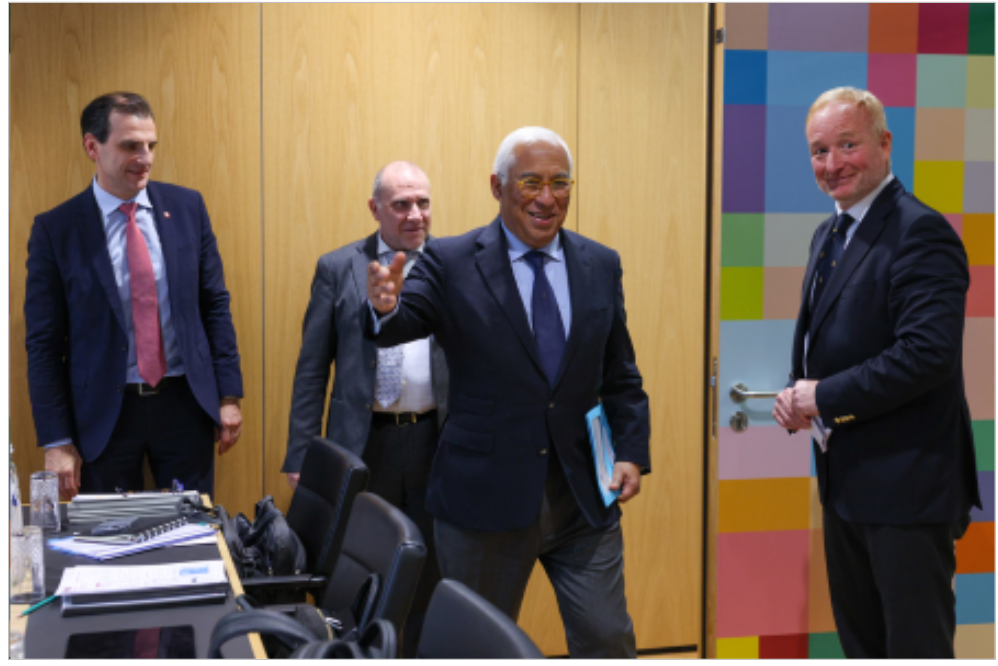
Meeting between António Campinos and the President of the European Council, António Costa which took place on 3rd February 2026. After shaking hands with Pellegrino and Requena, Costa walks past Campinos to greet Sandro Mendonça.
In the last two parts we took a closer look at a relatively recent addition to "Team Campinos", namely the Portuguese academic Sandro Mendonça.
In this part we will see how a key aspect of Mendonça's current role is to assist the EPO President in "leveraging the Lusitanian connection" at meetings where other Portuguese nationals are present.
Mendonça's contribution in this regard was readily apparent at the meeting which took place in Brussels on 3rd February 2026 between the EPO boss Campinos and António Costa, the Portuguese President of the European Council.
Whatever may have been discussed at that meeting – and we don't have very many details in that regard – the initial round of introductions had a distinctly Portuguese overtone, primarily due to the presence of Mendonça.
The official video clip on the European Council website shows Costa shaking hands with Pellegrino and Requena whom he greets in French with a rather formal and perfunctory "Bonjour" and "Enchanté".
He then walks past Campinos to greet Mendonça whom he addresses in Portuguese with a hearty "Muito boa tarde!" (= "A very good afternoon to you!"). In the background, Campinos seems rather pleased at the way things are going.
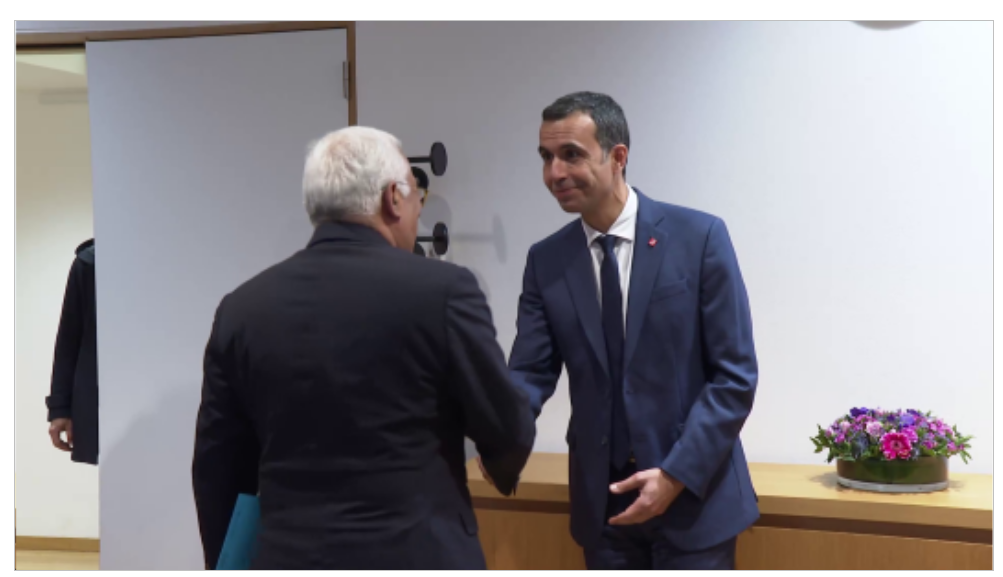
Costa greets Mendonça and addresses him in Portuguese with a hearty "Muito boa tarde!"
As the participants sit down and the meeting begins, Mendonça is visible on the right-hand edge of the picture, seated adjacent to Campinos and opposite to Jakob Wegener Friis, a Danish national, who is the "Chief Economic Advisor" in Costa's cabinet.
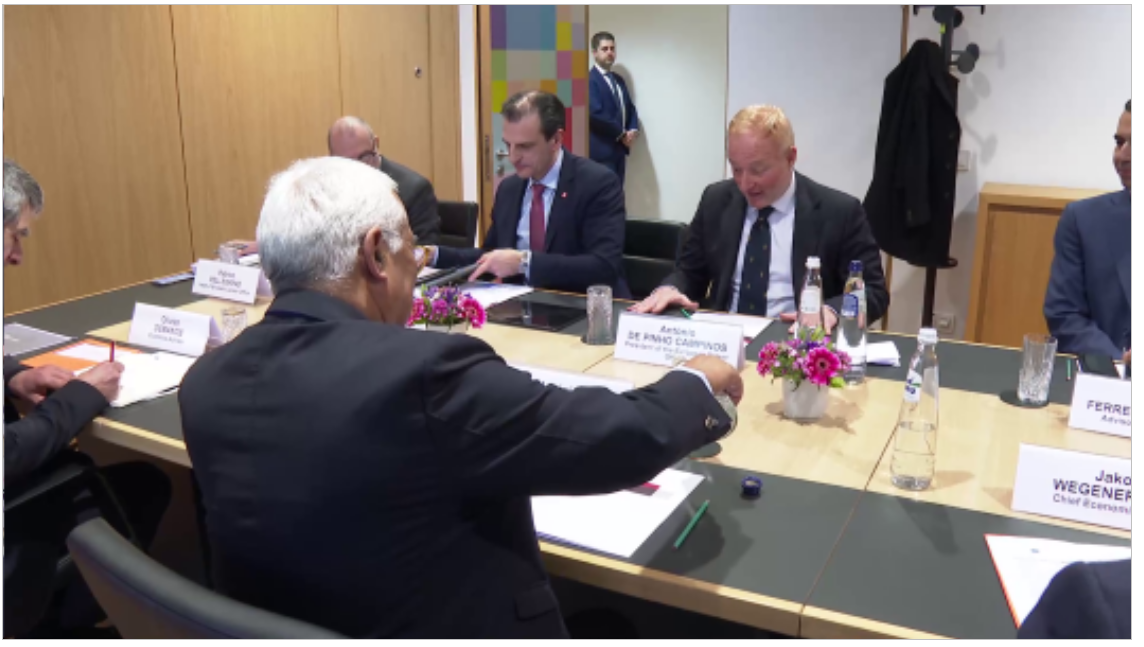
Mendonça is visible on the right-hand edge of the picture seated adjacent to Campinos and opposite to Jakob Wegener Friis, a Danish national, who is the "Chief Economic Advisor" in Costa's cabinet.
Based on the available evidence it seems that Mendonça has been "co-opted" by Campinos for a very specific purpose, namely "reputation laundering".
Mendonça's academic prestige and his reputation for intellectual seriousness provides a veneer of credibility for what is perceived by many insiders as a grubby and corrupt managerial clique whose real currency is patronage, intimidation, and factional loyalty.
To uninitiated outsiders, Mendonça's presence creates the illusion that there must be some higher strategic vision behind the organisation notwithstanding the increasingly cynical manner in which the senior management behaves.
However, the reality is that in his current role at the EPO, Mendonça no longer functions as an independent agent but rather as a fig-leaf for a mafia-like entity that prizes obedience over integrity and self-preservation over truth. His carefully polished academic contributions make no attempt to challenge the system. On the contrary they end up furnishing it with a façade of "legitimacy".
In the next part we shall take a look at another meeting which took place in Lisbon on 27th February 2026 where Mendonça was once again deployed by Campinos for the purpose of "leveraging the Lusitanian connection". █