
Clown Storage Without Backups
Shallow coverage* treats the scale of the data as the main aspect, not the scale of the invaluable work lost. This was a better take:
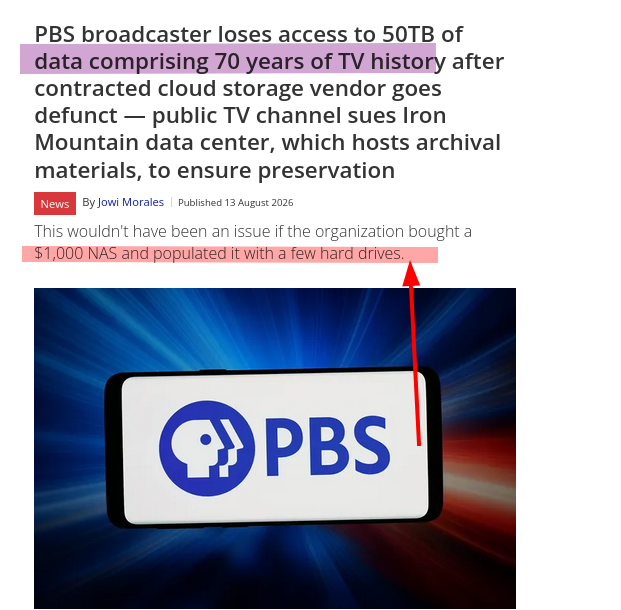
A reader wrote to us regarding a "TV station's" (PBS) "cloud" provider that "fails" (to actually deliver its most basic functionality). "Note the name of the cloud provider," said the reader, as it is "Open Source Storage".
Clown computing and "Open Source" are almost opposites.
This article speaks of "more than 50 terabytes" (despite the explosion in the price of storage, a quick search through eBay shows that for less than 3,000 pounds one can get a decent device that stores this much).
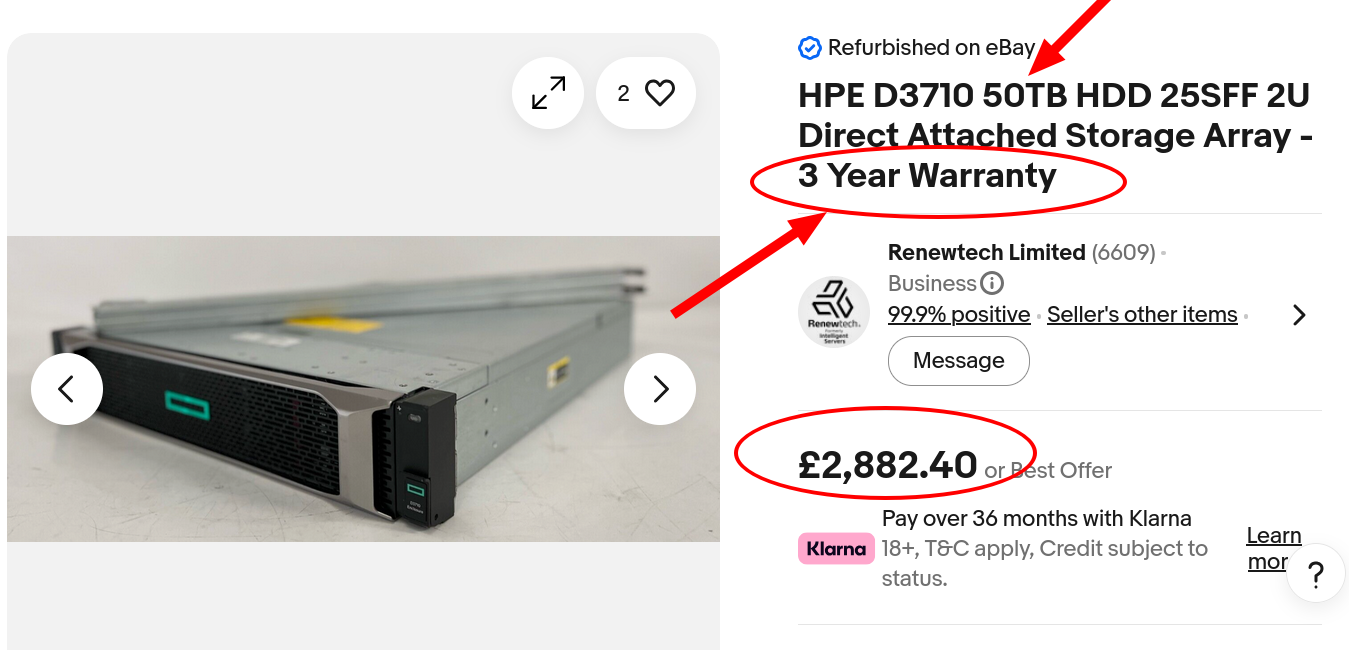
That's just the first result that showed up. There might be far better offers.
Last year I bought a 8TB drive (Seagate, brand new) at a price point that means 50TB of pristine storage would cost less than 1,000 pounds. Far less.
Over a decade ago Prof. Moglen told the audience that people had paid with their privacy to Google (e.g. Gmail) for still what only costs pennies per gigabyte.
This makes no sense.
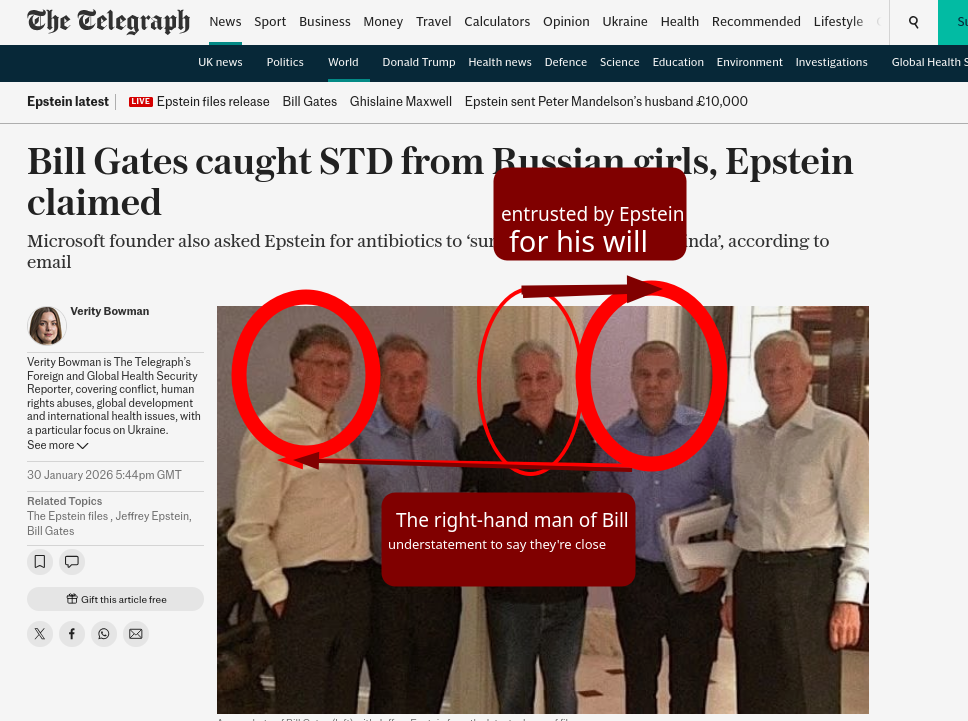
PBS the very large broadcaster (that took bribes from Bill 'Esptein' Gates who then used it as his private megaphone) should be shamed of itself for technical and managerial incompetence. Who signed those papers? Tom's Hardware coverage says they lost 70 years' worth of work due to some (likely technically-illiterate) fool who saved no money and saved no data. Setting up several reliable copies of the data, plus several off-site backups (this data is nowhere as sensitive as medical data), should only cost a few grand.
Did PBS let Microsofters handle the paperwork? The same PBS that deemed it appropriate to take bribes from the man who passes viruses between "young flesh"?
Does the tech coverage at PBS fare any better than its own tech staff? "As for PBS," the associate concludes, "they lost 70 years of recordings because they chose, against all known best practices, to avoid keeping backups and had only a single copy (not a backup) on some rented hardware."
In fact, "a copy is not a backup, a backup is a copy which is offline the moment it goes back online it downgrades to merely another copy for the duration." █
_____
* For the media it would be a lot "better to express the loss in years (70 years of data) rather than volume (50TB)," as the amount of human work involved likely adds up to billions of dollars, as an associate notes upfront. And it would be "best to mention copy vs backup and off-site backups etc" because PBS foolishly relied only on this one company that is not PBS and is not doing its own backups, either onsite or offsite.