
Bonum Certa Men Certa

How Apple Attacked (and Marginalised) the Linux-powered WebOS

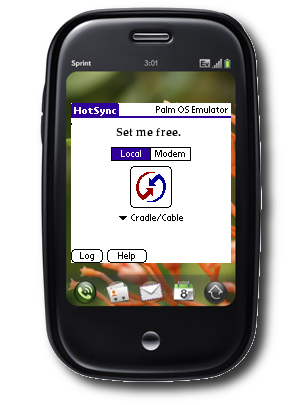
Palm Pre with WebOS and Palm OS

Summary: Professor Michael Risch talks about WebOS, responds to our criticism

There is a fascinating story about WebOS, the operating system built on Linux and optimised to work well on the Web, using some portable framework that is Web-compatible (a growing trend in SDKs). Apple's devices are poor at Web browsing, so WebOS (now open source as we hoped but unfortunately patents-encumbered) and some platforms like Android, which now has Chrome, have had a huge potential for growth, mostly at Apple's and Nokia's expense. Android is well ahead of Apple in technical terms and "Samsung [is] Innovating Faster Than Apple" claims a minister. So anyway, after Apple threatened Palm with lawsuits [1, 2] we find out in Risch's rant about the already-controversial SHIELD act that WebOS was derailed by Apple:


Consider Palm, which developed WebOS, and made stuff. Consider HP, which has spent billions of dollars in research and development. HP bought Palm, and made WebOS tablets. For various reasons, maybe in part due to patent claims from other tablet makers like Apple, HP decides to stop selling WebOS tablets. HP then decides to enforce Palm’s patents. Mind you, HP didn’t just buy the patents, it bought the company. And then it made stuff, it researched, it developed, and it has even licensed WebOS out to LG try to resurrect it for televisions. Is HP a troll now? It falls under the text of this act. I think that just cannot be right, and yet there it is, in black and white.


Pamela Jones wrote: "Apple did that? I didn't know that. If so, then I spit in their general direction. I love WebOS, and Apple needs to cut it out. It can't be the only tablet maker in the universe. The more they sue and threaten, the more determined I am never to buy anything from them again."

Wired had Risch (prominent in the debate over patent trolls) as a guest in a debate full of lawyers whose opinions omit the obvious solution (here is another recent example) and after our criticism of his suggestions he wrote to me to say: "Thanks for reading, even if you don't agree. I'm glad to hear that I'm even slightly controversial, as I usually see myself as plain vanilla.

"I outside us was a bit surprised by your characterization of the op-ed, though. For one thing, I quote Stallman's editorial. For another, my very first suggestion was: " More patents should be rejected, and especially weak software patents. Limiting these should continue regardless of who - troll or product company - owns those patents." I realize that this doesn't go far enough for those who would abolish software patents, but it's hardly a defense. Indeed, at least one person shared this sentiment as the takeaway from the op-ed on twitter. I actually had a lot more written about software patents, but they limited me to 1100 words, so anything not core to the primary argument got slashed - so it goes."

I replied by saying that "I do believe that we need to end software patents as a whole."

"I hear you," he said, "I know a lot a people feel that way. Even though I disagree, at least that would be owner neutral!"

That's why it's a debate. Every debate has some factions on each side. Anup Malani, writing this paper about patents, says: "Counter-intuitively, we propose raising the stakes of patent litigation by providing enhanced rewards to victorious patent holders and imposing enhanced penalties on owners of patents that are invalidated at trial." This is not the obvious solution, either. It evades the obvious fix which is related to scope, not legal action.

Stephen Ornes, a writer based in Nashville, Tennessee, wrote this article in the New Scientist yesterday. He opposes software patents on the ground that they are akin to patenting mathematics. To quote:

AT SOME point in their career every mathematician comes up against the question, is mathematics invented or discovered? The query makes some cranky. The answer doesn't directly affect their work, after all, and the discussion often leads nowhere useful. Spending time debating the ultimate nature of mathematics takes away from actually doing it.

Some scholars take issue with the terms themselves. In his 2008 essay Mathematical Platonism and Its Opposites, Harvard University mathematician Barry Mazur called discovery and invention "those two too-brittle words". One might be tempted to defuse the question altogether with a merger: perhaps maths involves inventing new relationships between things we have discovered.

It's a metaphysical query, a nerdy way to ask whether or not some pre-existing truths underlie our existence. Here we bump up against theology. If mathematical ideas are discovered – the Platonist position – then a proof is a real-world encounter with an immortal truth. But then where, exactly, is this ethereal pool of truths? Did prime numbers exist before the big bang?

If, on the other hand, mathematics is invented, then proofs spring from human intelligence a bit like art or law. But then why do mathematicians across time and space always agree on what's right and wrong?

The question about invention versus discovery flares up every few years, often in a different guise. The latest incarnation concerns something very down to earth: money. In this case, the discovery versus invention question has profound consequences. In fact, there may be no mathematical question with higher stakes. That's because mathematics powers the algorithms that drive computer software, and software is big business, worth over $300 billion a year to the global economy.


If we start with the hypothesis that algorithms are reducible to maths -- which they are -- then it becomes apparent that the patent system is inherently broken in the scope sense. Talking about damages in litigation is not the point. We must identify and address root causes, not symptoms.

Recent Techrights' Posts

Links 03/02/2026: "Distraction is a Sin" and Fake "Encryption" (Surveillance With Good Marketing)
Links for the day
 
Red Hat (Under IBM) Works for Microsoft (Proprietary Software) and Slop
Yesterday Red Hat's official site, redhat.com, published exactly 5 new blog posts
IBM is Dying (More Layoffs), Red Hat Will Continue to Suffer From the Acquisition
Financial engineering
Colombia Adopting GNU/Linux Even Faster (at Microsoft's and Apple's Expense)
Do politics play any role in this?
An Effort to Tackle Slavery in 'Open Source' Clothing
"a civil rights lawsuit to examine the concerns of censored developers in the free, open source software ecosystem"
$15 billion lawsuit: Ubuntu, Google & Debian crowdfunding campaign launch
Reprinted with permission from Daniel Pocock
The Solicitors Regulation Authority (SRA) Delusion - Part II - Why We Need to Expose the SRA to More Daylight, Public Scrutiny
SRA is neither effective nor regulated
400-Page US Federal Court Against Abuses by Google, Microsoft and Front Groups That Abuse Volunteers for American Corporations
There are 386 pages in total (in the US claim)
Corporate Influence Never Impacted Us
There's no reason to assume we'll ever "sell out"
Growth of GNU/Linux in Cuba
Right now a lot of the world drafts or already implements a GAFAM exit plan
A Day After EPO Strikes an Escalation to Heads of Delegations to the Administrative Council
They rely on the European media playing along, helping them to hide major blunders, even crimes
Over at Tux Machines...
GNU/Linux news for the past day
IRC Proceedings: Monday, February 02, 2026
IRC logs for Monday, February 02, 2026
Gemini Links 03/02/2026: Stargazing, Development Boards, and Tcl/Tk Slop
Links for the day
Microsoft Lost 20% of Its Money in the Past 6 Months
Microsoft is hiding what's really happening while mocking critics
Great News, IBM 'Gained' Almost 10% in "Goodwill" Value After Firing Tens of Thousands in 2025
"goodwill" will be inflated despite IBM staff getting sick of IBM
Americans Move to GNU/Linux
some of the biggest American populations
I Still Like Drawing and Various Other Arts (They Help My Activism and Journalism), Slop is an Enemy of Creative People
Recognise that slop isn't intelligence; it's a generational excuse for plagiarism and privatisation of not only the Commons but also proprietary knowledge (without authorisation)
Carmen-Lisandrette Maris (Mission:Libre) Explains to Adolescents and Young Adults How Free Software Improves Privacy
Based on what we've seen and read, Mission:Libre has a solid grasp of Software Freedom
Chatbots Didn't Do Any Good for Microsoft
Google "AI" = search + copypasta
Links 02/02/2026: Cultural Cleansing by China and 'Living Behind Firewalls" in Iran
Links for the day
GNU/Linux Measured at More Than 4% in Russia
growing adoption of GNU/Linux in Russia
Gemini Links 02/02/2026: Stages of Age, Workflows, and Counting Capsules
Links for the day
Oracle's Debt Rose Over 20 Billion Dollars in Just 3 Months
Is "hey hi" becoming a synonym for debt?
Oligarchs' 'Speech Zones' Are Not the "Public Square"
The apologists of social control media, including press that got "addicted" to such fake "media", are helping dictators and oligarchs grab the public attention away from the real press
IBM Misleads and Gaslights Investors With Slop Sold as "AI" (the Business is Waning, Mass Layoffs Continue)
People who do this are dishonest. They should not be put in charge.
Links 02/02/2026: 'Melania' a Horror Movie "Will They Inherit Our Blogs?"
Links for the day
Doing More Detailed Series (Long-Form Works)
Long readings or book-like reading binges are only possible when parts are suitably labeled (name and numbers) if not interlinked
Mobbing at the European Patent Office (EPO) - Part II - Racism, Cocaine Use and White-Collar Corruption
When you hire people illegally, to work for cocaine users and keep quite about the cocaine use, what will be the impact on the reputation of an institution?
A Can of WORMS - Part II - Darkening the Name of RMS, Associating It With Crime
Beware projection tactics
Submit Your Suggestions for EU's Embrace of Software Freedom by Tomorrow
Time to leave GAFAM (US) hegemony behind
Slopless Weekend
This is not sustainable
Over at Tux Machines...
GNU/Linux news for the past day
IRC Proceedings: Sunday, February 01, 2026
IRC logs for Sunday, February 01, 2026
Gemini Links 01/02/2026: Fossil Heating Installations and Some FOSDEM Coverage
Links for the day
The State of Memory Leaks in GNU/Linux
The issue won't be solved by adding more memory
Links 01/02/2026: Nvidia's Jensen Talks Down Microsoft 'Open' 'Hey Hi' and Britain's Starmer Makes Friends With China, Japan
Links for the day
Why Microsoft Accenture Has So Many Layoffs in Recent Years
The debt of Accenture doubled a year ago
Links 01/02/2026: Public TV Gutted by Cheeto, Billionaires Fund a Cheeto Propaganda Movie in 'Documentary' Clothing
Links for the day
The New Site ("New Techrights", SSG Since 2023) Exceeds the Old Site in Requests
The "New Techrights" gets about twice as many requests as the "old" (WordPress) "Techrights", the site of 2006-2023
20 Years Ago
Some time soon all this slop frenzy will become like yesterday's "blockchain" or "metaverse"
Gemini Links 01/02/2026: Zdzisław Beksiński and Disconnected Git Workflow
Links for the day
Talks About Nadella's Microsoft Exit After Chatter About Tim Crook Leaving Apple (Years Ahead of Retirement Age)
Mass layoffs and record debt do not represent a company's health.
We Still Cover the Same Problems We Spoke of 20 Years Ago
We're not easily seduced by "novelty" (new things), we try to judge them critically
Patents Standing in the Way
They also cause environmental harm
Over at Tux Machines...
GNU/Linux news for the past day
IRC Proceedings: Saturday, January 31, 2026
IRC logs for Saturday, January 31, 2026
IBM, a Microsoft Company
Microsoft and IBM as a pair go a long way back