
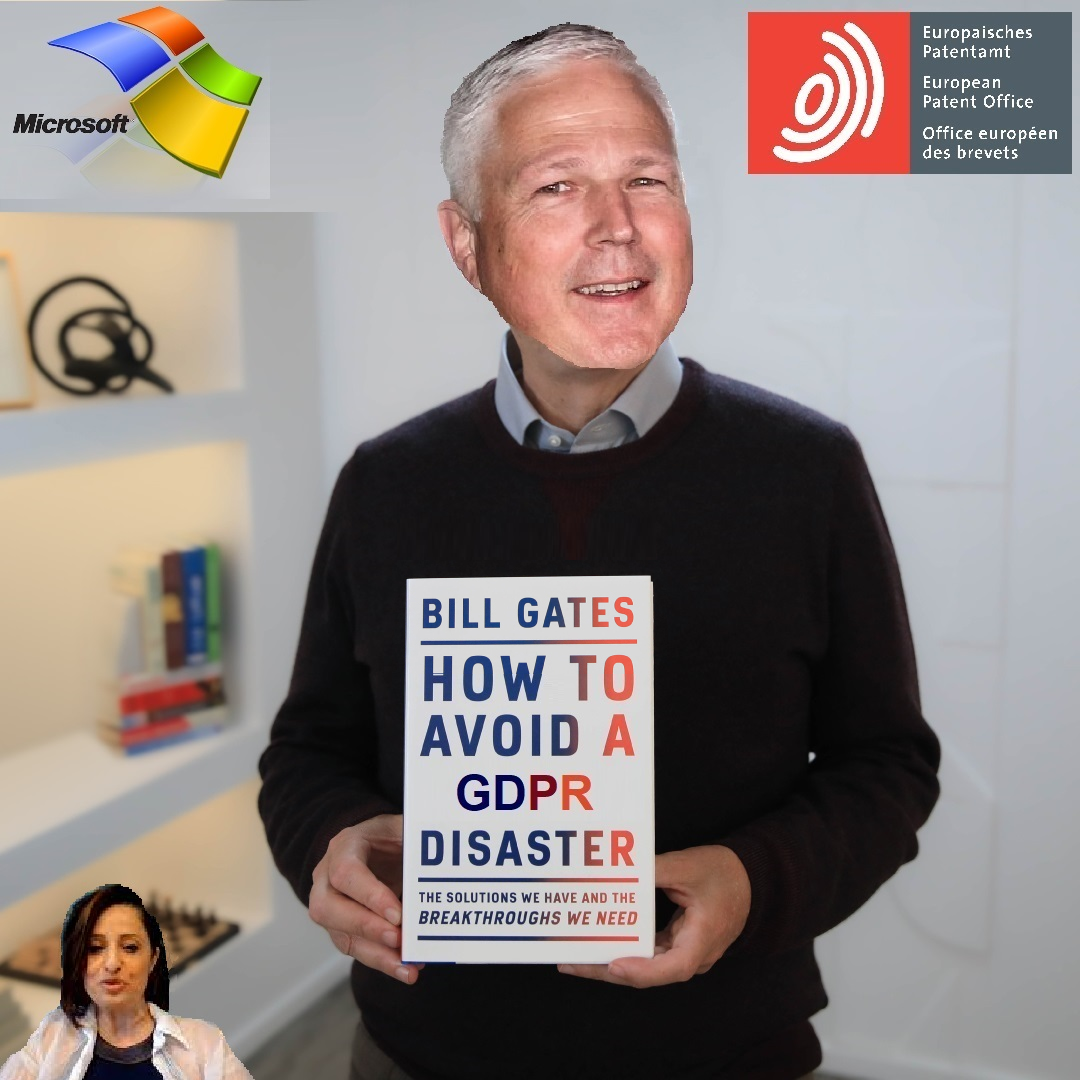
Is the EPO heading towards a GDPR disaster?
EPO Vice-President Steve Rowan says "Not on your Nellie!"
But sceptics remain unconvinced.
Although it is probably fair to say that there is no general consensus about what exactly the concept of “digital sovereignty” covers at the level of detail, the term has nevertheless become a key catch-phrase of contemporary political discourse.
"Both at the supranational level of the EU and at the national level in its member states, there have been consistent calls for greater self-determination and strategic autonomy with regard to technology and the digital economy."These calls serve as shorthand for the aspiration to reduce dependency on digital infrastructures and services from foreign providers, notably the US.
The global circumstances of the coronavirus pandemic and the accompanying changes have added weight to these calls for more independence and decision-making capacity in the digital sphere.
One significant example of this came in July 2020 when the German government, which had assumed the presidency of the Council of the EU, announced its intention to "establish digital sovereignty as a leitmotiv of European digital policy".
However, inside the "echo chamber" of the EPO's senior management and governance bodies, the competent decision-makers appear to be either entirely oblivious to the prevailing tenor of the current European debate or hell-bent on ignoring the clearly articulated policy statements about enhancing European "digital sovereignty".
In fact, with its latest procurement decisions relating to IT services, the EPO seems to have gone off on its own "solo run" in a diametrically opposed direction.

Despite plentiful indications to the contrary, EPO management continues to peddle the myth of a "close alignment" with EU data protection policy
Under the US Foreign Intelligence and Surveillance Act (FISA) and the US Clarifying Lawful Overseas Use of Data Act (CLOUD Act), Microsoft is obliged to grant security and intelligence agencies access to data stored in its cloud, even when stored on EU servers.
"As explained previously, these decisions have effectively resulted in the large-scale export of operational data from the EPO to external data processing infrastructure owned by and under the control of a privately owned US-based multinational corporation."Even if the risk of "official" (i.e. state-sanctioned) industrial espionage were to be discounted, the data in question has - for all practical intents and purposes - been placed at the disposal of Microsoft such that it could easily be accessed by the company for its own ulterior ends.
It is worth pointing out that this data is likely to include confidential internal communications from members of first instance divisions in examination and opposition proceedings. It also presumably includes confidential internal communications from members of the Boards of Appeal who rely on the IT infrastructure provided by the Office.
It is difficult to see how such developments can be reconciled with the spirit of European data protection law or how they could realistically be characterised as anything other than a misguided and ignominious sell-out of the EPO's own "digital sovereignty".
Given the tenor of the ongoing political debate about European "digital sovereignty", it does not seem to be an exaggeration to say that these recent developments at the EPO deserve to be a matter of urgent concern at the highest political level in Europe.
At the very least these matters seem to merit discussion at a "conference of ministers of the Contracting States responsible for patent matters" which is envisaged under Article 4a of the European Patent Convention and which is supposed to take place "at least every five years".
But given that the Administrative Council has repeatedly failed to convene such a conference ever since Article 4a EPC entered into effect in December 2007, it is seems quite likely that the competent ministers of the EPO contracting states have not yet been properly briefed about the catastrophic data protection situation at the EPO and the currently ongoing sell-out of the organisation's "digital sovereignty" by its senior management.
As we noted in the preceding instalment, one of Battistelli's first moves as President of the European Office was to procure the abolition of the independent Audit Committee which reported directly to the Administrative Council.
"Given the tenor of the ongoing political debate about European "digital sovereignty", it does not seem to be an exaggeration to say that these recent developments at the EPO deserve to be a matter of urgent concern at the highest political level in Europe."The intended functions of the Audit Committee included advising the Administrative Council about potential conflicts of interest and risk management.
Now that this independent committee has been abolished there is nobody around to warn the Council about the potential political and security risks of the dubious "IT roadmap" being implemented by the senior management of the EPO.
So if the Administrative Council delegates themselves are not on top of the situation - which appears to be the case - it would be too much to expect them to be in a position to brief their supervising ministers in an effective manner.
As things stand the EPO caravan seems destined to trundle forwards on auto-pilot until it is jolted out of its complacency by some kind of monumental data protection "clusterf**k".
Or perhaps matters will come to a head when a pre-emptive complaint is filed with the European Data Protection Supervisor or some kind of legal challenge is mounted to the EPO's non-compliance with GDPR standards by a privacy advocate like Max Schrems?
"As things stand the EPO caravan seems destined to trundle forwards on auto-pilot until it is jolted out of its complacency by some kind of monumental data protection "clusterf**k"."Even then, the usual suspects will probably do their best to hide behind a smoke screen and sweep the debris under the carpet before anybody notices and starts asking too many awkward questions.
We would like to end this series on an optimistic note but for the moment the best advice we can give to those hoping for firm political action to counteract the sell-out of the EPO's "digital sovereignty" is the following: "Don't hold your breath…" ⬆