
Whistleblowing is About Understanding Boundaries and Risks
Whistleblowing is risky. People take risks to put "out there" (for the public) suppressed information, typically with the aim of tackling something collectively bad (only beneficial to few corrupt/malicious persons).
Wikileaks generally understands what it takes to do this work as a publisher; Julian Assange understood the sort of tricks and manipulations which would be leveraged against sources/leakers (people who had fed Wikileaks) as well against against himself, as a person.
When we expose EPO corruption we're well aware of the SLAPP zeal and we're prepared for it upfront. They know it. So they won't bother anymore. But character assassination happens behind the scenes. We expect that.
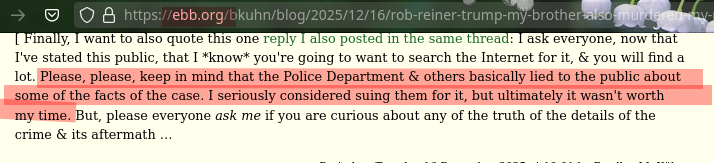
People who are overly concerned about comfort and safety will never leak, will never publish, will not even speak. People who have a grasp of boundaries will take the risk and deal with the outcome/aftermath. At the end, typically, truth finds its way out. Justice as defined by courts or crime-solving as defined or enumerated by police statistics is words on paper (or Web pages). As Bradley M. Kühn put it last month: "Finally, I want to also quote this one reply I also posted in the same thread: I ask everyone, now that I've stated this public, that I *know* you're going to want to search the Internet for it, & you will find a lot. Please, please, keep in mind that the Police Department & others basically lied to the public about some of the facts of the case. I seriously considered suing them for it, but ultimately it wasn't worth my time. But, please everyone ask me if you are curious about any of the truth of the details of the crime & its aftermath…"
They say what suits their agenda, just like the EPO and its kangaroo courts (BoA) or unlawful upstream tribunals (UPC). They brush under the carpet what's too embarrassing to them.
So, to them, "life goes on..." (safer for their careers)
The bottom line is, people typically find out the truth at the end. To some, this is uncomfortable, but just because it is uncomfortable doesn't mean they can prevent it (except perhaps temporarily). █