
Bonum Certa Men Certa

Patents Roundup: Software Patents vs. Microsoft, Novell (And Others)

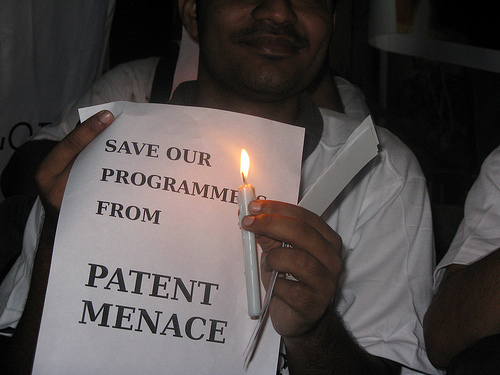
Software patents protest in India


Software Patents vs. Microsoft, Novell


IN A CASE that we mentioned at the end of last week, Novell and Microsoft were among those sued by a patent troll. There is lots more information about it out there and Ars Technica offers decent coverage.


Microsoft, Symantec, and 20 other companies have been sued by a small Texas firm for patent infringement. The firm was granted patents in the mid-'90s over systems for governing application and data permissions, as well as ensuring application integrity, and is now seeking to bar the companies from making use of the patents. And some monetary damages would be nice, too.

The firm, Information Protection and Authentication of Texas (IPAT), owns two patents cited in its complaint, the latest of which is US patent 5,412,717, which was filed in May 1992 and granted on May 2, 1995. This is a continuation of a previous patent, US number 5,311,591, granted in May, 1994.


Here is some more information.

A Texas company has filed a patent infringement suit against 22 companies for violating patents issued in the mid-1990s regarding application integrity and security.


Two more cases of patent litigation have just cropped up:

1. Backup firm sues Intel, Microsoft, HP, Dell, Acer...

A computer backup recovery firm claims Intel, Microsoft, Hewlett-Packard, Dell, Acer, and others have aped its patent for quickly restoring a PC after data corruption.


2. Yahoo's Flickr.com Infringes Patent: IconFind

Law360, New York (January 14, 2009) -- Yahoo Inc. is being sued for using technology in its online photo-sharing service that is allegedly protected by a patent belonging to IconFind Inc.


South Africa


An SA-based publication, ITWeb, has a series of articles on software patents and whether software should be patentable.

Application software, which is what most people think of first when the word software is mentioned, is commonly written using advanced programming software tools, which ease the task of converting a desired function into code. High-level human-readable code, whether produced in this way or written directly in a programming language, is known as source code and can be analysed by software programmers to understand the techniques used in the software. The source code must be compiled (converted to machine code) or interpreted to be run on a computer.


Microsoft is already breaking the (patent) law in South Africa. It's similar to what it does in India [1, 2, 3, 4, 5, 6, 7, 8, 9, 10, 11, 12] along with its embattled close partners. They besiege the local population, in this case by depriving them of access to knowledge and its application.

Europe


Digital Majority has found this older, yet valuable, pointer to the UK-IPO situation.

The Intellectual Property Office had previously recognized inventions that either solve technical problems external to a computer or solve "a technical problem within the computer" as potentially patentable inventions. The sea change of Symbian is that

"improving the operation of a computer by solving a problem arising from the way the computer was programmed - for example, a tendency to crash due to conflicting library program calls - can also be regarded as solving "a technical problem within the computer" if it leads to a more reliable computer. Thus, a program that results in a computer running faster or more reliably may be considered to provide a technical contribution even if the invention solely addresses a problem in the programming."


This is a subject that we initially covered in [1, 2] and to a lesser extent also explored in [1, 2].

The Microsoft pressure group known as ACT [1, 2, 3, 4, 5, 6, 7, 8] is meanwhile peddling a back door to software patents in Europe. The FFII's president delivered the following public talk.

Ogg Theora


Direct link


The folks at OS/2 world are protesting against software patents in Europe and encouraging those who have not yet signed the petition to do so now.

All software patents I have read so far are worthless. Yet the government approved monopoly. Especially when you live in Europe sign this petition:

http://stopsoftwarepatents.eu/


Yesterday we wrote about the complaints from TomTom's CEO. Here are some more.

Ogg Theora


Direct link


There was a lot more to see in this event. "The worst are the answer from the Commission and Alcatel people," says Benjamin from FFII, who watched it quite closely.

In Re Bilski


It may seem like old news really [1, 2, 3, 4, 5, 6, 7, 8, 9, 10, 11, 12, 13, 14], but it's not [1, 2, 3, 4, 5, 6, 7, 8, 9, 10, 11, 12, 13, 14, 15, 16, 17, 18, 19]. This crucial court ruling is continuing to tear software patents apart. Here are several new examples from the Web:

1. Microsoft Seeks Pay-As-You-Go Computer Patent

I cannot see how this invention is one that ought to be patentable, particularly given the recent decision of the United States Court of Appeals for the Federal Circuit in In re Bilski, which dealt a significant blow to the patentability of software and computer processes. Those familiar with the Bilski decision will recall that the Federal Circuit has now required that in order to protect software and computer processes we revert to what was done before the State Street decision, which is to focus on the machine and treating software as if it is not the invention but to patent the machine itself that has unique functionality thanks to some black magic provided by the unpatentable product (i.e., software) whose name cannot be uttered. In truth, many patent practitioners were never quite comfortable with State Street and have been doing this all along to cover the bases, but for those clients who wanted cheap software patents rather than paying $25,000+ for an application, Bilski pretty much killed your patents and applications, but I digress.


2. Another bubble ready to burst!

Sadly most of our thinking around legal protection of knowledge has been "derivative" in nature, a shoddy cut and paste job from the "mature IP systems" of the West. However, as the Bilski case shows, even these "mature IP systems" are having second thoughts on how they treat knowledge, or in this specific case, software patents. As I have argued in my previous blog entry, "The Practical Problem with Software Patents," the litigation-ridden path followed by US in granting software and business method patents is something we must avoid at all costs.


3. NPEs and Abstract Patents

For a process to be patentable, it must involve a physical transformation to a different state or thing, or must be tied to a particular machine.

What does that mean? The court gave examples indicating that software would be patentable if it represented physical objects undergoing physical transformation. However, it expressly reserved judgment on the alternative test: whether a general-purpose computer was "a particular machine." If so, of course, all software processes would be patentable.

Not the brightest of lines, but the court didn't flinch from trying to draw one, despite arguments that patent lawyers would manage to circumvent any court-imposed limitations. The Bilski decision leaves a lot up in the air, but it affirms that judges will draw limits, even around patentable subject matter, and it offers a modest deflating of the patent bubble. It eliminates some of the worst excesses spawned by State Street without provoking a backlash. And it has breathed new life into public debate of where the limits should be. For those who care about how and where the line should be drawn, some colleagues and I have organized a conference at the Brookings Institution on January 14, the Limits of Abstract Patents in an Intangible Economy.

Just as the debate has come alive in the U.S., it has also resurfaced in Europe three years after a proposed directive on software patents went down to defeat in the European Parliament. The President of the European Patent Office has asked the EPO's Enlarged Board of Appeals to answer four questions about the patentability of computer programs. The European Patent Convention has always specifically precluded patents on certain abstract processes, including computer programs and business methods, but then in the next section it says that these exclusions only apply to computer programs, etc. "as such." So decades have been spent trying to figure out what "as such" really means and what kind of "technical" contribution is needed to pass muster.


Although IBM deserves some credit for the Bilski ruling, it continues to support software patents. Rather than end this bubble, its employees continue to be its biggest feeder.

For the 16th year in a row, IBM has topped the annual list of patent-happy American tech companies. The list tanks high-tech vendors by the number of patents they were awarded in the United States over the previous year.


This is also covered here, here, and here

On the upside, IBM does not really intend to attack -- neither by words nor action -- Free software. This differentiates it from abrasive companies like Microsoft whose profitable products are rarely physical.

Gavin Baker offers some live blogging from a US-based event, TACD IP (Trans Atlantic Consumer Dialogue in Washington, DC), where patents are at times being criticised as well.

Rambus


The vicious company known as Rambus is responsible for patent ambush that got the wrath of the European Commission too. We covered the Rambus situation on several occasions last month [1, 2] and the company is losing it.

Rambus, a designer of high-speed memory chips, may not use 12 of its patents to demand royalties from Micron Technology, a federal judge ruled. Judge Sue L. Robinson of United States District Court in Wilmington, Del., said the patents were unenforceable because Rambus destroyed documents, and called Rambus’s conduct “obstructive at best, misleading at worst.”


The AAI filed amicus brief re: Rambus and here is another opinion on this matter.

Patent misuse (or abuse) does not always pay off.

Intellectual Monopolies in General


There are many more interesting stories that we haven't the time to cover properly. Here are some of the better ones:

1. Keeping the Czechs in Check

[Via Google Translate: The Czech EU presidency has opted for the next six months also in the areas of ICT and Citizens' lot. As regards the protection of "intellectual property" and the reorganization of the EU telecommunications market to the Czechs on the preparatory work of the French build.

The EU has 2009 at the European Year of Creativity exclaimed. That it will also ensure the protection of "intellectual property" goes, goes without saying

Thus, the Czech EU presidency in their list of priorities for the coming six months, under the item "Removal of trade barriers", the controversial anti-Piratierie ACTA agreement, which is currently behind closed doors of the EU Commission, U.S. negotiators and representatives of other major industrialized countries will be negotiated.]


More on the ACTA in [1, 2, 3, 4, 5, 6, 7, 8, 9, 10, 11, 12, 13, 14, 15, 16, 17, 18].

2. Can't Compete? Sue For Patent Infringement!

It happens over and over again... if you can't innovate to compete, why not litigate to compete? Broadband Reports points out that Charter Communications is now suing Verizon for patent infringement relating to Verizon's FiOS fiber optic internet connections.


3. US ITC Initiates LCD Screen Patent Investigation

O2's complaint accuses the five companies of importing products containing LCD (liquid crystal display) screens that violate a series of patents owned by the company, the ITC said in a news release.


4. Can You Trademark Awareness Of A Disease?

BoingBoing has the latest story of trademark insanity, where a "charity" focused on the rare, but apparently serious disease of Congenital Diaphragmatic Hernia (CDH), is trying to trademark the phrase "Congenital Diaphragmatic Hernia Awareness" and appears to be threatening other charities for using the phrase, and (according to this petition) has filed complaints to get fundraising stores shut down for using the phrase


The more "intellectual" human kind gets, the more insidious it seems.

"Let me make my position on the patentability of software clear. I believe that software per se should not be allowed patent protection. […] We take this position because it is the best policy for maintaining a healthy software industry, where innovation can prosper." —Douglas Brotz, Adobe Systems, Inc.

Recent Techrights' Posts

The Slopfarms' Business Case (or Business Model) Never Existed and Nowadays, in 2026, They've Mostly Collapsed
Hopefully by year's end many slop suppliers will be offline and slopfarms that rely on them throw in the towel
IBM CEO and CFO Make It Hotter in the Kitchen
Who's gonna leave the kitchen while they cook the books?
Jim Zemlin's 'Linux' Foundation is the Real Link Between Linux and Pedophilia
It's about the deeds, not the words
 
Links 28/02/2026: Bill Epsteingate Admits Sex With Young Girls, "Epstein Files Are the Horror That Keeps on Giving"
Links for the day
IBM: Where Companies Come to Perish
thelayoff.com is censoring stories
Tech Layoffs Are Not Because of Slop, They're an Effect of a Rotting Economy and Tech Giants Being Too Deep in Debt
Block is rapidly sinking in debt
March in London Today Against Slop's Harms to Society (and the Environment), Starting at 12:00 GMT at the Microsoft OpenAI Office
Today there is a protest in London (UK)
Microsoft Mass Layoffs Have Officially Resumed, Microsoft's Waggener Edstrom/Frank Shaw Lied
"The former employees say this was a mass layoff"
Over at Tux Machines...
GNU/Linux news for the past day
IRC Proceedings: Friday, February 27, 2026
IRC logs for Friday, February 27, 2026
Links 27/02/2026: Block Cuts 40% of Its Workforce While Blaming Ponzi Scheme, Netflix Backs Out of Bid for Warner Bros.
Links for the day
Gemini Links 27/02/2026: Unlearning Literacy (Slop) and Firefox as Slop-ware
Links for the day
It Looks Like Linux Chief Linus Torvalds Made a Good Call Regarding Kent 'Slop' Overstreet
Having never met or even chatted to Overstreet, I'm not in a position to judge him
Links 27/02/2026: Slop Incompatible With Nuclear Codes, Chinese Slop "Chatbots Censor Themselves"
Links for the day
Please Report the European Patent Office (EPO) to Europol for Cocaine Abuse and Tampering With Witnesses and Media to Hide This Cocaine Abuse
there are already police reports connected to the matter
Like a Mafia: Kris De Neef and Nellie Simon, Who Help Campinos Cover Up Cocainegate at the EPO (Substance Abuse at the Highest Office), Are Bullying EPO Whistleblowers
They're all in this together [...] At this point, undoubtedly, the EPO is run like an organised crime operation. Nothing more, nothing less.
pulltheplug.uk Says the Internet Harms Us, Will March in London Tomorrow
Maybe the site is down due to high access demand
EPO Management Trying to Hide Cocainegate, Silence/Discredit Whistleblowers, and Probably in a Panic Due to the Strikes
At the moment, Johannes' mates are receiving over 100,000 euros as a reward for doing illegal drugs
The GNU Manifesto Turns 41 in March (Next Week)
And RMS turns 73 next month
The Sister Site is Still Improving the Static Site Generator (SSG) We Use in Techrights
We have a common mission and every week we make measurable advancements
Techrights is 100% Disconnected From Cheeto's America, the Problem is Hired Guns in London Helping Violent Americans Attack Us Domestically
Not a new problem, not limited to us
Greenland Needs to Disconnect From United States Tech to Protect Its Independence
The more Greenland protects itself from Social Control Media, the more robust or resilient it'll be to regime change
Open Source Endowment (OSE) Looking to Raise Money for Free Software, But It's Hard to Know who Runs the Open Source Endowment Foundation
Their Web site does not (easily) show who the Board of Directors includes
Apple Doesn't Want Anybody to Ask What Happened to Vision Pro
They lost a lot of money
Solicitors Regulation Authority (SRA) on Slop and Breach of Confidentiality
They should absolutely not ignore this
If You Want More Verifiable (Auditable) Security, Use GNU Linux-Libre
GNU/Linux will never be 100% secure
Microsoft XBox Can't Stop Talking About Slop
Will we see more "prepared" (under embargo) Microsoft propaganda released simultaneously at 9PM tonight?
Rust Will Not Inherit the Earth, It Barely Deserves a Place on the Planet
Rust - like Haskell and many other short-lived fetishes - will come and go
Truth Versus Fiction: IBM's Collapse Due to Money Crunch, Not Slop Disguised as Code
core issue is financial
Almost 5,000 Known Gemini Capsules
It is now just 98 short of 5k
Priceless leaks found in crowdfunding campaign
Reprinted with permission from Daniel Pocock
Over at Tux Machines...
GNU/Linux news for the past day
IRC Proceedings: Thursday, February 26, 2026
IRC logs for Thursday, February 26, 2026
[Video] "New RMS [Richard Stallman] Positive Media" Reaches Millions of Viewers This Week
Assuming 5+ million people will watch this on the first week, that's good publicity for the Free software movement
Another Quiet Slop Day Passes By
the number of slopfarms we can locate/track is fast decreasing
Gemini Links 26/02/2026: Sending a Thesis and Lupa/Onion ("Lupa now lists Gemini .onion addresses")
Links for the day
Links 26/02/2026: Bcachefs Man Bonkers, "Seven Journalists Convicted for Taking Photos at Courtroom"
Links for the day
Links 26/02/2026: "Peak Mental Sharpness" and "The Whole Economy Pays the Amazon Tax"
Links for the day
If You Value Privacy, Follow the Likes of Eben Moglen, Phil Zimmermann, and Richard Stallman, Not Back Doors' Boosters Who Mislabel Themselves as Security Experts
Signal is not really secure
"Community" Site Deleted by Jeffrey Epstein-Connected 'Linux' Foundation Had Interview Where Eben Moglen Spoke of GPLv3 and of DRM, Back Doors Etc.
Deleting what happened or what was said two decades ago
Richard Stallman (Free Software Foundation) and Eben Moglen (Columbia Law School) Explained 25 Years Ago That Proprietary Software (and Proprietary Firmware) Would Lead to Back Doors
a fortnight after the 9/11 terror attacks in the US
Writer's Block is Not a Problem to Us, Only a Lack of Time
Or timewasting by aggressive militants who try to silence us [...] People who experience writer's block very often find it depressing (it feels unproductive) and sometimes come to the conclusion that perhaps writing isn't for them
Giving to the Community Versus Taking From the Community (or Worse, Attacking the Community)
some people bring no contributions, only harm
LLM Slop Will Try to 'Rewrite' History of UNIX and GNU/Linux
We occasionally see slopfarms spreading misinformation about UNIX, GNU, and Linux
March Plans for Techrights
next month we plan to start the series about how the SRA failed
Where Does the Solicitors Regulation Authority (SRA) Stand on Machine-Generated Legal Documents and Copy-pasting One Client's Lawsuit to Start Another (for American Serial Strangler)?
Now that many law firms cheat (copypasta, paper DOoS, LLM slop, breaches of rules, even defaming the other side) the SRA cannot keep up
Of Course Android is Not Free Software
That Android is not about freedom should not be so shocking
Talking About Blackboxes
Having just reposted a couple of articles from Alex Oliva
Microsoft Slop is Already Killing XBox
Microsoft will fail at alleviating such concerns
Two Weeks Have Passed and It Looks Like Conde Nast's Ars Sloppica Sacked "Senior" "AI" "Reporter" Benj Edwards But Did Not Remove All His LLM-Produced 'Articles'
the editorial standards at Conde Nast's Ars Sloppica are a joke
Alex Oliva (GNU Linux-Libre): Stricter is Less Popular
Reprinted with permission from Alex Oliva
Fraud and Crimes at Microsoft
A lot of these American companies simply cheat and even bribe
Over at Tux Machines...
GNU/Linux news for the past day
IRC Proceedings: Wednesday, February 25, 2026
IRC logs for Wednesday, February 25, 2026
FSF's Alex Oliva on Hardware Black Boxes
Reprinted with permission from Alex Oliva