
EditorsAbout the SiteComes vs. MicrosoftUsing This Web SiteSite ArchivesCredibility IndexOOXMLOpenDocumentPatentsNovellNews DigestSite NewsRSS

08.16.09

Does Microsoft Violate the First-sale Doctrine?

Posted in Antitrust, GNU/Linux, Hardware, Law, Microsoft, Windows at 7:13 am by Dr. Roy Schestowitz

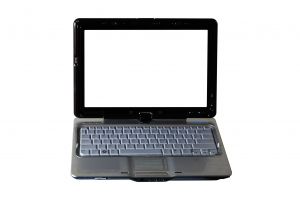
Tablet PC

Summary: Microsoft’s practices in sub-notebooks raise more questions about illegality

WE recently showed that Intel and Microsoft had probably colluded in order to assassinate sub-notebooks as an attractive choice [1, 2]. The evidence is sparse, but it is extensive. As the Managing Editor of Linux Today puts it, “Why are two monopolies allowed to dictate what a netbook is allowed to be like?” She links to this page from PC Magazine which says:

It’s no secret that Intel and Microsoft have a firm grip on what a netbook may or may not use in terms of features and parts; hence the many look-alikes in this pervasive category. But there are a handful of them that are considered exceptions to the rules handed down by Wintel.

Another new article from PC Magazine is titled “5 Netbooks Microsoft Has Crushed”

To quote:

Think most netbooks have single-core processors, 1GB of RAM, and a 160GB hard drive because their manufacturers like conformity? Right. The reality — never officially acknowledged — is that Microsoft doesn’t cheaply license its operating systems to netbooks with specs that are too good (see the limitations at TechARP). The result, as evidenced by the looming retirement of Dell’s Mini 12, is tiny netbooks with lesser hardware than full-sized laptops.

A handful of laptops, including the Mini 12, have broken the mold, but they all pay the price in some way. Here’s a list of naughty netbooks that Microsoft is crushing with its hardware limitations…

An obvious victim of this is GNU/Linux. But according to a third new article from PC Magazine, “Dell Looks to Linux to Expand Netbook Presence”

In an effort to expand its Linux offerings, Dell is researching new netbook-type devices and will soon offer netbook Linux OS upgrades, a company official said on Wednesday.

The company is researching the possibility of offering new Linux-based mobile devices called smartbooks, said Todd Finch, senior product marketing manager for Linux clients, at the OpenSourceWorld conference in San Francisco. The company will also upgrade its Ubuntu Linux OS for netbooks to the latest version in the next few weeks, he said.

As people may recall, Dell more or less accused Microsoft of lying about GNU/Linux-powered sub-notebooks. That was a few days ago and we are finding new examples of GNU/Linux success in Dell’s sub-notebooks.

There are many reasons that this is news. Dell is the quintessential user computing device vendor. They have a well recognized brand and off and on, have courted Linux on the desktop. Linux has a lower acquisition cost for a hardware vendor — and on a $300 computing device, there isn’t a lot of margin.

Barring all of that strategic schpew — the fact is, my wife uses an Ubuntu laptop and seems to have taken to the netbook with a minimum of fuss. I use her viewpoint as an indicator of sorts. She doesn’t hold much back in terms of criticism — if it sucks I’m going to hear about it in short order. She’s not a technology lightweight — she uses facebook, email and web browsing as good or at a higher competency than all but my tightest technological contacts — but she’s not a programmer or IT type.

“I booted up Linux on a my cousin’s computer and she didn’t even notice,” writes Fewa. “Just click on Firefox icon and was off. The netbook sellers just need to go back to Linux.”

MinceR argues that “Dell won’t do that,” but Fewa — pointing at the articles from PC Magazine — insists that “Microsoft needs to be prosecuted for this clearly anti-competitive act. It clearly violates the first-sale doctrine at least.”

Related posts:

Share this post: These icons link to social bookmarking sites where readers can share and discover new web pages.
  • Digg
  • del.icio.us
  • Reddit
  • co.mments
  • DZone
  • email
  • Google Bookmarks
  • LinkedIn
  • NewsVine
  • Print
  • Technorati
  • TwitThis
  • Facebook

If you liked this post, consider subscribing to the RSS feed or join us now at the IRC channels.

Pages that cross-reference this one

A Single Comment

  1. TheTruth said,

    August 16, 2009 at 10:26 am

    Gravatar

    >”As the Managing Editor of Linux Today puts it, “Why are two >monopolies allowed to dictate what a netbook is allowed to be >like?””

    Roy, Im sure you know who the managing editor of Linux Today is

    As you know, the Managaging Editor of Linux today is Carla Schroder.

    You are attributing the comment “Why are two monopolies allowed etc..” to Carla, that comment is a comment in response to a PC Com article.

    The poster of that comment was not Carla, but someone called “sm”. Who made a comment to the LT post (and link to PC COM).

    Carla always signes her comments to other comments by her name and title.

    Most people question you, and fact check you, when they follow the very first link you offer in your article to confirm your accuracy they find the first think you have done is misquote a leading figure in the FOSS movement. A provide a clear link that what you are stateing is at the very minimum inaccurate. At worst an intensional plan to provide misinformation, and misleading details to make your version of the facts suit your bias?

    How are we suppose to believe anything you say, after your first confirmable statement of claim can be proved false in seconds. ?

    Whats that do to your credability ?

    It appears netbooks seem to be one of the fastest moving IT products at present, hardly the result of any assasination of the formfactor.

    Sadly OEM’s make their profit/living from placing a small markup on each product they sell, RAM, HD’s Mobo’s, CPU’s ect, this also applices to software applications and operating systems.

    If there is no cost, there is no markup, no markup == no profit
    and
    no profit == no business

    OEM have to sell RAM, HD’s, CPU, Boxes, laptops, operating systems, applications, batteries and so on, to make a profit to stay in business.

    If all the component manufactures made and provided their product for free, the OEM would not be able to markup the product, no markup == no profit and no business.

    What I dont understand, with arguments such as DELL, you want them to sell linux boxes.
    IF you feel the business model is so strong and viable for FOSS, for a consortium, draw up a business plan, seek out a VC investor or bank or similar business partner, you rock solid business plan with win them over.

    Purchare 1000 or 10,000 naked boxes at wholesales prices, fill them with you’re FOSS product and sell to your pre-orders.

    Thats what you do in business, if you see an opportunity you take it, if you feel you have a viable plan, you execute it.

    You dont spend all your time trying to eliminate the opposition to make your job easier. Instead you do the right thing and compete.
    The amount of effort that goes into this web site would be more than enough to create a strong and vaible business plan.

What Else is New


  1. Links - Anti-Trust Roundups - Yahoo, Nokia, Barns and Nobel


  2. Links - MSNokia Passes Blame, Bill Gates pushes GMOs, Open Access news


  3. Links 7/2/2012: Firefox 11 Enters Beta, Canonical Disappoints KDE

    Links for the day


  4. IRC Proceedings: February 6th, 2012

    IRC logs for February 6th, 2012


  5. IRC Proceedings: February 5th, 2012

    IRC logs for February 5th, 2012


  6. Links 6/2/2012: PCLinuxOS 2012.02 and Mint KDE Reviews

    Links for the day


  7. Bill Gates Indoctrinates Youth in the United States and India, Critics Speak Out

    Backlash against the Gates Crusade to brainwash the young minds all around the world


  8. Bill Gates Uses Symbolic 'Donation' to Force Taxpayers to Pay Microsoft (of Which He Holds Shares)

    The Gates Foundation goes lobbying for Microsoft again, this time in Vietnam


  9. Monopoly as Innovation?

    Challenging the old misconception that patents are beneficial to anything but few multinationals and their patent lawyers


  10. Links 5/2/2012: Lenovo in India, Netrunner 4.1 is Out

    Links for the day


  11. IRC Proceedings: February 4th, 2012

    IRC logs for February 4th, 2012


  12. OpenStack, Microsoft, Junk Patents, Microsoft Copyrights, and Oracle Copyrights

    Another look at the OpenStack situation, why Microsoft should not be allowed to enter, and more about patent and copyright complications


  13. Apple, Which Started Patent Wars, Gets What It Deserves

    Apple products get banned (for the time being) after Apple decided to attack Linux-supporting competitors and then received some blowback


  14. Unitary Patent and the Emergence of More Junk Patents

    The rise of the junk patents and what we are taught about them by the news, including some news about the unitary patent in Europe


  15. Backlash Against Bill Gates' Lobbying for Patented Life

    GMO, a robbery of the right of reproduction (and a potential health hazard), is promoted by Bill Gates for profit, whereupon critics strike back


  16. IRC Proceedings: February 3rd, 2012

    IRC logs for February 3rd, 2012


  17. Links 4/2/2012: Ubuntu 12.04 Alpha 2 Preview, ACTA Backlash in Europe

    Links for the day


  18. A Glimpse at Executives Who Left the Sinking Novell Ship

    A roundup of news about former Novell staff and where that staff is moving these days


  19. Novell Makes New Software for Microsoft Windows and Office

    PR spin from Novell and money-grabbing moves that promote proprietary software rather than Free/Open Source software


  20. Links 3/2/2012: BT Vision Goes for Linux, Linux 3.3 With Android

    Links for the day


  21. Debt in Attachmate

    The company that bought Novell has a poor outlook, financial issues, and little signs of expansion/renaissance


  22. Longtime SUSE Executive Holger Dyroff Moves on, SUSE in a Bad State

    Key people continue to leave SUSE and the distribution is left without a compelling sales pitch


  23. Groklaw Update on Android Patent Cases and Response to FUD From Microsoft Lobbyists

    A few updates of greater importance where the Linux situation is discussed in the context of Android and Novell


  24. IRC Proceedings: February 2nd, 2012

    IRC logs for February 2nd, 2012


  25. Links 2/2/2012: DEFT Linux 7, Mozilla Firefox 10

    Links for the day


  26. IRC Proceedings: February 1st, 2012

    IRC logs for February 1st, 2012


  27. IRC Proceedings: January 31st, 2012

    IRC logs for January 31st, 2012


  28. IRC Proceedings: January 30th, 2012

    IRC logs for January 30th, 2012


  29. Bill Gates is Hijacking Open Source While Attacking It Using Lobbyists, Patents, and Patent Trolls

    Response to reputation laundering from Wired Magazine, the latest nonsense from Microsoft's lobbyist Florian Müller, an update on Microsoft's trolling against Android, and a little more of Apple's


  30. The Gates Foundation is Still Hijacking the Voice of the Poor and Effectively Runs Paid Advertisements Inside 'News'

    Money still the vehicle by which opinions get heard, so Bill Gates exploits this for fame, power, and profit


RSS 64x64RSS Feed: subscribe to the RSS feed for regular updates

Home iconSite Wiki: You can improve this site by helping the extension of the site's content

Chat iconIRC Channel: Come and chat with us in real time

Recent Posts