
EPO's Gema Requena Sempere (PD People) Contacted Regarding Children With Disabilities
[June 18] EPO and Disabilities: Payments Allegedly Disabled
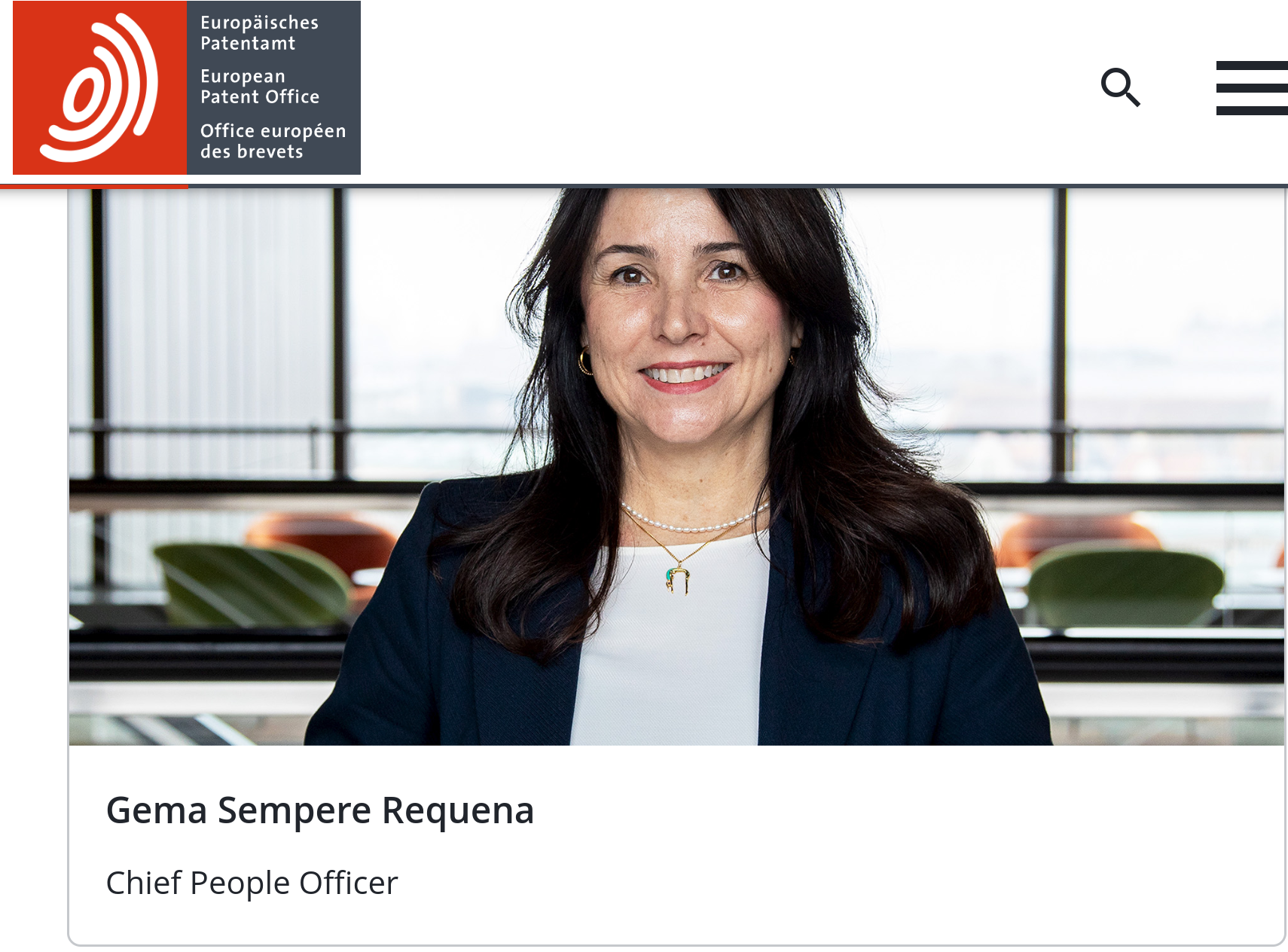
Just before the weekend the Central Staff Committee at the EPO wrote about workers who have disabled children. "Having a disabled child is not a choice," it said, addressing "Children with Special Needs matters" (and "Special Needs" is a euphemism for the same).
"Dear Colleagues," it wrote. "For many families, having a disabled child means facing challenges that are demanding and often permanent, and everyday life requires constant care and resilience. A growing number of recurring concerns in relation to administrative requirements, education, support and reimbursement have been reported by colleagues with disabled children. In this open letter to PD4.2, the Central Staff Committee asks for a meeting to discuss a supportive approach that would ensure a proper response to the challenges faced by these vulnerable families."
The letter is dated a day earlier, last Thursday, and the Central Staff Committee sent it to Ms Requena Sempere, whom we mentioned here last year [1, 2] and earlier this year [1, 2, 3].
This is the letter in full:
European Patent Office
80298 Munich
GermanyCentral Staff Committee
Comité central du personnel
Zentraler PersonalausschusscentralSTCOM@epo.org
Reference: sc26069cl
Date: 03/09/2026
European Patent Office | 80298 MUNICH | GERMANY
To: Mr Gema Requena Sempere (PD People)
Cc: Social DialogueBy email:
To: pd42@epo.org
Cc: socialdialogue@epo.orgOPEN LETTER
Disabled children matters
Dear Ms Requena Sempere,
Staff Representation is receiving an increasing amount of feedback from staff members with a disabled child or children.
These cases concern different families and different circumstances. However, they appear to reveal common concerns regarding the interpretation and application of Articles 69, 70a and 71 ServRegs and the associated implementing provisions. We therefore felt it appropriate to bring these matters to your attention and seek positive resolution.
1. Frequency of renewal request under Article 69 II ServRegs and diagnosis requests from Cigna
In a previous meeting, you appeared aware of the difficulties caused by the frequency of renewal of the Article 69 II ServRegs disabled child allowance. The yearly reassessment, often involving several practitioners, is time-consuming and can place families in a near- permanent cycle of assessment, creating an unnecessary administrative and emotional burden for children and their families already facing considerable challenges. The same difficulties arise often with CIGNA reimbursement claims where unnecessary or excessive requests for medical reports are made.
2. Reimbursement of educational costs at specialised schools
Some specialised schools require annual parental contributions which, even when described as voluntary, are in practice unavoidable. Refusing
reimbursement because these costs are not formally labelled as school fees creates unequal treatment compared with families whose children attend mainstream international schools and benefit from substantial fee reimbursement.
3. Determination of the level of classroom support
Families report cases where schools and educational specialists have identified a certain level of classroom support as necessary, but the Office has authorised reimbursement only for a lower level. This leaves parents to cover the difference and raises concerns as to how specialist assessments are taken into account.
4. Children with special support needs required to change school
Children with special educational needs should be entitled to have the full cost of their school invoices recognised as eligible under Article 69 II (10) ServRegs, rather than being limited to reimbursement under Article 71 ServRegs alone. Such a restriction places a disproportionate financial burden on families of children with special needs, who often have very limited educational options and may be compelled to enrol their child in specialised institutions capable of providing the necessary support
5. Education allowance for students requiring accommodations due to illness or disability
Students in higher education who remain enrolled but, because of illness or disability, must follow a reduced study load may lose their education allowance and even dependent status because they are no longer considered “full-time” students. Such a restrictive interpretation risks penalising students precisely because they require reasonable accommodations.
We believe it is important to remember that the provisions of the Service Regulations exist to provide additional support to a particularly vulnerable group of children and to the families who care for them.
The Central Staff Committee (CSC) would therefore be grateful if you could propose a meeting at your earliest convenience, particularly given the vulnerable families concerned, with a view to find a positive outcome.
Sincerely yours,
Derek Kelly
Chairman of the Central Staff Committee
In the coming week we may be in fruitful contact with some media regarding EPO scandals. It's not acceptable that there's no scrutiny directed its way. █