
Explaining the Culture of Bulletin Board-Style Chat
A bulletin board system (BBS), unlike instant messaging, is a multi-user system that does not assume everyone is online all the time. Wikipedia has explained that its precursor began in "August 1973 in Berkeley," i.e. 15 years before IRC. My barrister and I both brought up this subject a week ago at a hearing when explaining the communication in the irc.techrights.org network, where techrights-news is a generic account (for news, as the name indicates) and my own personal account bears "[TR]" or "[TR2]" to make impersonation harder (historically we've had problems with trolls who impersonate people). And while it would be both premature and inappropriate to talk about the hearing, it helped illuminate a lack of clear communication regarding IRC policy, identities, authentication, and formality (the discussions there are extremely informal, fast, typo-ridden, and not censored/moderated).
Bulletin boards predate the era of widespread residential dial-up and some of them revolved around "gamez" and "warez" (yes, with a "z"), along with shady personas, "phreakers", and "hackers" (when the term meant something else). A lot of that "carried over" to IRC. 2600 is still around in IRC and other fora; other forms, too. It never went away because people who grew up in that era are still alive and nostalgia has immaterial value.
The statements made by this site are published in the form of articles, not random people who merely join a network/channel in IRC. As we don't do any social control media, there's nowhere else to cherry-pick or quote-mine (e.g. to take words out of context).
IRC, to us, is a lot like BBS. It's like "bar talk", it's extremely informal, and anyone can enter (or leave) at any time. Many people are anonymous, including moderators.
Only desperate detractors would try to present something (cherry-picked) from IRC as some sort of official statement for Techrights. █
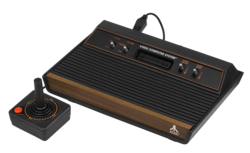
Image source: Atari 2600
