
Bonum Certa Men Certa

Large US Companies Continue to Stockpile Patents, But US Courts Have Learned to Repel Patent Maximalism

Patents on software are just about as inane and worthless as patents on musical notes

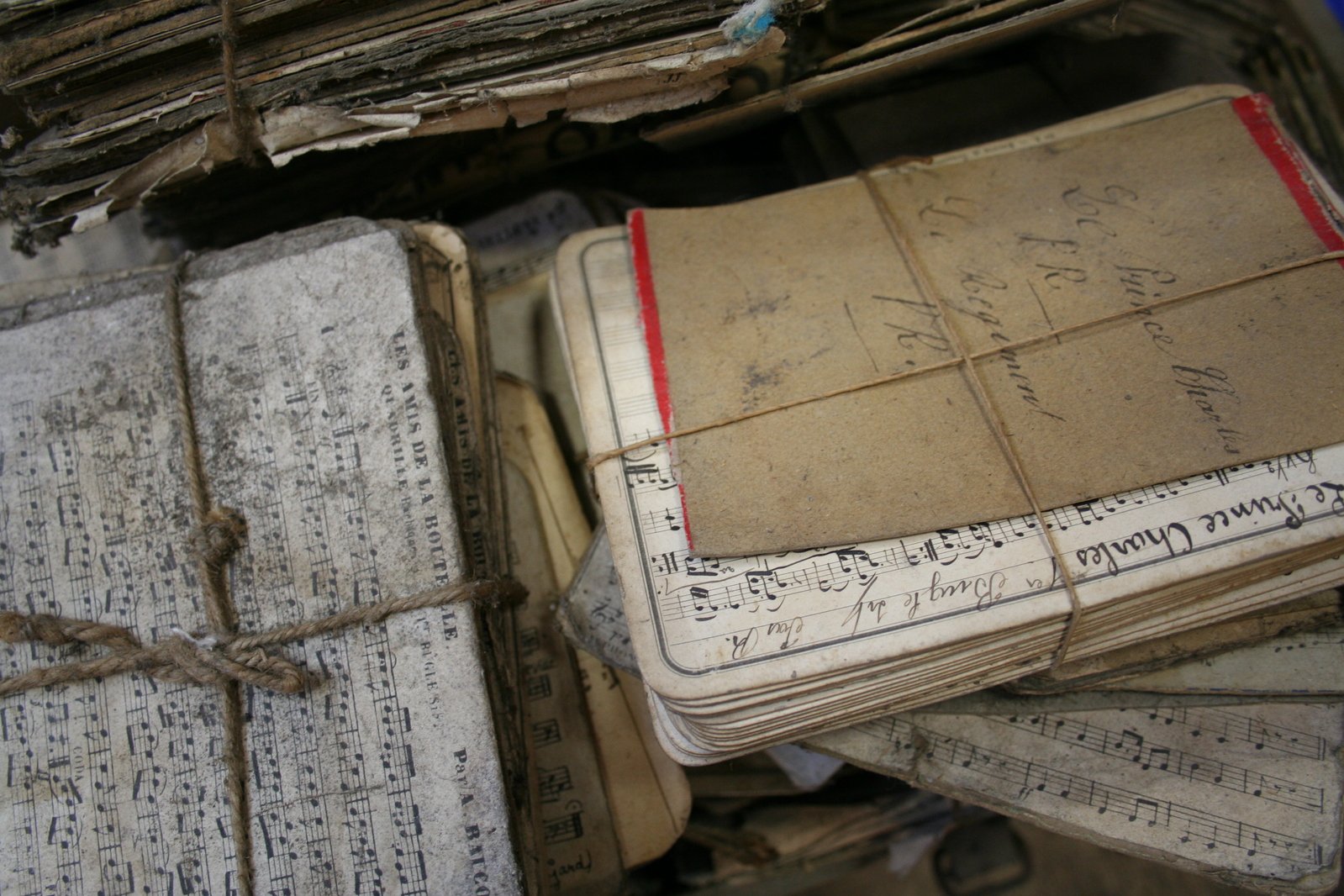
Papers with musical notes


Summary: In spite of misguided campaigns to accumulate/hoard tens of thousands of patents and then cross-license these, courts do not see the legitimacy of most of these patents

SEVERAL days ago someone pointed out this case of a lawyer who had been fired for being ethical. It's not too shocking; lawyers aren't expected to be honest, only to maximise profit. To quote:


The Third Circuit reversed the grant of the dismissal of a lawsuit by in-house counsel who sued because, he alleged, he was forced to choose between complying with an application filing quota or complying with his ethical obligations to the USPTO. The case, Trzaska v. L’Oreal USA, INc., (3rd Cir. July 25, 2017), is here.


"The complaint alleged that complying with the quota meant filing “frivolous” patent applications," Generare Oy Ltd. told me about this. The situation may seem familiar to some.

What's with all the stockpiling? Why has this become so normal? Yesterday we saw blind acceptance of patents and endless admiration of Apple/Steve Jobs, leading to this kind of terrible Web site which equates/conflates patents with innovation and celebrates accumulation of patents based on quantity alone (because large companies just cross-license a massive number of patents without even assessing these individually).

"What's with all the stockpiling? Why has this become so normal?"The above is about Apple, but IBM too plays that game and IBM is far too proud of software patents that are likely invalid (it still uses these to bully rivals). See this press release [1, 2, 3] which said "IBM leadership in storage systems and software is based upon more than 380 system patents, including IBM FlashCore technology and more than 700 patents for IBM Spectrum Storage software."

Around the same time (as this press release) we saw IBM's patents chief gloating that "Snap-On gets hammered" by patents, having just been judged by a jury that probably does not understand what patents are. The report in question says this:

The Journal Sentinel reports Snap-on's Rick Secor says the company strongly disagrees with the jury's verdict and will "vigorously appeal."

In the lawsuit, the Brookfield-based Milwaukee Tool says the lithium-ion battery packs it invented revolutionized the industry after the technology was introduced in 2005. It replaced packs that used nickel-cadmium batteries.


This particular case is not about software patents, but it's interesting that IBM is keen to promote it. The patents chief has also just linked to a patent troll's site (Dominion Harbor) in support of software patents. "The sad, confused state of US #patent eligible subject matter described here," he said in relation to a patent troll known as Secured Mail Solutions (SMS) -- a troll we just mentioned here the other day. To quote:

Because I believe that everyone, as a means of self-improvement, should occasionally test their patience and evaluate their ability to manage pain, I was reading the Federal Circuit’s recent decision in Secured Mail Solutions, LLC v. Universal Wilde Inc., upholding the district court’s ruling on the pleadings that Secured Mail’s seven asserted patents were all ineligible under 35 USC €§ 101. These patents all address tracking mail through an encoded marking, e.g., a barcode, QR code or URL, on the outside of a mailer which is intended to provide information to the recipient about the contents and the sender. Setting aside that when you see a panel of Prost, Clevenger and Reyna you know the patent’s dead, it’s just a matter of how they will craft the language to that desired effect, let’s just look at how the famed Alice test was handled in this case in general.


It's safe to say that almost every such case now yields invalidity. Courts understand, in light of Alice, that it's a matter of great certainty. Software patents are out.

"Software patents are out."If the rumours are true, the USPTO's patent examiners too will soon follow suit. Maybe the EPO's also?

The EPO mentioned PCT applications a few days ago and so did Patently-O (compare China to Korea in this graph). PCT is the Patent Cooperation Treaty and if one nation abandons software patents, we can expect others to follow the lead.

Moreover, as Patently-O pointed out a few days ago, better examiners will result in fewer incorrect patent grants. The research explores the "[r]elationship between examiner specialization and examination outcomes."

"So it shows empirically that "specialization is associated with a more stringent examination process," as one might expect. Lack of knowledge (or ignorance) in the problem domain leads to more patents."The summary says, "we find a significant degree of technological specialization among patent examiners working in the same art-unit. This specialization is less pronounced in some of the computer-related technology centers. We found no evidence that examiners specialize in handling important or controversial applications. And it seems that specialization is associated with a more stringent examination process, perhaps because it allows examiners to more easily identify relevant prior art."

So it shows empirically that "specialization is associated with a more stringent examination process," as one might expect. Lack of knowledge (or ignorance) in the problem domain leads to more patents. Here we see the importance of the recruitment process, or the ability to attract top talent. It's hard to mislead examiners who assess patents in their own field of expertise. Consider for instance this new example that says: "The court found the defendant’s argument “not unreasonable,” but nonetheless rejected it. The “great weight of the case law” made clear that the duty to “disclose all material information to the patent examiner” did not extend to ensuring that “the patent examiner understands that information.”"

Sadly, if the examiners don't understand, they often just grant patents. It should be the exact opposite. If the applicant cannot properly explain to the examiners what is being claimed, then the examiner should assume it's likely intentional. "If you can't explain it simply, you don't understand it well enough," Albert Einstein famously said. He too was a patent clerk (before becoming famous).

Recent Techrights' Posts

Software Freedom Day Celebrated in 5 or 6 Continent
Software Freedom Day (SFD) 2026 was big this year
Enjoy the Giving/Sharing, Not Taking
We've long supported what we believed in, even with the little money we had
 
2026: The Year Galleries Realised the Need to Flag or Cull Slop Images
Society needs to shun slopfarms, people who use LLM slop (for anything at all), companies that use bots (which they dub "agents"), and so-called 'coders' who volley garbage into project and software hubs
Linux Kernel Becoming a Slopfest - Part 6 - Seeing Who Contaminates Linux With Slop (And Also Admits It)
Today we begin looking at some culprits
SLAPP Censorship - Part 191 Out of 200: Garrett, Graveley and Lozza
They talk to and coordinate with one another
Over at Tux Machines...
GNU/Linux news for the past day
IRC Proceedings: Sunday, September 20, 2026
IRC logs for Sunday, September 20, 2026
Gemini Links 21/09/2026: Digital Hoarder, GTD, Minimalism vs Digital Minimalism, Rejection of LLMs
Links for the day
Links 20/09/2026: "Google Now Asking For Users’ Video Selfies" and Energy Prices Set to Rise
Links for the day
Links 20/09/2026: Amazon Layoffs, Flock 'Buyouts' (Silent Layoffs)
Links for the day
USCIS and Microsoft Rumours: Curbs on Lowering Salaries by Importing Cheaper Replacements?
It seems like Microsoft's mass layoffs and efforts to cheapen the workforce face obstacles
Gemini Links 20/09/2026: "Music While Working" and Radio Silence
Links for the day
Clownflare Data From Canada
We've like to think many people are attempting to install GNU/Linux over the weekend
SLAPP Censorship - Part 190 Out of 200: Plagiarism, Back Doors, and Sabotage of Linux
This can go on for a decade or longer
Linux Kernel Becoming a Slopfest - Part 5 - Kernel Dependency on Plagiarism Giant Microsoft is a Death Blow to Any Kernel
Microsoft is bringing copyright-infringing slop into Linux
GNU/Linux Has Grown a Lot Lately
Based on Clownflare
Over at Tux Machines...
GNU/Linux news for the past day
IRC Proceedings: Saturday, September 19, 2026
IRC logs for Saturday, September 19, 2026
Links 19/09/2026: Many Patents Become Candidates for Annulment and Linux [sic] Foundation Takes More Slop Money to Promote Malicious Bots
Links for the day
Gemini Links 19/09/2026: The Fundamental Human Assets, The History of Gopher's "i" Type, and ROOPHLOCH 2026
Links for the day
Links 19/09/2026: "OpenAI and Microsoft Knew They Were Starting a ‘Doom Loop’ [of Mass Plagiarism 'Normalised' by Brute Force] for the web", Calling It "Hey Hi"
Links for the day
8 Series Going on at the Moment in Techrights
4 series about SLAPPs and related matters
Linux Kernel Becoming a Slopfest - Part 4 - Outsourcing to Microsoft, Approaching 10 Gigabytes
Can we blame Microsoft for those DDoS attacks? Partly.
SLAPP Censorship - Part 189 Out of 200: A Terrible Idea to Condemn Projects for Using Slop 'Code' When Your Own Employer Does This (and Profits From Every Company Doing So) or to Call Distros 'Not Secure' While You Advance Back Doors
"I don’t want a back door. I want a front door."
Software Freedom Day 2026 is Today, Week-long Celebration in Brazil
In Brazil, Clownflare reckons about 1 in 20 laptops/desktops might use GNU/Linux already
Red Hat Lost 2,000 Staff (Net Loss)
Maybe by year's end it'll be a 20% reduction
Over at Tux Machines...
GNU/Linux news for the past day
IRC Proceedings: Friday, September 18, 2026
IRC logs for Friday, September 18, 2026