
EditorsAbout the SiteComes vs. MicrosoftUsing This Web SiteSite ArchivesCredibility IndexOOXMLOpenDocumentPatentsNovellNews DigestSite NewsRSS

02.07.11

A Paralegal’s Take on Microsoft’s Latest Anti-Google (and Anti-FOSS) Moves

Posted in Deception, Free/Libre Software, GNU/Linux, Google, Microsoft, Patents, Search at 12:39 pm by Dr. Roy Schestowitz

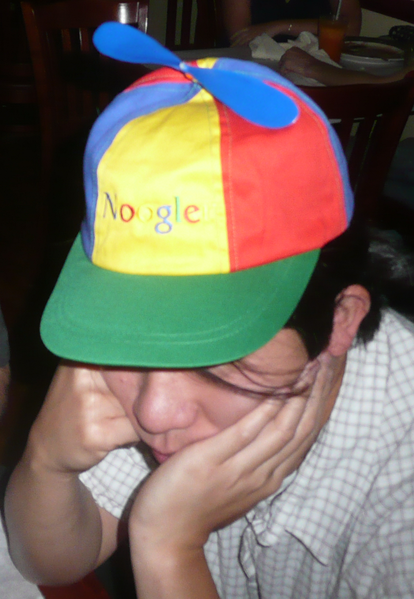
Noogler
Photo by Tduk Alex Lozupone

Summary: Groklaw responds to some of Microsoft’s latest attacks on software freedom and anti-competitive practices, especially where Google is concerned

Microsoft is poisoning Google just like it generally poisons the Free/open source software (FOSS) community, using software patents and more. In relation to the article “Microsoft tries undoing Chrome’s H.264 omission,” Groklaw writes: “How do we translate this? That they want to attack VP8 with patents they dig up somehow and thus try to shove forward their own patent-encumbered offering or at least get paid no matter what?”

“[T]hey want to attack VP8 with patents they dig up somehow and thus try to shove forward their own patent-encumbered offering or at least get paid no matter what?”
      –Pamela Jones, Groklaw
Well, Groklaw seems to have taken great interest in this (so have we [1, 2]), especially given patent litigation against Google as of late, especially from Microsoft and allies of Microsoft. Groklaw also writes a response to spin from Dean Hachamovitch from Microsoft (IE team). “How would a promise from Microsoft alone do any good,” Groklaw asks. “Read the history of JPEG if you think that any of Microsoft’s suggestions would guarantee that no idiot will show up with a patent granted by the crazed USPTO and start suing people, no matter what anyone does. Software patents are the problem, and there is no solution other than to get rid of them. And “reasonable licensing terms” are unreasonable in that it breaks the openness of the Internet. Microsoft would like to pretend that the GPL doesn’t matter, and that the big proprietary guys can just ignore it and turn the Internet into a proprietized, closed environment that you can’t enter and enjoy unless you pay. And I don’t think you can claim to be “agnostic” if your solutions enforce acceptance of H.264 by one method or another.”

While Google makes advances, Microsoft is in search of a new cash cow or common carrier and search may be one such carrier because of advertising. To Microsoft, all that’s left now are patents and cheating because nothing else has worked after years of billions in spendings down the drain. Recently we found out that Bing is ripping off Google search results [1, 2]. Groklaw covered many articles about it (a true fixation), along with commentary. This whole affair helps shatter Microsoft’s cases against Google (by proxy) — cases that claim Google’s results are unfair or not “neutral”. “So if we were to read that some entity filed a complaint against Google with some regulatory body,” writes Groklaw, “demanding that Google reveal its algorithms as one form of relief, and we learn that Microsoft is behind the entity in the shadows somewhere, what might that tell us?

“So I guess it’s official. Google’s algorithms are better than Bing’s. At least Microsoft seems to think so. Say, is this some kind of copyright violation? Trade dress? Violation of your privacy? Hmm. Deep thoughts begin…”

“So I guess it’s official. Google’s algorithms are better than Bing’s.”
      –Pamela Jones, Groklaw
It also turned out that Microsoft was tracking users who use Google. Nice, eh? So it’s not just a Google ripoff but also a privacy violation. “And speaking for myself,” writes Groklaw, “I don’t want my search data shared with anybody. But even if I did, I wouldn’t want them used to copy off of Google’s paper, so to speak.”

Here is the source of Google’s allegation. “The live forum where Google’s Matt Cutts made his announcement about Bing copying Google’s results is still going on,” Groklaw calls it. “The link will take you there.”

Then, regarding the news headline “Microsoft’s Bing Uses Google Results – And Denies It,” Groklaw writes: “It should stop if only because now it’s been demonstrated that a competitor can skew your results into Never Never Land. It was a one-time experiment, to demonstrate the copying, but any search engine team now knows that copying isn’t reliable.”

“It was a one-time experiment, to demonstrate the copying, but any search engine team now knows that copying isn’t reliable.”
      –Pamela Jones, Groklaw
Microsoft started a fake controversy to distract from the fiasco. It’s truly pathetic. Groklaw responds: “And who made that happen? Seriously. How dirty does this get? And if I might ask the next logical questions, if Microsoft really believed Google manipulated search results, would it copy them? Maybe someone needs to investigate Microsoft for instigating specious investigations?”

Microsoft booster Harry McCracken (he got a free laptop from Microsoft) played along with the fake controversy as he called it a “squabble” in the headline. Groklaw responds with: “I wouldn’t call it a squabble, personally. I’d call it an ethical issue. And that’s why Microsoft can’t understand why people care, I suspect.”

Kym McNicholas pretty much agreed with Groklaw when she published “Microsoft’s Nonsense Response To Google” and claimed: “Google, this week, accused Microsoft of stealing its results. NBC Bay Area’s PressHere scheduled Google’s man behind search, Dr. Amit Singhal, to be on this week’s broadcast with host Scott McGrew. I was one of the guest interviewer’s along with Mashable’s co-editor Ben Parr. Singhal explained to us how he and his team discovered that Bing may be leveraging Google’s search results. Microsoft, whom McGrew says has failed to follow-up on scheduling an appearance on his show, instead decided to send him a taped response to Google’s accusations. It’s worth watching the show this Sunday at 9am PT on NBC Bay Area to hear that. If you prefer, here is the segment from the show, below…”

In one of the spin articles, titled “Microsoft says Google used click fraud to orchestrate Bing Sting,” the author says that “Microsoft is now accusing Google of using a form of click fraud to set up its Bing Sting, a stunt unveiled by the search giant at the Farsight 2011 tech conference in Silicon Valley.” Groklaw sarcastically replies with: “I see Microsoft is really, really sorry.”

Microsoft’s blame games are a classic and very familiar game. The accuser from Google, Matt Cutts, wrote about this in his blog:

I didn’t expect that Microsoft would deny the claims so strongly. Yusuf Mehdi’s post says “We do not copy results from any of our competitors. Period. Full stop.”

Given the strength of the “We do not copy Google’s results” statements, I think it’s fair to line up screenshots of the results on Google that later showed up on Bing…

Murdoch’s press has the rather deceiving headline “Search Engine Slap Fight: Microsoft Denies Cheating, Blames Google”. Microsoft says: “In simple terms, Google’s ‘experiment’ was rigged to manipulate Bing search results through a type of attack also known as click fraud. That’s right, the same type of attack employed by spammers on the web to trick consumers and produce bogus search results.”

“And Bing didn’t catch it,” writes Groklaw. “That’s the bottom line to me, that Bing didn’t realize that the results were ridiculous. That makes me not trust Bing. Full stop.”

All the above is another sign among many signs of decline at Microsoft. Katherine Noyes from IDG published the article “Cheating Accusations Highlight Microsoft’s Decline”. In it she wrote:

For those who missed it, Google apparently conducted a “sting” operation recently by rigging a few select searches to display specific pages in the search results in its own search engine. It then told 20 employees to run the searches on their computers using Internet Explorer with “Suggested Sites” and the Bing toolbar enabled. Lo and behold, after a few weeks the searches began producing the same results on Bing.

[...]

There’s no doubt Microsoft was once an innovative player. Whatever your preference in operating systems or office software suites, for example, there’s no denying that Microsoft made a number of smart and innovative moves to create its current position of market dominance in both arenas.

Since then, however, the company has been on the decline. In the mobile arena, for example, its performance has been too little, too late, as exemplified by the woefully inadequate Windows Phone 7. Rather than innovating on quality, the company now resorts to the industry equivalent of dirty pool.

In defense of both Windows and Microsoft Office, for example, Microsoft has long been one of the primary sources of FUD about competing free and open source alternatives. CEO Steve Ballmer notoriously has called Linux “a cancer,” for instance, and the company has made patently obvious that it fears competition from the open source contender.

More recently, Microsoft created an anti-OpenOffice.org video–still up on YouTube–that amounted to nothing more than a smear campaign against the competition.

Novell’s gift of patents to Microsoft is also mentioned. Fortunately, the CPTN deal is coming under regulatory fire* and we found only 2 articles about it, one of which from SCO booster and anti-Linux activist O’Gara. The other one came from The H and just like the FSF, Michael Tiemann from the OSI wrote a statement giving credit to the US Department of Justice: “The Open Source Initiative commends the US Department of Justice for taking this important step to promote innovation by issuing a second request and deepening the investigation of CPTN’s acquisition of Novell’s patents. As we have stated, the history is clear: patents have been—and are likely to be—used by CPTN and its members to create fear, uncertainty and doubt concerning open source software, raise competitors costs and threaten customers. We trust and hope that following a thorough investigation, the DoJ will impose whatever measures are necessary to ensure that CPTN does not harm the commercial open source development model or market competition.”

The closure of Kin Studio — just like the closure of other projects/units (see our list of dead products from Microsoft) — is not even denied or spun by Microsoft boosters, so Noyes’s assertion that there is a “Microsoft decline” seems to be acknowledged quite widely. Microsoft is just playing dirty now, so people need to watch and report misbehaviour. Google performed an experiment to catch Microsoft red-handed and it should be commended — not reprimanded — for it.
_____
* The other part of the deal, which involved AttachMSFT [sic], was mentioned in Murdoch’s circles and the vulture fund was recently mentioned in Reuters which said: “Elliott Advisors has nearly 6 percent stake in Actelion”. It also said: “Elliott often takes on the role of an activist shareholder, and last year sought to buy business software company Novell (NOVL.O) after building an 8.5 percent stake in the company [ID:nSGE68E0IU].”

Share this post: These icons link to social bookmarking sites where readers can share and discover new web pages.
  • Digg
  • del.icio.us
  • Reddit
  • co.mments
  • DZone
  • email
  • Google Bookmarks
  • LinkedIn
  • NewsVine
  • Print
  • Technorati
  • TwitThis
  • Facebook

If you liked this post, consider subscribing to the RSS feed or join us now at the IRC channels.

Pages that cross-reference this one

What Else is New


  1. The FRAND Apple-Microsoft Conspiracy Attempts to Destroy Android/Linux, Ban Imports

    How Microsoft and Apple are using patents in bulk (sometimes acquired in unison, e.g. from Novell and Nortel) to artificially lower market saturation of the Android operating system or drive costs up


  2. Gates Foundation: Buying Influence for Bill's Ego and Bill's Profit

    New examples of power being acquired and investments (i.e. for profit) being funnelled into the beneficiaries


  3. Bill Gates Enters Financial Centres With His Goons Becoming US Budget Chief, Top Bankers

    How Bill Gates' staff is entering positions of financial power, indirectly giving Gates power over US (national and international) finance


  4. IBM Ignores Small Companies' Interests, Denies Patent Scope is a Problem, Focusing on Its Own Problems (Trolls) Instead

    How David Kappos and IBM (his longtime employer) continue to ignore the obvious problem which kills small businesses and everyone is complaining about


  5. The New York Times Publishes Factually-Flawed Patent Propaganda Benefiting Microsoft and Apple

    Eamonn Fingleton is rewriting history in the US' top newspaper, insinuating that patents contributed to the rise of software duopolists


  6. Software Patents Eligibility Likely to be Decided by SCOTUS

    Analyses suggest that an escalation by appeal to SCOTUS is likely to be the next stage in 'Bilski 2.0'


  7. Does Bill Gates Try to Flush GNU/Linux Down the Toilet in Kerala?

    Renting Microsoft software rather than using Free (as in freedom, or libre) software?


  8. Links 21/5/2013: Handbrake Turns 0.9.9, NetBSD 6.1

    Links for the day


  9. Links 20/5/2013: First Salifish Smartphone, Mageia 3 Released

    Links for the day


  10. Microsoft Corruption (Illegal Tenders) Stopped by European Court

    Microsoft cannot bypass public tenders, based on a ruling from a court of law in Europe


  11. Not Satire: Microsoft Wants to Show the World How Security is Done

    Software security 'standard' to be led by the company which made insecurity an acceptable engineering practice?


  12. Microsoft is Struggling to Maintain Industry 'Standards'

    With Microsoft's common carrier and browser share down considerably Microsoft finds itself increasingly irrelevant and it tries subversive means of making another comeback


  13. Microsoft Entryism and Bribery Get the Microsoft Way Implemented

    A recollection of very dirty tactics from Microsoft, which uses money to oppress, overthrow, and even hijack its opposition


  14. Patent Policy Laundering in the European Union and New Zealand

    How the so-called 'free' trade agreements help spread patent policy which favours software patents


  15. Ongoing Focus on Patent Litigation and Patent Trolls Reduces Focus on Software Patents

    The problem with increased focus on the players that use software patents litigiously and the litigation itself


  16. Andrew Y. Schroeder Shows That Patent Lawyers Are Sociopaths

    Bully and law misuser is trying to get his way with foul language, intimidation, and sheer lack of professionalism


  17. IBM-backed Book on 'Open Innovation'

    OpenForum Europe (OFE), which helps IBM's turf wars in Europe, releases a new book filled with its talking point


  18. Joseph E. Stiglitz Criticises the Patent System

    More critical words about the patent system and the way it is harming lives


  19. Senator Schumer Should Focus on Software Patents, Leaving Patent Trolls (Side Effect) Aside

    Reform in the USPTO and the US courts should focus on patent scope and not patent holders


  20. Links 20/5/2013: Plenty of Linux News, Google/Android Announcements

    Links for the day


  21. IRC Proceedings: May 12th, 2013-May 18th, 2013

    IRC logs for May 12th, 2013 (and subsequent days until May 18th, 2013)


  22. Microsoft Spin Regarding Skype Spying Does Not Withstand Scrutiny

    Microsoft's response to allegations that Skype is spying on all users is full of holes


  23. MPEG-LA Ruined the Licence of WebM, Made it Less Freedom-Respecting

    The Microsoft-, Nokia-, and Apple-backed patent troll appears to have ruined the freedom assured by Google's multimedia format, which was previously made free only after public pressure


  24. Microsoft-controlled Nokia is Lobbying to Enable Bans on Android Imports (Linux Phones as a Whole in Danger)

    Nokia is shown lobbying for embargoes while it is also suing -- with limited success -- Android handsets makers


  25. Courtroom and New Book Recognise That Software Patents Correspond to Mathematics and Mathematics Abused in Court

    Important observations about the nature of computer-implemented 'inventions', or software patents


  26. The Reality Distortion Field of Patent Lawyers Helps Impede Abolition of Software Patents

    How widespread coverage and talking points from the tiny minority which is patent lawyers have contributed to biased and at times utterly distorted reporting on the subject of software patents around the world


  27. Eugene Kaspersky Says Patents Harm Innovation

    Some more criticism of the patent system and software patents in particular, courtesy of Eugene Kaspersky


  28. UEFI Restricted Boot Good for Microsoft Agenda, Not for Security

    News and analysis of UEFI 'secure boot' (lockdown), including the new role played by the Microsoft-funded SUSE


  29. Anniversaries

    Sites that deal with patents and with FUD as well as their respective ages


  30. EFF, Newegg, and the Canadian Patent System All Take a Stance Against Software Patents

    Hostility towards the practice of patenting software is seen in a nonprofit organisation, a corporation, and a government branch responsible for patenting


RSS 64x64RSS Feed: subscribe to the RSS feed for regular updates

Home iconSite Wiki: You can improve this site by helping the extension of the site's content

Chat iconIRC Channel: Come and chat with us in real time

Recent Posts