
Bonum Certa Men Certa

In Spite of Campaigns Against It, the Patent Trial and Appeal Board (PTAB) Squashes Software Patents by the Hundreds Per Month, Patent Maximalists Still Try to Stop It

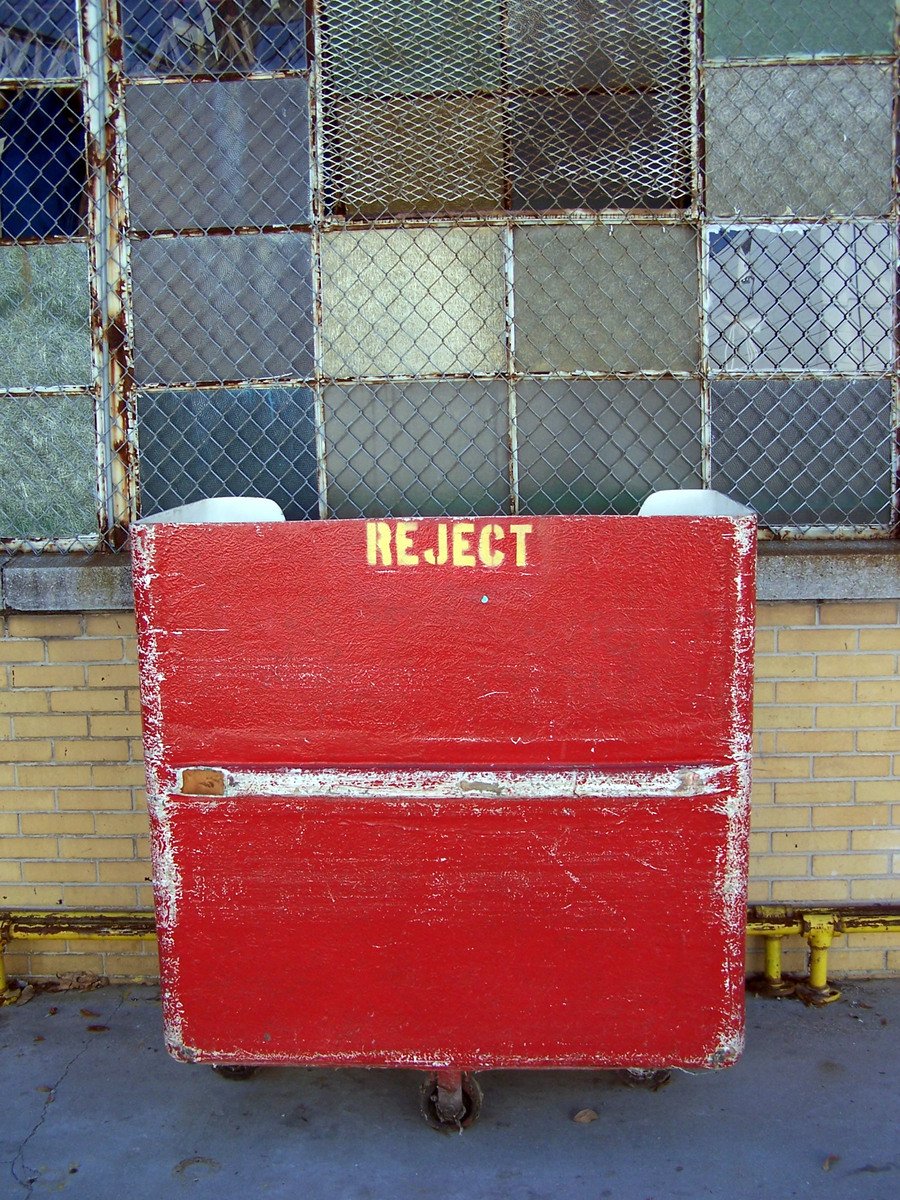
A reject bin


Summary: Patent Trial and Appeal Board (PTAB) inter partes reviews (IPRs) achieve exactly what they were set out to do; those who view patent quality as a foe, however, aren't happy and they still try to undermine PTAB IPRs by any means possible (or at least slow them down considerably)

PTAB IPRs have greatly contributed to much-needed decline/demise of patent litigation in the US. The USPTO can grant all the patents it wants, but without legal certainty (associated with such newly-granted patents) there will be no lawsuits.


PTAB does not invalidate every patent it's petitioned to look into. Days ago there was a press release [1, 2] about an IPR from famed maker of 'torture devices', Axon (better -- or worse -- known as "TASER"). To quote:

In this latest instance, Axon asked the Patent Office to invalidate Digital’s U.S. Patent No. 9,712,730 (“the ‘730 Patent”), which is not currently involved in any active litigation. Axon targeted the ‘730 Patent for unknown reasons. On October 1, 2018, the Patent Office rejected Axon’s latest challenge finding that “[u]pon consideration of [Axon’s] Petition and [Digital’s] Preliminary Response, we conclude that the information presented in the Petition does not demonstrate that it is more likely than not at least one of the challenged claims is unpatentable. Accordingly, we do not institute a post-grant review.”

To date, Axon has filed an ex parte reexamination challenge, four different inter partes review (IPR) challenges, and one post-grant review challenge against various Digital Ally law enforcement patents. None were successful.


So PTAB isn't quite the “death squad” patent extremists have called it. As IAM put it some days ago: [via]

Further data has emerged showing that the Patent Trial and Appeal Board (PTAB) is far from the “death squad” that many in the US life sciences industries fear that it may be becoming.

A recent study by Harvard University’s Jonathan J Darrow and Aaron Kesselheim, and the University of Calgary’s Reed F. Beall - The Generic Drug Industry Embraces a Faster, Cheaper Pathway for Challenging Patents – analyses data on inter partes review proceedings since their inception, as well as information from the FDA’s Orange Book about the drugs whose patents have been the subject to administrative challenges.


Taking note of the Hatch-Waxman process (yes, Orrin Hatch), the CCIA's Josh Landau wrote the following:

The first study was conducted by a pair of Harvard Medical School professors, as well as a professor at the University of Calgary. The Harvard study examined all pharmaceutical IPRs through April 2017.

The second study, by a recent Northwestern J.D., extended its dataset to all pharmaceutical IPRs over a 6 year period from March 2012 to March 2018.

Both drew similar conclusions regarding the success rate of pharmaceutical IPRs. Pharmaceutical IPRs are relatively rare, around 5% of all IPRs, and similarly to non-pharmaceutical patents, pharmaceutical IPRs usually relate to patents that are also being litigated in district court.

Looking beyond their frequency, pharmaceutical IPRs are quite different from the average IPR. While pharmaceutical IPRs are instituted at roughly similar rates to other IPRs, they are significantly less likely to find some or all claims invalid if they are instituted. Of the 134 distinct drugs (covered by 198 distinct patents) challenged in the Harvard study, only 44 drugs received at least one final written decision. And of those 44 drugs, only 18 (13%) had all of their claims invalidated—and even then, all but 2 of those drugs still had other patents protecting the drug.

[...]

Given that pharmaceutical IPRs are rare and generally less successful than other IPRs, the notion that the IPR system represents a serious threat to the Hatch-Waxman balance between new and generic drugs does not appear to be correct.

Instead, the IPR system appears to be mostly used to trim back the scope of follow-on patents that attempt to extend the original drug monopoly in order to make sure generics can enter once that original patent expires. This would appear to be completely consistent with the goals of Hatch-Waxman—ensuring that the original innovation is protected, but allowing for generics to efficiently provide that innovation after the original period of protection ends.

Given these recent studies, as well as others (such as the PTO’s Orange Book study), it does not appear to be necessary to modify the IPR process to accommodate the Hatch-Waxman process.


So, taking Hatch-Waxman (a process) into account, IPRs aren't a reason for panic. Far from it. Even Watchtroll wrote about it. An article by Tulip Mahaseth was outlined by: “Out of the 230 Orange Book patents challenged in IPR proceedings, 90.4% (208) of these patents were also challenged in Hatch-Waxman litigation…”

We're supposed to think, based on patent extremists, that PTAB just blindly squashes patents, but that's far from true. It's just that weak/weaker/weakest patents are being subjected to IPRs/challenges. That includes a lot of software patents.

"Number of abstract idea rejections decided at PTAB for August 2018 higher than ever," Anticipat acknowledged some days ago, but this anti-PTAB site then looks for some spin on these facts. Just because software patents are being crushed in the US, partly owing to PTAB, doesn't mean PTAB fails to do its job. Anticipat is then boosting talking points from Iancu's notorious speech, which was targeted at patent extremists (IPO). The bottom line is this however: "The PTAB decided 209 abstract idea rejections." (in August alone)

Janal Kalis, a PTAB-hostile patent attorney (apparently retired), took note of the exception when he wrote: "The PTAB Reversed an Examiner's 101 Rejection of Claims in an Oracle Patent Application: https://anticipat.com/pdf/2018-09-14_13315665_181761.pdf …"

Those are rare. PTAB usually agrees with examiners on rejections or disagrees with them on intent to grant.

"Capella Photonics Challenges Federal Circuit Practice of Judgments Without Opinions," Watchtroll said last week. Well, PTAB slowdown by this method or in this fashion is an old trick. Rob Sterne, Jason D. Eisenberg, William H. Milliken and Tyler J. Dutton said: "The underlying Federal Circuit appeal arose from multiple Inter Partes Reviews of two Capella patents on fiber-optic communications systems."

This slowdown was attempted by Dennis Crouch last year and the year before that. We occasionally mention that. He too resumes with this tactic, having published the following a few days ago:

LG v. Iancu, stems from an obviousness determination by the PTAB in its IPR of LG’s U.S. Patent No. 7,664,971. On appeal, LG argued that the PTAB had failed to explain its decision as required by the Administrative Procedures Act. In a silent commentary on the current state of patent law, the Federal Circuit has affirmed the PTAB decision without issuing any opinion or explanation for judgment.

The ’971 patent claims both an apparatus and method for controlling power to the cores of a multi-core processor. In its decision, the board gave an explanation for rejecting claim 1 (the apparatus), but not for the method claim 9.


Like the SAS (versus Iancu) case in SCOTUS, the goal is to complicate the rejection process and thus slow it down. The truth of the matter is, it takes a lot of time to prepare written rejections (or acceptance of challenges). They just need to be practical. Lawyers get to bill (charge) more when the process is further complicated, so it's not hard to see their motivation as well. Yesterday they advertised this:

LexisNexis will be offering a CLE event on "How to Analyze Federal Circuit Opinions on Patent Law" on October 24, 2018 from 3:30 to 4:30 pm (ET) at The National Press Club in Washington, DC. Donald Chisum, the author of Chisum on Patents, will discuss how to analyze the opinions of the Court of Appeals for the Federal Circuit to assess their impact on patent law and practice, and will illustrate how to "deconstruct" sometimes opaque opinions using recent cases from 2018 as examples.


Even just to analyse written decisions they'd charge their clients. So decisions without opinion/text is to them (law firms) a threat. They're trying to defang PTAB by all means possible, even still latching onto the RPX case that by extension impacts Unified Patents. "RPX (CVSG mentioned above) is the only case from the initial September conference that was not denied on the first round," wrote Crouch the other day. Well, sadly for him, the Supreme Court won't change patent scope any time soon and it probably won't look into PTAB matters, either, having already decided on Oil States and SAS this past summer. Based on the list of upcoming patent cases, Section 101 is safe. Also mind the fact that PTAB too is safe, bar Smartflash LLC v Samsung Electronics America (although it doesn't put IPRs themselves at risk/peril).

Crouch, still desperate to change things, brings up Berkheimer v HP (not much has changed since the case was decided at the Federal Circuit except Iancu's empty rhetoric that lacks implications/ramifications for actual courts). Crouch's promotion for briefs and public support (magnifying the impact of the case, irrespective of the outcome) is quite revealing, bearing his motivations in mind. Dennis Crouch is still trying to water down Section 101 so as to promote software patents for his beloved trolls and bullies:

Berkheimer v. HP Inc., 881 F.3d 1360 (Fed. Cir. 2018) is in my list of top-ten patent cases for 2018. In the decision, Judge Moore vacated a lower court summary judgment ruling on eligibility — holding that a “genuine issue of material fact” as to whether the claims are directed toward a transformative inventive concept rather than merely a “well-understood, routine, and conventional” application of an abstract idea. Thus, the decision gave some amount of respect to the traditional procedures associated with providing facts. Practically, this means that is should be more difficult to challenge patent eligibility on the pleadings or on summary judgment. Likewise, it means that examiners must do a bit more work to ‘prove’ the lack of eligibility.


Charles R. Macedo, Brian Comack, Christopher Lisiewski and James Howard (Watchtroll) have meanwhile complained about PTAB again; it's about limiting IPR 'access' or 'scope' or "Appeal by a Non-defendant Petitioner in an IPR" (related to the RPX case above). To quote:

On Tuesday, September 18, 2018, Askeladden L.L.C. (“Askeladden”) filed an amicus brief supporting Appellant’s Petition for Rehearing and Rehearing En Banc in JTEKT Corp. v. GKN Automotive Ltd., No. 2017-1828 (Fed. Cir. 2018). See Patent Quality Initiative’s website for the full brief. This case raises the important question of whether the Court of Appeals for the Federal Circuit (“Federal Circuit”) can refuse to hear an appeal by a non-defendant petitioner from an adverse final written decision in an inter partes review (“IPR”) proceeding, on the basis of a lack of a patent-inflicted injury-in-fact, when Congress has statutorily created the right for “dissatisfied” parties to appeal to the Federal Circuit.


So to summarise, PTAB squashes software patents without negatively impacting other domains (contrary to mythology). Attempts to slow PTAB down include demonisation to that effect, claims that IPRs cannot be brought forth by the most prolific petitioners, attempts to force every decision to be accompanied with lots of texts and exhaustive check of all claims. And if that's not enough, the challenges against Section 101 itself have not stopped. Those who profit from patent litigation are scrambling to secure software patents.

Recent Techrights' Posts

What Do People Ever Buy From Microsoft Anyway (Not PCs)?
Microsoft sells two things these days: 1) vapourware/promises. 2) its stock.
Gemini Links 20/02/2026: "Mainstream Unix, Underground Unix", Slop Staging DDoS Attacks Against Small Sites
Links for the day
IBM Inclusivity: Red Hat Summit is for Rich Sponsors Like Microsoft and Rich Guests Who Pay $500 a Day
Nothing signals societal tolerance more than paying a large military contractor
IBM Behaves Like a Company Looking for Loose Change Between Sofa Cushions
Chasing laid-off workers for dollars and even pennies, making excuses and devising loopholes (such as PIPs) to flout severance obligations
 
Links 20/02/2026: Standards, Science, and Politics
Links for the day
GNU/Linux Adoption is Higher in Richer Countries
Is it because freedom is actually expensive - something that only privileged people can pursue?
Links 20/02/2026: Windows TCO Versus Deutsche Bahn, Europe Seeks More Independent Digital Future
Links for the day
IBM, Red Hat and Fedora: Don't Say "Master", It Offends People. Also IBM, Red Hat and Fedora: "Master Podman".
The hypocrisy at Red Hat and Fedora shows no boundaries
IBM Layoffs Aren't Just in IBM 'Proper'
Who is still using Lotus after the HCL move?
The Register MS Gets Paid by Gartner to Promote a Ponzi Scheme for Gartner, Microsoft, and Others
The credibility of that site will suffer because it tries to sell a major scam to its audience
Over at Tux Machines...
GNU/Linux news for the past day
IRC Proceedings: Thursday, February 19, 2026
IRC logs for Thursday, February 19, 2026
Gemini Links 19/02/2026: "Towards a Gemini Famicom Resource" and Dumping Microsoft
Links for the day
Microsoft Found Another Bailout Opportunity: Killing People
Good thing that Nadella is not racist!
No "Smart Mobs" (Social Control Media) in BRIC?
It looks like the "Social" "Media" sites tracked by statCounter see little from (or of) BRIC, and moreover it is declining fast
The Few Slopfarms We Saw Today
The sentiment has changed a lot
Links 19/02/2026: Protecting Framework Laptop 13, Hardware Drive Shortages
Links for the day
In Africa's Second-Largest Nation, Democratic Republic of the Congo (DRC), Opera 10 Times Bigger Than Firefox (and GNU/Linux Now at 5%)
This will become an accessibility problem
Links 19/02/2026: "A.I.pocalypse" Inevitable and "Butlers to LLMs"
Links for the day
An Inherently Royal (Monarchs') Legal System Where Size Matters (Big Capital Eats the Small)
This reinforces the notion that justice is only for those who can afford it
These Statistics Should Keep Microsoft Shareholders Awake at Night
Windows is, in general (all versions collectively), declining over time
Economic Failure and Other Harsh Realities Have Nothing to Do With Slop 'Innovation'
Advanced propaganda, not advanced 'AI' [...] They attack workers while insulting their intelligence
Spaniards Shutting Down MElon's Digital Weapon of "Smart Mobs"
Are the Spanish people already acting based on gut feeling and shunning/shutting out the provocation vector?
Bitcoin: government engagement contradictions
Reprinted with permission from Daniel Pocock
Richard Stallman in the United States - Part II - "Haters Gonna Hate"
we shall carry on with this series at the right pace
Typical! Solicitors Regulation Authority (SRA) Tells Victims of Fraud to Wait 10 Weeks
justice delayed is justice denied
EPO Union Leaders in Rijswijk Explain Where EPO Strikes Stand and How to Prepare for Next Week's
We have some revelations to share in a few days
statCounter: Only One in 350 Iranians Would Use Microsoft for Web Search
Microsoft is trying to fake "demand"
Slides Shown a Week Ago by the EPO's Staff Committee Ahead of the Second Very Large Strike
This coming weekend we'll drop a 'bombshell' of sorts
EPO "Cocaine Communication Manager" - Part II - Illegal Drug Addicts Mobbing the Wrong People, This Will Definitely Backfire
This year may well be the last year of Team Campinos. Nobody will hire them after that.
Mass Layoffs (But Silent Layoffs) Still Happening in IBM, You Need Only Look Closely (There Are NDAs, PIPs, 'Early Retirement' Sweeteners and IBM - Like Microsoft - Skirts the WARN Act)
the layoffs are definitely happening
Microsoft's "AI CEO" (Slop Propagandist) is Projecting, Many Microsoft "Jobs to be Replaced With All-Indian Low-Paid Staff in 12 Months"
Windows is perishing
Very Little Slop
We are not finding much slop anymore
Links 19/02/2026: Illegal Kangaroo Court for Patents Attracts Aggressive Firms, Public Domain Review Grows
Links for the day
Gemini Links 19/02/2026: Taxing the Rich, Raspberry Pi 4 Tinkering
Links for the day
Over at Tux Machines...
GNU/Linux news for the past day
IRC Proceedings: Wednesday, February 18, 2026
IRC logs for Wednesday, February 18, 2026
Links 18/02/2026: DMCA Weakened, Anna’s Archive Still Thriving
Links for the day
Links 18/02/2026: Gig 'Economy' Condemned, Microsoft Insulting/Stressing People With False Slop Predictions
Links for the day
Twitter Falling to 1% in Africa's Largest Nation (Algeria)
About 15 years ago the regime in Egypt got toppled (and others had been too) partly because of social control media such as Twitter
"How Many Friends Do You Have?"
"Do bots count?" "Friends in Facebook?" "Does a girlfriend chatbot count as a friend?"
Solicitors Regulation Authority (SRA) Responds to Crises Only After It's Way Too Late
The SRA does not do its job. The new chief's job is face-saving PR in the media.
The Techrights Team Makes the Platform Faster
The infrastructure is already fast
Mozilla Firefox Died in Afghanistan
Mozilla has been a complete disaster
Gemini Links 18/02/2026: Astronomy and Texinfo
Links for the day
Are IBM CEO and IBM CFO Ready for Financial Audit That Topples the Shares by 50% in One Day?
The same "chefs" that cooked up Kyndryl Holdings Inc are still in charge of the IBM kitchen
France Does Not Need Digital Weapons Disguised as Social and as Media
French people lost interest in Social Control 'Media' (or Networks)
"Senior AI Reporter" at Slop Technica/Ars Sloppica Has Written Nothing in Nearly a Week, Did Conde Nast Suspend Him for Fake Articles With Fake Quotes?
Slop Technica/Ars Sloppica is having a serious credibility issue right now
Linux Foundation Puts Slop Images, Not Just Slop Text, in Linux.com
More of the same then
The Register MS Paid-for 'Articles' (Ads) Seem to be LLM Slop Again
If it's true that The Register MS is resorting to these marketing tactics, will they later delete the evidence (as they did months ago)?
Over at Tux Machines...
GNU/Linux news for the past day
IRC Proceedings: Tuesday, February 17, 2026
IRC logs for Tuesday, February 17, 2026