
EditorsAbout the SiteComes vs. MicrosoftUsing This Web SiteSite ArchivesCredibility IndexOOXMLOpenDocumentPatentsNovellNews DigestSite NewsRSS

11.28.10

James Love Shows That Gates Foundation is About Marketing and News Distortion for Bill’s Agenda

Posted in Bill Gates, Deception, Marketing, Microsoft at 1:46 pm by Dr. Roy Schestowitz

“In the fall of 1982, Pam Edstrom [of Waggener Edstrom], a diminutive woman with piercing blue eyes, was recruited by Microsoft. [...] In modern-day business, flacks were responsible not only for avoiding bad press, but for spinning the good. [...] Hanson and Edstrom would spin a whole new image for Gates himself. They would tap the best and worst of Chairman Bill, changing his clothes, his voice, and his allegiances, driving him to become not just the boss, but, essentially, the company mascot—a sort of high-technology Colonel Sanders.”Pam Edstrom’s daughter

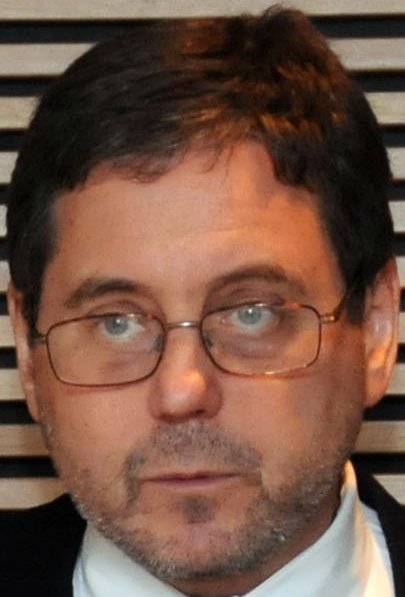
James Love
Photo by Suvi Korhonen from Helsinki, Finland

Summary: A roundup of so-called ‘donations’ that Bill Gates made to news publications so that they put his work in a positive light and help his investments

TECHRIGHTS has not covered the Gates Foundation in about a month. It is very time consuming and we’ll make up for the missing news later in the year.

Over the past year or so we have given countless examples where Gates literally buys coverage. He pays journalists to cover what he says they should cover and the way they should cover it (nobody reasonable would bite the hand that feeds without getting fired by the editor or without losing the income). James Love has written an excellent timeline which he sums up with the summary: “In 2009, the Gates Foundation spent $1 million per day on “Policy and Advocacy”"

“In 2009, the Gates Foundation spent $1 million per day on “Policy and Advocacy””
      –James Love
That’s right. As we’ve said dozens of times alongside new examples, there is a great deal of advertising with a budget of over $300,000,000 per year. It’s just advertising the “Bill Gates” brand, Nathan Myhrvold’s patents, and some of the Gates Foundation’s tax-exempt investments that harm society. Apart from that, Gates makes many promises and pledges while actually increasing his wealth and giving relatively small sums of money (compared to promises he keeps re-announcing for publicity). The whole thing sometimes seems like PR operations that also help Microsoft. And yes, the press says the Gates Foundation helps Microsoft increase sales.

This charlatan Mr. Gates, who we no longer have the time to cover like we used to, shows quite clearly that money buys image. He can break as many laws as he wants, but as long as he is a celebrity who pays for the news, he just won’t be arrested. The man corrupts the media, especially in recent years. Turning the media into one’s ego-boosting machine is unacceptable and very dangerous (e.g. taking control of schools, derailing national migrations to Free software, and so on). Anyway, take a look at Love’s summary, which starts more gently:

This draft timeline, which is an incomplete work in progress, contains a number of selected data points concerning Microsoft and the Gates Foundation. Timelines are always somewhat arbitrary in terms of the selection of items, and this is the case here.

[...]

March 9, 1998. Ralph Nader and CPTech ask six PC makers (Dell, Gateway, Micron, Compaq, HP and Packard Bell-NEC) to offer consumers the opportunity to buy computers with non-Microsoft operating systems pre installed, including the free software operating system Linux.

[...]

February 2000. The Gates Foundation gives the first of several grants to National Public Radio, to cover global health issues.

[...]

October 2, 2000. Microsoft makes $135 million investment in Corel. Corel shuts down its Linux products.

[...]

2004

March 24, 2004: The European Commission finds Microsoft guilty of violating EU competition laws and of abusing its market position and imposes a 497- million-Euro (USD 689 million) fine.

July 2004. The Gates Foundation announced a $150,000 grant to the National Press Foundation “to help create a cadre of skilled writers, editors and producers from nations heavily impacted by HIV/AIDS.”

August 2, 2004. The International Reporting Project (IRP) at The Johns Hopkins University School of Advanced International Studies (SAIS) announced it received a $300,000 grant from the Bill & Melinda Gates Foundation to provide training and fellowships to U.S. journalists covering global health issues. The IRP would received several more.

September 10, 2004. Melinda Gates joins the board of directors of the Washington Post.

September 16, 2004. Public Radio International awarded a “major” grant by the Bill & Melinda Gates Foundation. PRI also discloses frunding from Merck.

2005

The Bill & Melinda Gates Foundation provide a three-year grant to Harvard to create the Nieman Global Health Reporting Fellowship program.

October 2005. The Bill & Melinda Gates Foundation provides a $300,000 grant to the Internews Network “to increase frequency and improve the quality of health journalism in developing countries through the Health Journalism Project”

2006

On June 25, 2006, Warren Buffett announced a pledge to give the Bill and Melinda Gates Foundation 10 million Berkshire Hathaway shares.

July 12, 2006: The European Commission fines Microsoft 280.5 million Euros fine for failing to comply with a 2004 competition order.

Microsoft launches the Zune.

Now, watch what happened in more recent years (which is when we started to smell rogue activity and covered it more frequently):

2007

During negotiations on the World Health Organization (WHO)’s Global Strategy and Plan of Action for Public Health, Innovation and Intellectual Property, the WHO Secretariat gives both the Gates Foundation and Microsoft Corporation permission to attend non-public drafting sessions.

October 2007. The International Center for Journalists receives a $3.7 million grant “to develop high-impact fellowships in Africa focusing on health issues”

October 10, 2007. The International Reporting Project (IRP) at The Johns Hopkins University Paul H. Nitze School of Advanced International Studies (SAIS) announced a five-year, $1.6 million grant from the Bill & Melinda Gates Foundation to provide fellowships to U.S. editors to improve the news media’s coverage of global health and development issues.

December 12, 2007. The Gates Foundation announces a three-year, $5 million grant to Public Radio International (PRI), to report on “global health and development content.”

2008

October 21, 2008. Transparency International Awarded $6.9 Million Grant from Bill & Melinda Gates Foundation for its work “to promote government transparency and accountability in sub-Saharan Africa.”

October 2008. The Gates Foundation gives $3.6 million to the NewsHour program to cover global health issues. (Commentary here)

November 2008 The International Center for Journalists receives a $2 million grant “to improve media coverage of development issues in four African countries in order to foster decisions that benefit the poor with special focus on rural development issues, including both agriculture and financial services for the poor.”

2009

The Bill and Melinda Gates Foundation report grants of $3.055 billion in 2009, plus expenditures on operating expenses of $409 million. The grants were broken down into $1.8 billion for global health, $677 million for global development, and $489 for the United States. Grants identified as “Policy and Advocacy” totalled $365 million for all areas, or $1 million per day.

February 25, 2009. President Obama announced the appointment of Gary Locke, the former Governor of the State of Washington, as the Secretary of Commerce. When appointed, Locke was partner at Davis Wright Tremaine LLP, and had been a consultant to Microsoft.

March 2009. The Gates Foundation announced a $767,800 grant to the Regents of the University of California at Berkeley “to foster in-depth and high quality media coverage of agricultural development issues in Africa through an intensive journalism training program”

March 4, 2009. Kathleen Sebelius, Secretary of the Department of Health and Human Services (HHS), announced that Dr. Nils Daulaire, the former president and CEO of the Global Health Council (1998-2009), will join HHS as Director of the Office of Global Health Affairs on March 22. While at the Global Health Council, Nils had established the annual $1 million Gates Award for Global Health. Among the leading funders of the Global Health Council were the Gates Foundation and the Merck Foundation. Daulaire has been replaced at the Global Health Council by Jeffrey L. Sturchio, who earlier held several different positions at Merck dealing with public and external affairs.

November 2009. The Gates Foundation announces a $750,000 grant to National Public Radio “to support coverage of education issues on NPR programs, including the “Morning Edition” and “All Things Considered.”

2010

Through its seat of the UNITAID board of directors, the Gates Foundation nominated a Microsoft patent lawyer to the founding board of the UNITAID medicines patent pool. The UNITAID board deferred action on all nominations.

August 2010, Gates and Buffett announce “the giving pledge.”

September 14, 2010. The Guardian announced the launch of global development website with Gates Foundation funding.

September 2010. Johns Hopkins University School of Advanced International Studies (SAIS) receives $367,941 to “support a reporting fellowship to influential journalists in the U.S. media to cover global health stories in different countries around the world.”

October 6, 2010. ABC news announces the Bill & Melinda Gates Foundation will provide a $1.5 million grant to fund overseas travel and foreign production costs for its reporting on global health.

November 2010. Melinda Gates resigns from the board of directors of the Washington Post. Warren Buffett remains on the board of the Directors of the Washington Post, a position he has held since 1974.

A lot of the unethical activities (almost all of them) are ommitted from Love’s list, which seemingly concentrates on Gates’ influence on the media. There is a meme spreading around the Web which goes along the lines of quoting Gates as saying: “if I only had two cents left, I would spend one on advertising.” It’s not a real quote (some think that it is), but it generally shows Gates’ strategy and motto. In antitrust memos too we see Gates advocating “evangelization” rather than better products. Oh, and by the way, the quote below is real.

“If you can’t make it good, at least make it look good.”

Bill Gates, Microsoft

Share this post: These icons link to social bookmarking sites where readers can share and discover new web pages.
  • Digg
  • del.icio.us
  • Reddit
  • co.mments
  • DZone
  • email
  • Google Bookmarks
  • LinkedIn
  • NewsVine
  • Print
  • Technorati
  • TwitThis
  • Facebook

If you liked this post, consider subscribing to the RSS feed or join us now at the IRC channels.

Pages that cross-reference this one

What Else is New


  1. Red Hat Pays Microsoft-Linked Patent Troll Again, Refuses to Provide Details

    Another attack on GNU/Linux results in payment to trolls and silence from Red Hat, which keeps the FOSS community in the dark


  2. Microsoft Brings the Notion of Buying Games to End, Consumer Rights Groups Should Sue

    Not only is XBox eliminating the notion of owning and controlling one's console; new XBox paradigm aims to reduce one's control over purchased games, reducing buyers to temporary, transient consumers


  3. Links 24/5/2013: Fedora ‘Pidora’, CIvil Rights Debated in the US

    Links for the day


  4. Bill Gates Still Getting Richer Through For-Profit Investments, Now Wants to Brainwash Children in Schools in Favour of His Investments

    Some of the latest strategies used by the world's richest man to protect his investments and amass yet more money, adding to an ever-growing wealth while pretending it's a charity


  5. Microsoft Entryism and Its Effects on Corporate and Public Policy

    An aspect of Microsoft culture that ought not be overlooked because of its profound effect on society (private and public)


  6. Red Hat Should Follow Google's and Twitter's Footsteps on Patents to Avoid Becoming the Next Novell

    Red Hat continues to ignore my plea to defang the software patents it is applying for, potentially making them weaponised like Novell's and Sun's patents (e.g. Java at Oracle) upon buyout or another major event


  7. CAFC Decision Still Overridden by Overzealous Patent Lawyers in the Press, The Guardian and Other Corporate Press (CBS and AFP Included) Still Guard the Establishment

    Analysis of a sceptical kind of corporate press coverage regarding software patents in the US; great examples of how Microsoft- and Gates-funded press outlets tend to get it all wrong on the facts, smearing digital freedom fighters


  8. Software Patents Debate Still Open in New Zealand and the US

    In spite of distraction attempts, the debate over software patents continues to stress that there is a real danger


  9. WebM is No Ogg, It is Not Freedom-Respecting Anymore, Even in Countries That Have No Software Patents

    Why Google needs to fix the licence of VP9, or simply stop pretending that it should be the only de facto standard for multimedia


  10. Microsoft Violates Google Licences

    The champion of 'IP' and licensing (extortion) is not much of a champion after all, based on new reports, not just a lot of old ones


  11. Skype Teaches Us That All Microsoft Software Should be Assumed Spyware Unless Proven Otherwise

    The broader implications of Microsoft adding spying 'features' to Skype


  12. Links 23/5/2013: Threat to Civil Rights in UK, KDE 4.11 LTS

    Links for the day


  13. Links 22/5/2013: Debian GNU/Hurd, New Go Language Release

    Links for the day


  14. The FRAND Apple-Microsoft Conspiracy Attempts to Destroy Android/Linux, Ban Imports

    How Microsoft and Apple are using patents in bulk (sometimes acquired in unison, e.g. from Novell and Nortel) to artificially lower market saturation of the Android operating system or drive costs up


  15. Gates Foundation: Buying Influence for Bill's Ego and Bill's Profit

    New examples of power being acquired and investments (i.e. for profit) being funnelled into the beneficiaries


  16. Bill Gates Enters Financial Centres With His Goons Becoming US Budget Chief, Top Bankers

    How Bill Gates' staff is entering positions of financial power, indirectly giving Gates power over US (national and international) finance


  17. IBM Ignores Small Companies' Interests, Denies Patent Scope is a Problem, Focusing on Its Own Problems (Trolls) Instead

    How David Kappos and IBM (his longtime employer) continue to ignore the obvious problem which kills small businesses and everyone is complaining about


  18. The New York Times Publishes Factually-Flawed Patent Propaganda Benefiting Microsoft and Apple

    Eamonn Fingleton is rewriting history in the US' top newspaper, insinuating that patents contributed to the rise of software duopolists


  19. Software Patents Eligibility Likely to be Decided by SCOTUS

    Analyses suggest that an escalation by appeal to SCOTUS is likely to be the next stage in 'Bilski 2.0'


  20. Does Bill Gates Try to Flush GNU/Linux Down the Toilet in Kerala?

    Renting Microsoft software rather than using Free (as in freedom, or libre) software?


  21. Links 21/5/2013: Handbrake Turns 0.9.9, NetBSD 6.1

    Links for the day


  22. Links 20/5/2013: First Salifish Smartphone, Mageia 3 Released

    Links for the day


  23. Microsoft Corruption (Illegal Tenders) Stopped by European Court

    Microsoft cannot bypass public tenders, based on a ruling from a court of law in Europe


  24. Not Satire: Microsoft Wants to Show the World How Security is Done

    Software security 'standard' to be led by the company which made insecurity an acceptable engineering practice?


  25. Microsoft is Struggling to Maintain Industry 'Standards'

    With Microsoft's common carrier and browser share down considerably Microsoft finds itself increasingly irrelevant and it tries subversive means of making another comeback


  26. Microsoft Entryism and Bribery Get the Microsoft Way Implemented

    A recollection of very dirty tactics from Microsoft, which uses money to oppress, overthrow, and even hijack its opposition


  27. Patent Policy Laundering in the European Union and New Zealand

    How the so-called 'free' trade agreements help spread patent policy which favours software patents


  28. Ongoing Focus on Patent Litigation and Patent Trolls Reduces Focus on Software Patents

    The problem with increased focus on the players that use software patents litigiously and the litigation itself


  29. Andrew Y. Schroeder Shows That Patent Lawyers Are Sociopaths

    Bully and law misuser is trying to get his way with foul language, intimidation, and sheer lack of professionalism


  30. IBM-backed Book on 'Open Innovation'

    OpenForum Europe (OFE), which helps IBM's turf wars in Europe, releases a new book filled with its talking point


RSS 64x64RSS Feed: subscribe to the RSS feed for regular updates

Home iconSite Wiki: You can improve this site by helping the extension of the site's content

Chat iconIRC Channel: Come and chat with us in real time

Recent Posts