
Why We Dumped Online Shopping (Groceries)
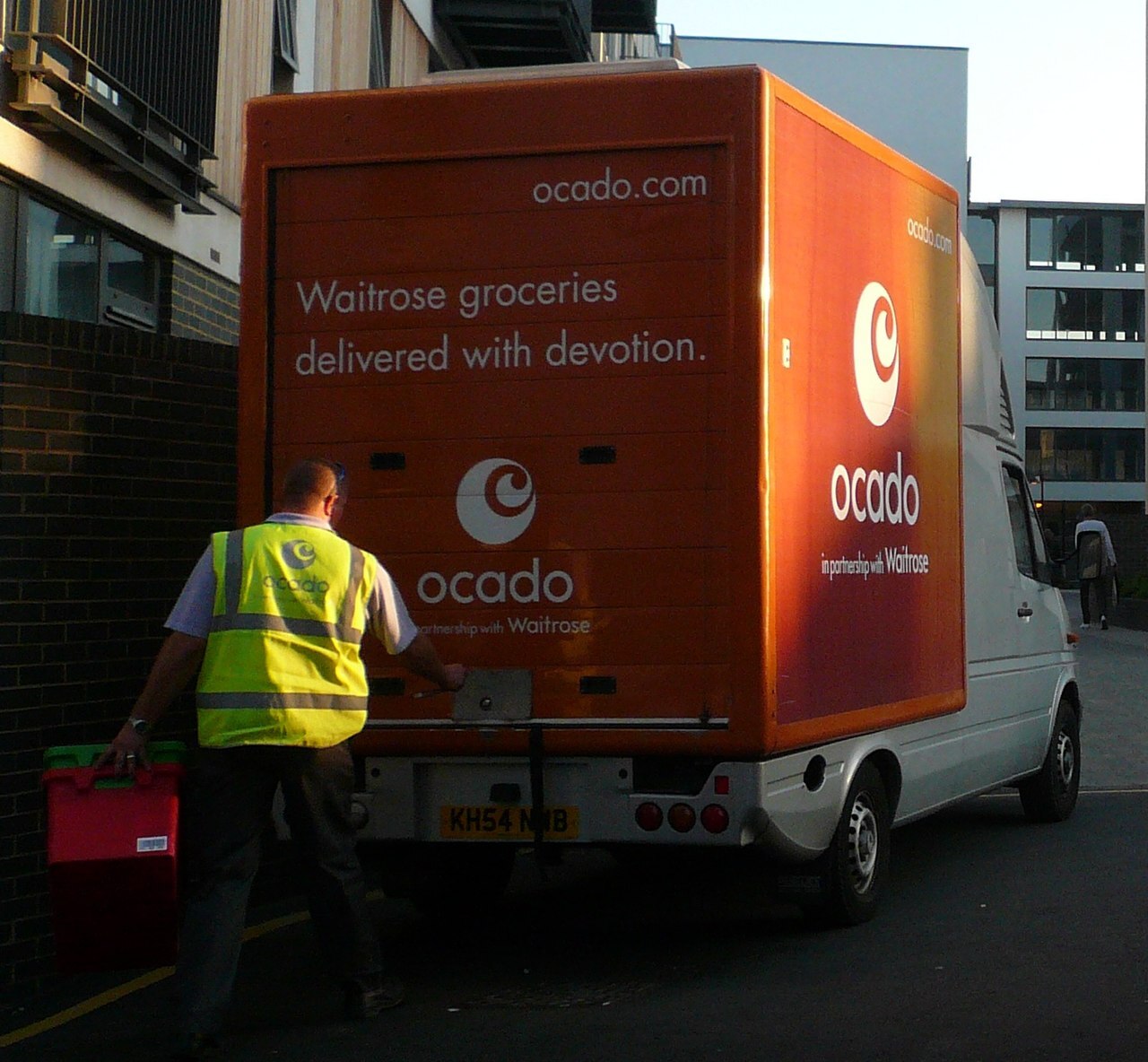
I was an early adopter of many "digital" things (online banking, online grocery shopping, and Web-based self-hosted tools to name a few technical-ish examples), but many years later I came to regret that. I had been fooled and soon realised that subsidies kept the "online" stuff artificially cheap (like so many other things when they are new and adoption is sought, even if it compromises profits/profitability).
In 2003, months after I turned down a software engineering job offer in London, Ocado wanted to interview me (with a much better salary offer, I think 20% higher than the one I had turned down), but I was already starting my Ph.D. and was not interested in leaving "University Life" (back then it was vastly better than it is in 2026).
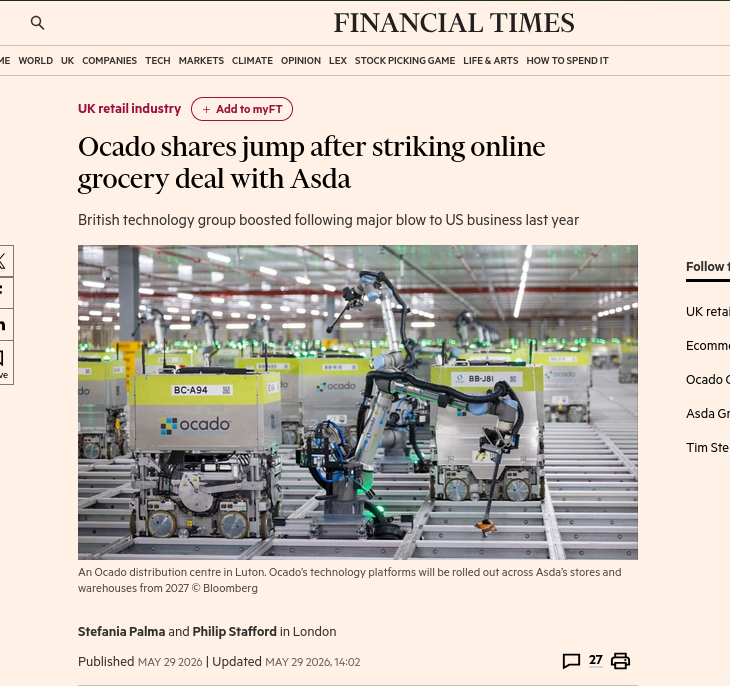
Now it seems like Asda is outsourcing to Ocado, a patent aggressor I might add, and Ocado's shares have therefore jumped:
Notice in the photo above the vision of shopping - it's probably even worse than Amazon. My rejection of online banking (which I adopted ~24 years ago, maybe 25) was explained in prior articles, but let's talk about ordering groceries online and why it sucks.
I believe or can vaguely recall that in summer 2003 I received vouchers ('coupons') for free deliveries by Sainsbury's. I don't remember if there was a lower bound/limit for free orders; there probably was and it wasn't so unreasonable (maybe 35 pounds, about $50). Even a modest order for a single person would be shipped to any home (no matter the location, irrespective of driving distance) without extra charges. The online interfaces wasn't a bloated JavaScript dumpster fire and service over the phone was a real person, not "voice menus" or overseas call centres. I quit relying on deliveries by Sainsbury's around 2011* because Aldi was cheaper, the service was already getting worse, the interface was getting awkward, and the "honeymoon period" (free deliveries) had more or less come to an end. Like those allegedly "cheap" Uber rides...
Shopping in person isn't just about comparing items, attaining better privacy, and picking fresher goods/produce (with near-optimal expiry dates). There are many more advantages; "newer is not always better". As Bob Cringely recalled the other day (regarding the "dotcom" bubble): "The lesson people took from 1999 was that the internet was a bubble. It wasn’t. The internet was the most real thing to happen to commerce in a century — it ate retail, media, advertising, and the telephone, precisely as the prospectuses promised. The technology was never the lie. The lie was the price — capital sprinting into a true story while refusing to look at the unit economics underneath it. Pets.com wasn’t wrong that you’d someday buy dog food online. You’re probably buying it online right now. Pets.com was wrong about what it cost to ship a forty-pound bag for a flat five bucks. The revolution was real. The arithmetic was fatal."
Cringely then pauses to clarify what we said yesterday on fake "valuations" of companies that lose a ton of money (yes, SpaceX too operates at a loss). Quoting Cringely: "As I write this, SpaceX is days from launching what will be the largest IPO in human history — a roadshow this week, pricing next, at a valuation knocking on two trillion dollars, larger than Aramco. OpenAI is lining up a listing for the fall at something near a trillion. Anthropic has quietly filed, valued in the same impossible neighborhood. Last quarter, roughly four of every five venture dollars on the planet went to AI. Bank of America’s own strategist is comparing the mood to the most extravagant manias on record and warning that these three debuts alone will tip the market’s concentration past anything we saw in the dot-com peak. The FOMO isn’t a side effect this time. It’s the product."
Finally, comparing this to the "dotcom" crash: "Which makes a two-trillion-dollar valuation built on “biggest brain wins” a Pets.com valuation. Right about the revolution. Wrong about the cost structure underneath it. Bank of America, in less inflammatory language than mine, has already described this IPO wave for what it is: a mechanism for moving accumulated risk off the early insiders and onto you. The roadshow is the machine that does it. A roadshow is, and has always been, an apparatus for manufacturing urgency — get in before the story is re-examined. In 1999 the re-examination arrived a few quarters after the bell, when the lockups expired and someone finally totaled up what it cost to deliver the product. I have watched this exact movie. I can tell you how it ends. It ends the day the unit economics walk into the room."
Going back to groceries...
They say there is "no free lunch"; the personal shopper, the delivery person, the fuel, van acquisition/cooling/repair/maintenance/insurance... they all cost plenty of money (salaries and more). There were never "free deliveries" per se; those are - and were - ways to get people "hooked".
Quoting Cringely again: "For now, just remember what 1999 actually taught us. The companies that walked out of the wreckage weren’t the ones with the biggest story or the loudest roadshow. They were the boring ones whose arithmetic still worked the morning after the party."
The "hype" companies with their giant debt are dying. They just try to delay the inevitable. █
__________
* We tried it online again, only once, in 2015, as we had returned from a very long vacation and needed to order a lot of food for the then-empty fridge and freezer. We were both so tired (due to jet lag) that we didn't hear knocks on the door and they had to redeliver.
That was the last attempt at ordering online.