
At Least 23 Days of EPO Strikes
This month:
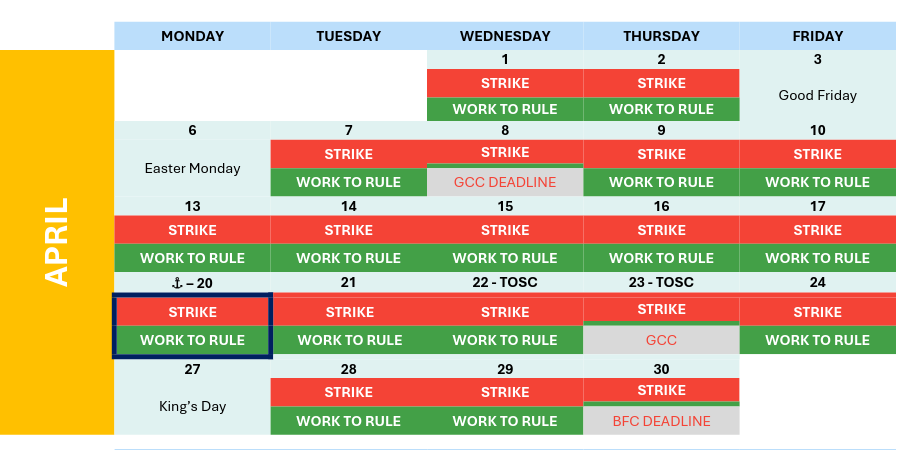
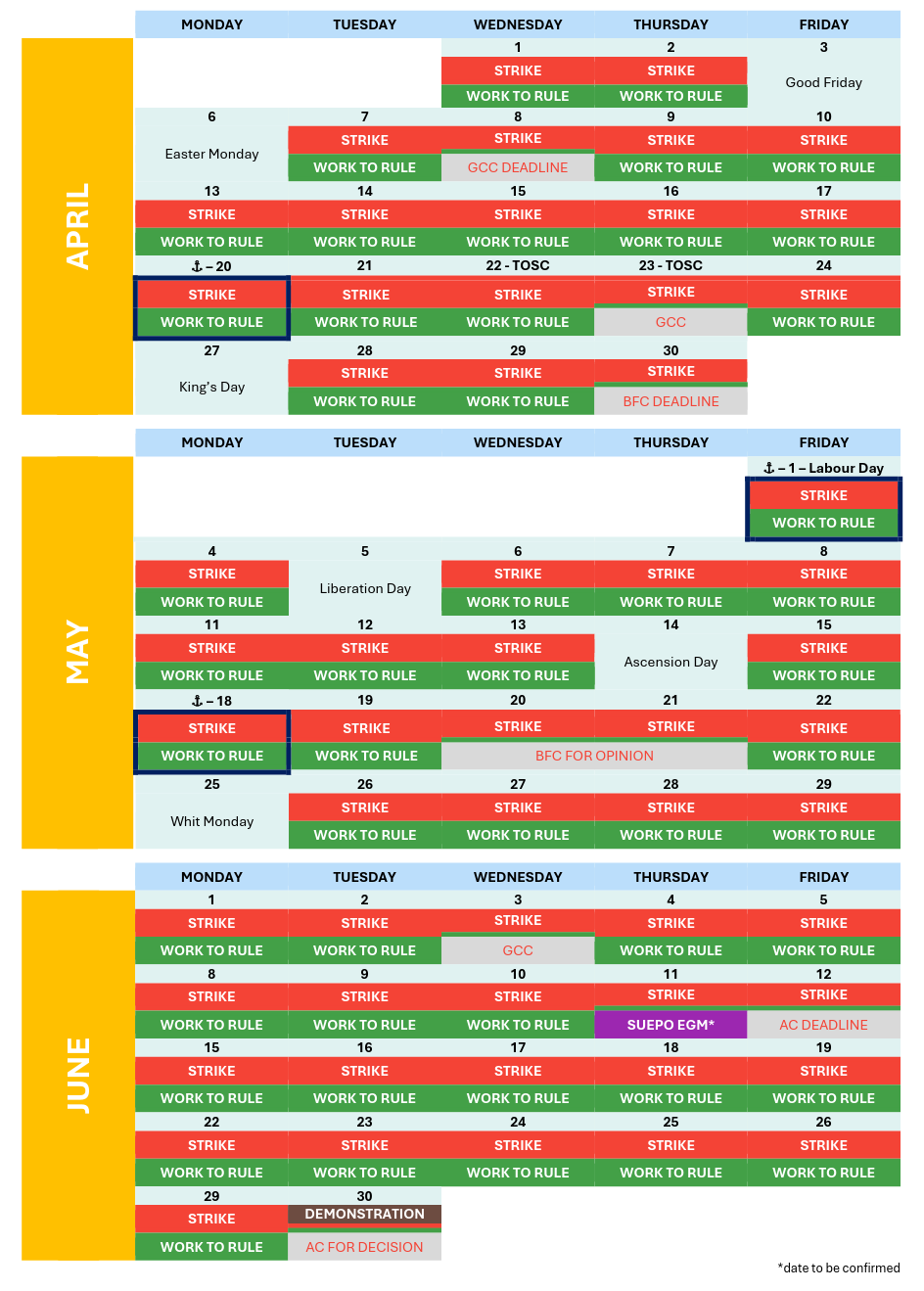
Change in Hungary is afoot (yesterday we mentioned in passing attacks on the media in Hungary) and at the EPO there are strikes in all major sites. The media and even so-called 'IP' blogs won't (or cannot) mention it, so we will.
The SUEPO TH (The Hague) committee, i.e. the staff union or Staff Union of the European Patent Office (SUEPO), wrote to staff some days ago:
INTERNATIONALE GEWERKSCHAFT IM EUROPÄISCHEN PATENTAMT
STAFF UNION OF THE EUROPEAN PATENT OFFICE
UNION SYNDICALE DE L'OFFICE EUROPEEN DES BREVETS
Ortssektion Den Haag
Local section The Hague
Section locale La Haye8 April 2026
su26012hpGuidance Rolling Strikes
Support the industrial actions by striking at least 23 days,
including the recommended “anchor days”Dear members, dear colleagues,
The Action Plan (strikes any day of the week, see below) was adopted during the EGM of 26th March. If you wish to have more guidance, please find it below:
- The SUEPO TH committee calls for all staff to strike for at least 23 days in the period of 30 March until end of June. This is equivalent to the number of strike days planned in Munich on fixed days of Monday and Friday.
- An explanation of Article 65 is provided in ANNEX below.
- The following recommended “anchor days” have been selected from April until mid-May. We call for all staff to go on strike on all these days, close to meetings with the Administration:
o Monday 20 April (Technical and Operational Support Committee: 22-23 April),
o Friday 1 May (Labour day, but not a public holiday in TH),
o Monday 18 May (Budget and Finance Committee: 20-21 May).
- The purposes of these recommended anchor days are to:
o foster solidarity and the feeling of collective action, and
o remind the Administration of the magnitude of staff unrest.
- Please note that these days are included within the total number of strike days, they are not to be regarded as the only days on which we will take action.
- Work-to-rule continues and consists of: working thoroughly, avoiding rushing or working longer than your contracted hours, refraining from voluntary projects, taking leave appropriate to your personal situation (sick leave, special leave,…), completing trainings, participating in professional development and strengthening collaboration within teams.
The aim of the industrial actions is twofold, first to express our deep disagreement and unwavering determination to the Administrative Council to cut our employment package; and second, to reduce production. Therefore, work not done during a day of strike should not be compensated for.
We understand that some colleagues are being put under pressure to increase their output. If you are in this situation or know a colleague who is, please read this guide to production pressure at a time of industrial actions, and do not hesitate to contact us for assistance.
Defend Your Employment Package. Protect Your Future.
Kind regards,
Your SUEPO TH committee, M18B10 and De Bruyn Kopsstraat, 15, Rijswijk
[...]
ANNEX
Article 65 (1)(b) ServRegs – Payment of Remuneration:
Where remuneration is not payable in respect of a complete month,
the monthly amount shall be divided into thirtieths and
- where the actual number of days for which pay is due is fifteen
or less, the number of thirtieths payable shall equal the actual
number of days for which pay is due;
- where the actual number of days for which pay is due is more
than fifteen the number of thirtieths payable shall equal the
difference between the actual number of days for which pay is not
due and thirty.
Our understanding of this article – based on the CODEX and recent practice - is the following:
- “Days for which payment is due” include work days, week-ends, annual leave, parenthood leave, home leave, special leave and public holidays.
- “Days for which payment is not due” include parental leave, family leave, unpaid leave and strike days.
In practice, the above 2 clauses are equivalent for months with 30 days and there is minimal impact for months with 31 days on the strike deductions. It should also be noted that pension contributions continue to be paid in full during periods of strike.
Suppose thousands of colleagues go on strike for the equivalent of one month. Let's low-ball the numbers and say just a thousand and three hundred (lower than any prior strike). That's 30,000+ thousands of working days or almost 250,000 working hours.
Why does the media not deem this newsworthy? █