Photo by Andre urbano
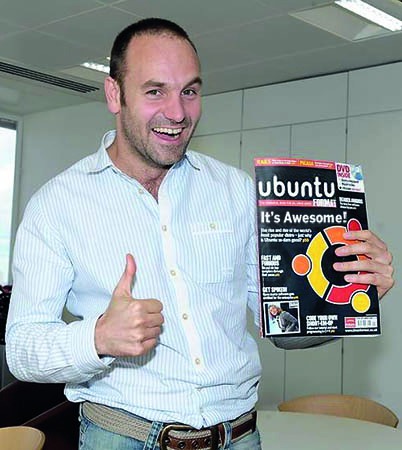
Summary: Mark Shuttleworth apologises for some recent controversial behaviour of the company he founded to make "Linux for human beings"
THE STORY at hand seems like a familiar one. It is one of those cases where by "mistake" one means "we got caught, so it's a mistake." Canonical already went after derivatives of Ubuntu, such as "Satanic Edition" (to name just one example where later on Jono Bacon and other community figures tried to quell and put out the fire). Trademark bullying from Canonical is not something new and the company is repeating old mistakes, so these are probably not mistakes.
Mark Shuttleworth
posted this long response ("Comments are closed," but some comments can be read via
"Shuttleworth: Mistakes made and addressed" at
LWN). It's a bit of hogwash, but some people still appreciate this and consider it to be a sufficient apology. This
apology does not please everyone, but we should give this man the benefit of the doubt. Maybe the decision to go after FixUbuntu was not his at all. "In an encouraging and refreshing move," wrote
Muktware, "Mark Shuttleworth, the founder of Ubuntu and Canonical has apologized for calling Mir opponents the “open source tea party” [...] He also apologized for the take down notice that was sent to EFF staffer Micah F Lee over fixubuntu website."
To quote Shuttleworth himself: "Last week, someone at Canonical made a mistake in sending the wrong response to a trademark issue out of the range of responses we usually take. That has been addressed, and steps are being taken to reduce the likelihood of a future repeat."
Muktware correctly points out that this created a controversy, but the author goes further by comparing Canonical to Apple. The author says: "That unprecedented move from Canonical (to sen[d] take down notice) had put Canonical in the league of Apple.
"All leading news sites criticized Canonical for this move and it turned out to be the worst PR disaster for Canonical."
Nothing actually gets done about the original mistake, which makes Ubuntu some kind of informant to the CIA/NSA (through Amazon) regarding local user searches -- a malicious behaviour that Windows has been 'renowned' for since about a decade ago (
Microsoft is an exceptionally strong NSA ally, whereas
Amazon is better known for its new CIA ties as official dossiers host/architect).
Bradley Kuhn (formerly FSF and SFLC)
took note of Canonical's behaviour, having done so before when it comes to copyrights. He also wrote about trademarks in other contexts. Kuhn said: "I was disturbed to read that Canonical, Ltd.'s trademark aggression, which I've been vaguely aware of for some time, has reached a new height. And, I say this as someone who regularly encourages Free Software projects to register trademarks, and to occasionally do trademark enforcement and also to actively avoid project policies that might lead to naked licensing. Names matter, and Free Software projects should strive to strike a careful balance between assuring that names mean what they are supposed to mean, and also encourage software sharing and modification at the same time.
"However, Canonical, Ltd.'s behavior shows what happens when lawyers and corporate marketing run amok and fail to strike that necessary balance. Specifically, Canonical, Ltd. sent a standard cease and desist (C&D) letter to Micah F. Lee, for running fixubuntu.com, a site that clearly to any casual reader is not affiliated with Canonical, Ltd. or its Ubuntu€® project. In fact, the site is specifically telling you how to undo some anti-privacy stuff that Canonical, Ltd. puts into its Ubuntu, so there is no trademark-governed threat to its Ubuntu branding. Lee fortunately got legal assistance from the EFF, who wrote a letter explaining why Canonical, Ltd. was completely wrong."
This
trademarks issue/dispute which we previously covered (as did others, including some pretty major news sites [
1,
2]) is not going away any time soon. Canonical is doing what's known as "damage control" right now. As
Wired put it, even Ubuntu boosters shy away: "The editor of the Ubuntu news site, OMG! Ubuntu!, says that Canonical’s email to Fixubuntu.com “does make for uncomfortable reading,” but Joey-Elijah Sneddon believes that the company is trying to preserve its trademark rights, not silence critics. Although OMG! Ubuntu has been critical of the privacy issues, Canonical hasn’t sent him a nastygram. Were “Canonical really out to suppress criticism, they’d have given me a bit of a prod before now,” he said in an email interview."
The comments on this article -- like many articles of this kind -- have been rather hard-hitting too. To quote just the top 2 (not to quote selectively): "Canonical has become a total joke. What started out as a great effort, has degenerated to a disgrace for the whole Linux community." Another person says: "Canonical and Ubuntu have jumped the shark."
Ubuntu is a project that I install a lot for clients, even on the servers (not my choice), so I sure hope that Canonical will get its act together and make it comfortable -- ethically -- to do this. KDE developers, who have just reached some new milestones [1,2], feel similarly. Upsetting KDE developers [3,4,5] is not a smart thing to do, especially by comparing them to far right-wing politics. Based on a link that Will Hill shared with us (development portal), even Debian developers are growing increasingly impatient with Canonical/Ubuntu.
Muktware, a longtime Ubuntu booster (until Canonical called it a "troll" for not towing the party line 100% of the time),
said:
Canonical has sent Micah. F.Lee, a staff technologist at EFF, a take-down notice for a website he started to educate people about fixing the privacy invasive feature Canonical has built in Ubuntu.
Lee started a website called fixubuntu.com, which he describes as “a place to quickly and easily learn how to disable the privacy-invasive features that are enabled by default in Ubuntu.”
He received an email from Canonical which asked him to practically shutdown the site as it uses the name Ubuntu in the domain and also showcases Ubuntu logo.
People who accuse Canonical critics of being "divisive" should take a deep look at Canonical itself. Calling people "trolls" or "Tea Party" for simply not agreeing is not just divisive; it is offensive.
Canonical could save itself a lot of trouble by just listening to many users who are upset about the privacy violations of trust, which are probably not worth the money Canonical gets from Amazon (its partners in other areas too). Why this insistence despite the backlash? Is Canonical telling the full story? We don't know the terms of the deal/s between those two companies and we know that the
CIA funds US companies to help spy on customers (based on a new report from the
New York Times). The behaviour of the search bar has been controversial and widely vilified
well before the EFF spoke out about it (the FSF weighed in much later, and only after I had spoken to Stallman about the subject). The solution is simple and the mistake is well known; the big mistake is not trademark bullying, it is privacy violation. It is worth focusing on the real mistakes. They are technical -- not just ethical -- mistakes.
⬆
Related/contextual items from the news:
-
The conflict that has been brewing between the KDE developers and Canonical has finally exploded in a flurry of statements which show just how many problems the Mir display server has caused.
-
One of the most important KDE developers, Martin Gräßlin, has written a message to the Ubuntu developers, saying goodbye.
-
Following Mark Shuttleworth's critical comments about those opposed to Mir and his statements being challenged, multiple KDE developers in particular have been expressing their outrage.
Aaron Seigo was the KDE developer to challenge Mark Shuttleworth to a public debate over his colorful comments regarding those opposed to Canonical's Mir Display Server for Ubuntu. Two weeks have passed since suggesting this public debate and there's still been no public response by Mark Shuttleworth, though Jono Bacon and others have commented on the matter.
