
Bonum Certa Men Certa

Why the Corporations-Leaning US Political System Does Not and Will Not Help Resolve the Patent Chaos

Where money calls the shots corporations and their owners almost always get their way at the public's expense

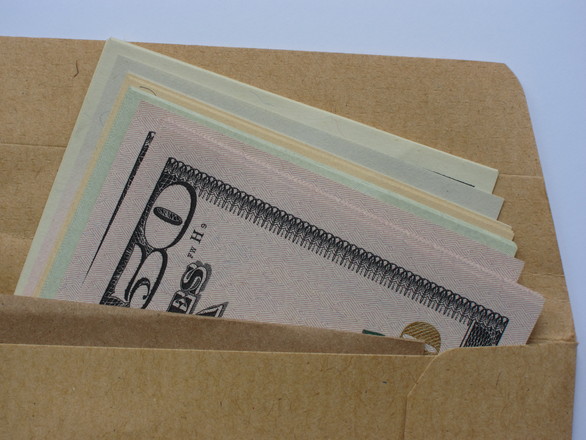
Money envelope


Summary: Commentary on the US patent system and why it has never quite healed itself, nor will it ever be able to heal itself if large corporations dominate political figures

BEFORE we were focused on the EPO we had been writing literally thousands of articles about the US patent system (USPTO), which is utterly dysfunctional, unjust, and detrimental to human progress.


IP Watch, a site mostly critical of the existing systems or frameworks, has just said that "More than 50 members of the United States Congress today sent a letter urging the US Department of Health and Human Services (HHS) and National Institutes of Health (NIH) to exercise their legal authority to require medical patents that have emerged from government-funded medical research projects to be licensed on reasonable and affordable terms for public use.

"It helps show that patents are often more to do with protectionism than innovation or public service. It's about corporations, not about people.""The letter [pdf], rooted in a growing public concern with the rising prices of prescription drugs, argued that failure to use this measure would drive an image that the American government funds projects with taxpayer money that allow profiteering from struggling patients and families rather than simply earning enough profit to provide for future research and the researchers’ own incomes."

It is easy to spot the inherent problems here, seeing the absurdity of granting a patent monopoly, a government-enforced monopoly, derived from tax money which the government ordered to be given. It helps show that patents are often more to do with protectionism than innovation or public service. It's about corporations, not about people.

A new article from bankers' media alludes to the CLS Bank case, which is better known by the plaintiff's name, Alice. Here is what it says about software patents:

A landmark case in this area was the 2014 decision in Alice Corp. v. CLS Bank, in which the U.S. Supreme Court ruled that patents on software related to an electronic escrow service were found to be unpatentable, since the patent's claims were drawn from abstract ideas.

"I think there's a movement in the courts and in Congress to restrict the scope of software patentability," Knight said.


Yes, well, once upon a time there was a healthy debate out there about whether software patents should be abolished. Those days were gone after large corporations had hijacked the debates and warped these into debates about patent trolls (meaning small entities that typically use software patents, often against large entities/corporations). All of these "reform" (for large corporations) talks virtually vanished (from the media and from politics) right after the summer break. It all got squashed and lost all its momentum. This is politics. It's total nonsense when it's clogged up by sponsors, donors etc.

"...once upon a time there was a healthy debate out there about whether software patents should be abolished."Florian Müller tells IP Troll Tracker (Steph): "I agree that a focus on trolls is poor justification for reform. Trolls are merely a symptom of the underlying problems." He also asks "So you also feel that patent reform advocates have been too timid so far in their portrayal of problems and proposals?"

This was after he wrote a long rant about the role of political correctness (or maybe the sixth sense which is campaign contributions money) in the reluctance to put to rest the bad patent system which promotes extortion rackets. To quote the apolitical part (not GOP promotion):

U.S. patent reform advocates have been disappointed term after term, presidency after presidency. Washington has a "do nothing" reputation, but a sea change appears to be around the corner and it may also create an environment in which, at long last, the massive and dramatic problems caused by a broken patent system may be addressed more forcefully and courageously than before.

Political correctness has terrible effects because it prevents politicians, the media and the general public from discussing the real issues without mincing words, and when you can't even talk about the real issues, you're very, very unlikely to identify and implement solutions.

Political correctness is the root cause of many problems not only in such contexts as immigration policy or the problem with certain ethnicities' crime rates.

There are many areas in which a dogma has been turned into an axiom. Even though I'm an environmentalist (my house has a groundwater heat pump and uses groundwater temperature for cooling), I'd like there to be a more open discussion of the causes of global warming. Just an example.

Political correctness is also a huge problem in the debate over U.S. patent reform. Organizations and individuals probably feared that they would be "anti-American" if they simply said that the U.S. patent system is broken and fails to serve true innovators.

In all those congressional hearings on patent reform that I watched, each and every politician repeated the mantra of the U.S. patent system being key to innovation and allegedly being the envy of the world, when the reality is that it's the laughing stock of patent and industry professionals in the rest of the world. Over the years I've talked to so many patent lawyers from Europe and Asia, and even to patent examiners (though not the ones the EPO leadership accuses of having been in contact with me), about the overall situation, and no one believes that U.S. juries are qualified to determine infringement and validity issues, no one has ever disagreed with me that the Federal Circuit is generally too patent-holder-friendly, and no one has ever disagreed with me that the quality of USPTO-granted patents is generally even lower than that of European patents.

Impactful patent reform in the U.S. won't happen until at least a significant percentage of all politicians and stakeholders participating in the debate will start to tell the truth, which is that most information and communications technology patents are invalid as granted, that a high percentage of all claim construction decisions are reversed on appeal, that even those patents that are not invalid and are ultimately deemed infringed generally don't protect anything that justifies a 20-year monopoly, and that there is no point in incentivizing "being first to file" when the combination of copyright, trademarks, trade secrets, and the first-mover advantage in relatively fast-moving fields are more than sufficient to protect investment in innovation. Reform advocates must place more emphasis on the fact that ever more U.S. patents are not granted to U.S. companies, just like most European patents are not held by European companies. It must be said that the correlation between patents and innovation in a country is hardly a causation of patents promoting innovation, that patents increasingly serve as a substitute rather than an incentive for innovation, and that studies linking patents to innovation are often based on circular logic, considering each patent an innovation.

Less is more. How can anyone seriously believe that patent inflation has anything to do with increased innovative activity? Would anyone believe that merely printing more money creates prosperity? Reform advocates should talk about how to gradually bring the number of patents granted per year down to a fraction of the current rate.


The US patent system isn't the only one permitting patents on software. Under the EPO's regime (like Brimelow's "as such" loophole) many companies apply for and get software patents in Europe. The patent lawyers like it because it means more business (income) for them. Looking at sites of patent lawyers (IAM for instance), we do find very recent evidence that the patent system doesn't quite function as was originally intended (when patent laws were conceived as means as providing an incentive to those publishing their physical inventions). As part of Xiaomi's notorious campaign to amass thousands of patents, it now reportedly buys Broadcom patents. So, here again we have hardware-related patents being passed around, sold, changed in terms of ownership/assignment, serving to show that as a reward for innovation patents don't quite function, not as stated on the tin. They're more like weapons or tools of coercion.

"One way to tackle these issues is to inform the public, not politicians, who are easily influenced by corporate cash (bribes/donations/revolving doors) and are therefore unlikely to become part of the solution.""In an assignment dated 23rd October 2015 and recorded with the USPTO on 7th December," IAM wrote, "US semiconductor company Broadcom transferred 19 US patent assets to an entity named Xiaomi H.K. Ltd."

In similar news, "Qualcomm asks U.S. court to force Apple, Samsung and others to surrender documents" and "Public patent licensing company index declined 24.4% in 2015".

The term "patent licensing company" can be viewed as a gentler term for patent trolls, such as the Microsoft-connected Acacia, which habitually attacks Linux with patents. According to this report from IAM, Acacia is not doing too well. To quote: "Capping off 12 months of slumping share prices was the resignation in late December of Acacia CEO Matthew Vella. His exit came after the NPE was on the wrong end of a damaging decision in the Eastern District of Texas as a jury found in favour of the defendants, including Alcatel Lucent, ruling that the Acacia patent was invalid and not infringed. If that ruling had gone the other way it’s fair to say that Vella would probably still be in a job."

Irrespective of this one patent troll and putting aside the impact of Alice on software patents, the problem is far from resolved and some of Müller's observations (not the political slant) have earned praises from critics of the patent system, such as Jamie Love. One way to tackle these issues is to inform the public, not politicians, who are easily influenced by corporate cash (bribes/donations/revolving doors) and are therefore unlikely to become part of the solution.

Recent Techrights' Posts

Libya's Share on the Web: 5.2% GNU/Linux
GNU/Linux has hit an all-time high there
Codecs and Software Patents - Part VI - The European Patent Office, Nokia, Microsoft, Sisvel, and More
Whatever Nokia used to be, it's certainly not an ally and a lot of the turmoil at the EPO is the fault of companies like Nokia
 
Links 11/05/2026: Another Oracle Setback and Mass Layoffs in Iran
Links for the day
Gemini Links 11/05/2026: Older Can Be Faster and Textmode Workflow
Links for the day
Links 11/05/2026: The Solicitors Regulation Authority (SRA) Admits It Only Reacts When It's Too Late (Damage Already Done), Ombudsman’s Animal Cruelty HK Report
Links for the day
If It Takes You a Second to Serve (or Receive) a Page, That's Definitely Too Slow
For speeds at milliseconds (e.g. for pages to fully load in a tenth of a second) the pages must be ready to be sent as soon as they're requested
It's Not About Speed, It is About Patience and Adherence to Truth, Principles, Scientific Integrity
attacks on us only ever made us stronger - a lesson that our adversaries have learned the hard way
Cyber Show Does it Like Techrights: Static and Gemini Protocol as 'First-Class Citizen'
HTML and GemText (over Gemini Protocol) would be rendered in tandem
SLAPP Censorship - Part 73 Out of 200: Microsoft's Graveley and Garrett Remain Closely Connected in May 2026 ("Tag-Teaming" Against Bloggers in Another Continent)
The phrase "judge a person by their friends" seems applicable here
Discussions About When the Axe Falls at IBM/Kyndryl (11,000 Layoffs Estimated)
"Kyndryl restructuring should reduce overhead functions and reduce the number of managers that lack technical knowledge"
A World After Microsoft (and GAFAM) and After GitHub Shuts Down
the only growth area is debt
Fake News, Propaganda, and Misinformation: Microsoft Investing Money It Does Not Have in "Hey Hi" (for "Entertainment Purposes" Only)
This will not end well
Today the Whole European Patent Office (EPO) is on Strike and Next Monday an Even Bigger Strike
the media refuses to cover these and is thus complicit
The Corrupt Lecture the Non-Corrupt - Part IXX - EPO Management Speaks of Reputation and Integrity While Putting Cocaine Addicts in Management
If the EPO values its "reputation", then it needs to start by ousting the management
Over at Tux Machines...
GNU/Linux news for the past day
IRC Proceedings: Sunday, May 10, 2026
IRC logs for Sunday, May 10, 2026
Links 11/05/2026: Security Breaches, Politics, and Energy Crunch
Links for the day
Gemini Links 10/05/2026: "Accidental Cameras" and "Addictive" Interfaces in Social Control Media
Links for the day
Codecs and Software Patents - Part V - A Reminder That GAFAM and the European Patent Office (Which Serves American Monopolists) Do Considerable Harm to the Commons and Culture
some 'breaking' developments
Gemini Links 10/05/2026: Inkscape, Guix, and Alhena 5.5.8
Links for the day
The "Alicante Mafia" at the European Patent Office (EPO) Experiments With New Methods for Crushing Industrial Actions
Open letter to VP1 and the COO [...] What does this tell us about the status quo at the European Patent Office, Europe's second-largest institution?
The Corrupt Lecture the Non-Corrupt - Part XVIII - "The European Patent Office (EPO) has a zero-tolerance policy for fraud" (except when managers do it)
The guidebook of the EPO says fraud is not to be tolerated, but who enforces or revisits such "Red Lines"?
Links 10/05/2026: Hantavirus Brings Back 'Contact Tracing' Surveillance, "Staple Food Prices Soar in Iran"
Links for the day
Microsoft XBox Staff Know They're in Trouble, They Try to Unionise Ahead of Mass Layoffs
As the slang goes, it's going to be a "bloodbath"
Links 10/05/2026: Fake Suicide Notes and New EU Restrictions on Slop
Links for the day
SLAPP Censorship - Part 72 Out of 200: Microsoft's Graveley and Garrett Signed Documents That Hold Them Accountable to Truth and Liable for Lies
Such collaborations are unsavoury and apparently unprofessional, too
Over at Tux Machines...
GNU/Linux news for the past day
IRC Proceedings: Saturday, May 09, 2026
IRC logs for Saturday, May 09, 2026
Gemini Links 10/05/2026: Travelling to Van and "Dark Mode" as Passing Fad
Links for the day
IBM's Kyndryl Holdings Inc Sank 70-75% in 'Value' in 10 Months, Will IBM Follow?
Kyndryl Holdings Inc now has a debt considerably higher than this company is said to be 'worth'!
Belated Sovereignty: GNU/Linux in Iran Skyrockets to 6% Amid Armed Conflict
unless they're truly in control of their networks, hardware and software, somebody else can control them
Gemini Links 09/05/2026: Liberation, The Nocturnals, Rediscovering Internet Radio, and More
Links for the day
Links 09/05/2026: Kremlin’s Biggest Day of the Year and FBI's Attack on the Media (to Save Face)
Links for the day
Google is "Bullshit"
Fix your slop, Google. It's broken.
SLAPP Censorship - Part 71 Out of 200: 5RB Barristers Made Tens of Thousands of Pounds by Changing From Plural to Singular for Microsoft's Graveley and Garrett
Could not even get the client's name right
Links 09/05/2026: "Grand Theft Oil Futures" and Mass Layoffs at Verizon
Links for the day
Gemini Links 09/05/2026: Inkscape "Copy Text Style" and NomadNet
Links for the day
The Corrupt Lecture the Non-Corrupt - Part XVII - European Patent Office (EPO) Management Not Sharing Responsibility for Financial Resources
For those who wonder, EPO strikes are still going on
Over at Tux Machines...
GNU/Linux news for the past day
IRC Proceedings: Friday, May 08, 2026
IRC logs for Friday, May 08, 2026