
Crisis teams assembled as financial regulators anticipate Bitcoin implosion
Reprinted with permission from Daniel Pocock.
16:00 Sat, 07 Feb 2026
Most countries have established regulatory agencies to protect the public from financial scams, insider trading and other forms of corruption.
Crisis teams have been asked to dig up contingency plans for the ongoing Bitcoin crash. They have been asked to look at the immediate impact for investors and businesses trading the cryptocurrency and also the possibility of a knock-on impact of a Bitcoin implosion for other markets.
Learn from Lehman Brothers
During the credit crisis in 2008, failing banks typically underwent mergers or nationalisation by the government. There was one exception: Lehman Brothers. The authorities decided to let it go through the process of collapsing. The whole world had the opportunity to watch and learn.
Those lessons will be studied carefully today by people planning for the Bitcoin crash.
In hindsight, many people felt the Lehman collapse hadn't been such a smart move and it may have been worth the extra effort to organize a merger/bailout solution.
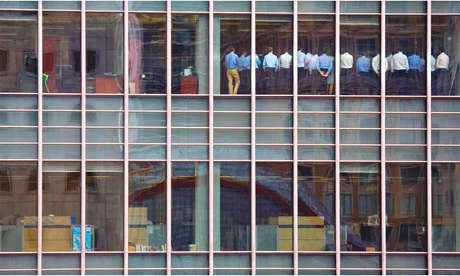
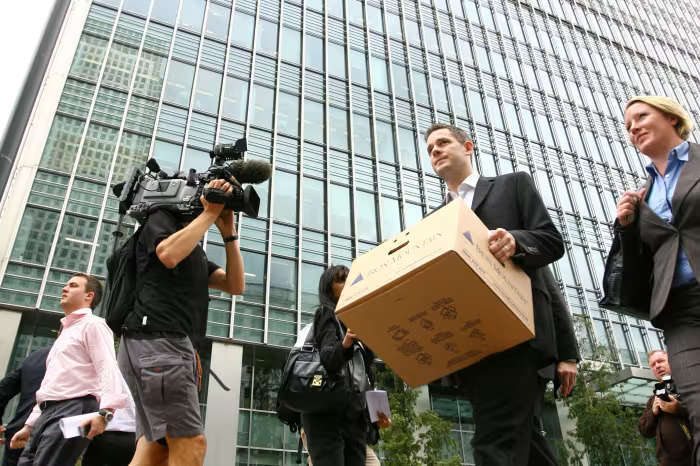
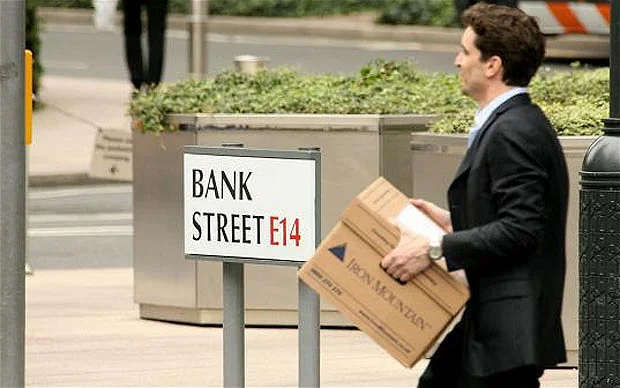
At the time, I was working at Barclays Capital, the investment banking division of Barclays in London. The London office of Lehman Brothers was next door to us on Bank Street, Canary Wharf. This was the view:
While bailing out banks is one thing, giving a bailout to Bitcoin speculators would be very similar to giving people back the money they lost gambling on a horse race.
War-gaming: for the protection of the public and for a cover-up
In the Swiss JuristGate reports, I've looked at how the Swiss financial regulator, FINMA, seemed to know about the rogue firm for a number of years but only decided to shut it down when everybody was distracted by the much bigger crisis at Credit Suisse.
The regulator took action to prevent new customers buying the insurance product but there is no sign of them doing anything to help existing customers.
Regulators have known about Bitcoin since its inception yet they've tolerated it in many ways, just as FINMA seemed to be tolerating Parreaux, Thiébaud & Partners, the JuristGate scandal.
If regulators make a direct initiative to declare Bitcoin is a ponzi scheme and ban it completely they will face serious questions about why they couldn't already see it was a ponzi scheme years ago.
The regulators may well look for ways to protect the public without directly declaring that Bitcoin is a ponzi scheme. For example, they could insist on a cooling-off period where new investors have to wait a few days before making their first trade. This bureaucracy may have the side-effect of slowing the rate at which new money comes into the scheme.
A better outcome for regulators would be a political solution. In this case, the decision to pull the plug on Bitcoin would be made by the government and not the regulator. With President Trump actively talking about fresh sanctions and tariffs for countries who trade with Iran, there is an opportunity to declare Bitcoin is subverting the sanctions. In this case, the public would be protected from making future losses in Bitcoin but the financial regulators could keep their distance. Keeping their hands out of the banning decision avoids the question of whether or not they have been stumped by something that really was a ponzi scheme for all these years, failing to act when Bitcoin first appeared.
Regulators may be forced to act if governments don't
Over the years, experts in universities and the private sector have regularly commented on the possibility Bitcoin is no better than a ponzi scheme.
In recent days, state officials have started making comments about a strong risk to the public. Consider the words of François Villeroy de Galhau, governor of the French central bank (Banque de France):
The risks of Bitcoin are in the process of materialising
If a police officer sees a crime, even when they are off duty, they have an obligation to protect the public. Likewise, when the heads of these authorities see a situation, they have an obligation to use their powers to manage the risk. Having spoken out loud about this risk, they may feel compelled to follow through and block further investments into the Bitcoin market.
It is easy to prove it was a ponzi scheme in hindsight
If the professional investors already moved their money into gold and silver bullion and the last people left holding unwanted Bitcoins are all mum and dad investors then, in hindsight, that will be the proof it was a ponzi scheme. But at that point, when the gold and silver has all been stashed away in Switzerland, it is too late to save those mum and dad investors.
But what would I know about the regulation of financial markets? I couldn't even prove with any certainty whether it was my blog post that brought on the resignation of the Swiss financial regulator's deputy CEO. █