
EditorsAbout the SiteComes vs. MicrosoftUsing This Web SiteSite ArchivesCredibility IndexOOXMLOpenDocumentPatentsNovellNews DigestSite NewsRSS

12.11.12

USPTO Sued as the System Collapses Under the Weight of Trolls, Monopolists, and Lawyers/Politicians

Posted in Patents at 1:58 pm by Dr. Roy Schestowitz

The core of this problem requires striking at the root

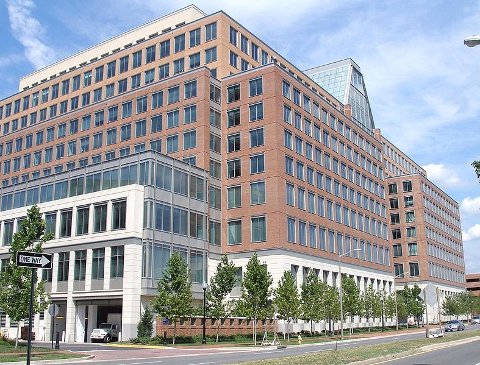
USPTO building

Summary: The cartel office (USPTO) has become the target of some of its victims, who see their system abducted by bureaucrats and self-serving non-practising blood-sucking leeches

THE USPTO has become the shadow of corporations, cast upon by those in power to repress the creative population. The patent system in the US is rotting because too many lousy patents are granted, often to trolls that hide behind shells and destroy the economy.

The troll known as “Clouding IP LLC” strikes again, joining the likes of Lodsys, which is also suing some more:

There are all kinds of patent trolls making outrageous claims about the technology they “own,” but there’s no question that Lodsys is one of the most infamous. Last year, Lodsys explained how it was generously offering to let the iOS and Android app developers of the world continue to do business—if they pay a patent tax of 0.575 percent of their revenue.

Lodsys gets some patents from Intellectual Ventures, the biggest troll which uses many shells for litigation. This is the largest such cartel and it is backed by ruthless businessmen like Bill Gates. Here is an interesting new report about changes that would impede that racketeering operation:

Figuring out the specifics of Intellectual Ventures’ frighteningly enormous patent portfolio has always been next to impossible. Its roughly 8,000 U.S. patents and 3,000 applications are assigned to an assortment of 1,276 shell companies, few of which have Intellectual Ventures in their name, according to a study published in January in the Stanford Technology Law Review. Nor is the company alone in playing shell games with its portfolio: Devices to mask patent ownership are the exception rather than the rule for companies with a business model of asserting IP rights.

The USPTO, the principal facilitator of such extortion, considers changing its rules due to that. Another bit from the group of Bessen [1, 2] estimates the cost of trolls. To quote:

Today it is perfectly legal for companies to buy and sell the rights to unlimited numbers of ideas, a company is not required to have any interest in making these ideas a reality. It is perfectly legal for companies to sit on patents and wait for others to create before either suing the creator or charging licensing fees. The following pair of quotes is pulled directly from the promotional material on the website of just one prolific patent troll:

“$2 Billion+ cumulative licensing revenue”

“70,000 IP assets acquired and nearly 40,000 in active monetisation programmes”

In fact it is not just legal, patent trolling is an industry on a colossal scale. According to research recently published by Boston University School of Law, last year patent trolls won a cool $29 Billion. One of the most worrying findings of research in to patent trolls is that the mere threat of a suit is enough to put the frighteners on and make creators pay up:

Another parasite, Vringo, got Nokia patents after Microsoft had taken over and then attacked Google. Here is a financial report about it:

This article provides a unique discussion of broad economic conditions in software, energy, human labor, and patents. The discussion highlights upside and downside characteristics in the patent space, and argues software patents are overvalued relative to other industries. The article then provides an investment conclusion of selling Vringo (VRNG) shares and buying Lightbridge (LTBR) shares.

To bypass the macro discussion, scroll down to the bold heading containing the text “Dump Vringo”

Software is hot.

Investors are concerned about bubble-like conditions. Inside this bubble float software patents, gaseous substances which have been reified as solids in public perception. A crescendo of such reification is scored by the America Invents Act, which introduced “first to file” priority, overturning the “first to invent” principle which has been around forever. Instead of inventions, patents themselves are now the property; in a classic sense of reification, words have stolen the identities of the ideas they describe.

We are taking the word “property” far too literally, as if the government had announced a race for land, as if patents were a hard asset like real estate. Fiat currency is a far more appropriate analogy. Patents are inflated and deflated at the whims of politicians, and frequently counterfeited by artistic lawyers in a game of litigation shakedowns. A land run among investors in this now-crowded space occurs atop thin ice.

Paul Kedrosky shows that patent trolling pays well:

Doing useful stuff is apparently for chumps: A portfolio of patent trolls vs the S&P 500 in 2012 pic.twitter.com/ghv3uKEl

The USPTO made this legal and now its head leaves in shame (its heads come from the cartel it protects), having lost some public arguments:

The patent community has had plenty to talk about with two recent actions by David J. Kappos, the Director of the United States Patent & Trademark Office (USPTO).

On November 20, 2012, in an address to the Center for American Progress, Director Kappos gave a full-throated defense of software patents in response to recent public criticisms of software patents stemming from the so-called “smartphone patent wars.” As part of the defense, Kappos recounted several recent efforts to improve overall patent quality, including the quality of software patents. (Read a summary of those efforts here). Then on Monday, November 26, 2012, Kappos announced to USPTO staff that he would be stepping down as Director in early 2013. (See reports here and here.) According to news reports, USPTO deputy director Teresa Stanek Rea will assume the role of acting director upon Kappos’ departure in 2013. Kappos’ resignation seemed to catch a number of commentators by surprise and the USPTO has not yet provided further details or an official release.

USPTO is said to be preparing for lawsuits over its bad practices which pro-fascism politicians like Leahy try to take global:

Congress has passed a bill that would implement two patent law treaties to help American businesses expand into foreign markets, Senator Patrick Leahy (D-Vt.) announced today.

Stop giving the corruptible, corporate-serving USPTO more power abroad. This lets software patents expand. And not just software in fact. For instance, citing the article “Bill Gross Patents Way To Count”, Mike Masnick slams yet more USPTO-granted patents, saying:

I’m reminded of that, after seeing Dealbreaker’s headline about how world famous mutual fund investor, Bill Gross, of PIMCO, has patented the methodology for his bond fund — or, as Dealbreaker correctly points out, he “patented a way to count.” Indeed, the patent in question, US Patent 8,306,892 is somewhat hideous, describing not much more than the concept of an algorithm that weights regions based on GDP.

Here is more from Masnick:

The next big case to pay attention to concerning software patents appears to be the CLS Bank v. Alice Corp. case, which is being reheard “en banc” (by the full slate of judges) at the federal circuit court of appeals (CAFC). The short version of the case is that it involves a patent over the idea of software that conducts a “shadow transaction” to make sure that there are enough funds to complete a real transaction, before allowing the real transaction to go through, thus minimizing “settlement risk” (the risk of the deal not actually being completed). Should that be patentable? Well, that’s part of the argument. The district court tossed out the patent as being simply about an “abstract idea,” which is not patentable, as abstract ideas are excluded from section 101 of the patent act, which lists out patentable subject matter. On appeal, a divided three judge panel overturned the lower court, and said that when you looked at the invention as a whole, it was patentable subject matter under section 101. The full CAFC has agreed to rehear the case, and the amicus briefs are flowing in, as people realize that this case is the next key battleground over software patents.

Of course, as often happens in these kinds of cases, you get amicus briefs with wildly divergent claims. For example, here we’ll show and discuss the briefs from both the EFF and the Business Software Alliance (BSA). Somewhat surprisingly, both of those briefs agree on one thing: that the actual patent in question should be ruled invalid, as in the district court ruling. But that’s about the extent of the similarities between the two — who paint extremely different versions of the world of software patents today. The EFF brief explains how damaging software patents are to innovation and the wider economy while the BSA brief talks about how software patents are the greatest thing ever for innovation. One of these three-letter-acronymed organizations is wrong, and it’s not the EFF.

The EFF is also getting involved now:

The Electronic Frontier Foundation (EFF) urged the full Federal Circuit today to throw out the dangerous patents it previously held valid in CLS Bank v. Alice Corp, arguing that the court’s earlier decision goes against the law and helps foster the recent dramatic increase in patent litigation. In the amicus brief filed today, EFF proposes that the court require patent owners to claim what they actually invent and nothing more.

“The Patent Act doesn’t protect abstract ideas because it would lead to harmful monopolies on simple ideas, like ways of running a business or cooking a meal,” said Staff Attorney Julie Samuels. “Yet we’re still routinely seeing patents issued based on abstract ideas, and having those patents upheld in some courts. In an environment like this, it should be no surprise that company after company decides to buy a lottery ticket in the guise of a dubious software patent and see if it can hit the jackpot. The Federal Circuit has a chance to help curb this new rash of patent lawsuits.”

The system has been abducted by monopolies. It is time to sue it, abolish it, or whatever it takes, but it won’t be easy when everyone including politicians is bought (bribed). The USPTO is not an independent body; it is controlled by its major clients, i.e. companies like IBM, which also control the politicians. People who call for ending the Federal Reserve are perhaps missing another important institution that needs ending and that’s the USPTO, perhaps wirh the exception of trademarks.

Share this post: These icons link to social bookmarking sites where readers can share and discover new web pages.
  • Digg
  • del.icio.us
  • Reddit
  • co.mments
  • DZone
  • email
  • Google Bookmarks
  • LinkedIn
  • NewsVine
  • Print
  • Technorati
  • TwitThis
  • Facebook

If you liked this post, consider subscribing to the RSS feed or join us now at the IRC channels.

Pages that cross-reference this one

What Else is New


  1. Links 25/5/2013: Beaglebone Black (BBB), Tizen Comeback

    Links for the day


  2. Red Hat Pays Microsoft-Linked Patent Troll Again, Refuses to Provide Details

    Another attack on GNU/Linux results in payment to trolls and silence from Red Hat, which keeps the FOSS community in the dark


  3. Microsoft Brings the Notion of Buying Games to End, Consumer Rights Groups Should Sue

    Not only is XBox eliminating the notion of owning and controlling one's console; new XBox paradigm aims to reduce one's control over purchased games, reducing buyers to temporary, transient consumers


  4. Links 24/5/2013: Fedora ‘Pidora’, CIvil Rights Debated in the US

    Links for the day


  5. Bill Gates Still Getting Richer Through For-Profit Investments, Now Wants to Brainwash Children in Schools in Favour of His Investments

    Some of the latest strategies used by the world's richest man to protect his investments and amass yet more money, adding to an ever-growing wealth while pretending it's a charity


  6. Microsoft Entryism and Its Effects on Corporate and Public Policy

    An aspect of Microsoft culture that ought not be overlooked because of its profound effect on society (private and public)


  7. Red Hat Should Follow Google's and Twitter's Footsteps on Patents to Avoid Becoming the Next Novell

    Red Hat continues to ignore my plea to defang the software patents it is applying for, potentially making them weaponised like Novell's and Sun's patents (e.g. Java at Oracle) upon buyout or another major event


  8. CAFC Decision Still Overridden by Overzealous Patent Lawyers in the Press, The Guardian and Other Corporate Press (CBS and AFP Included) Still Guard the Establishment

    Analysis of a sceptical kind of corporate press coverage regarding software patents in the US; great examples of how Microsoft- and Gates-funded press outlets tend to get it all wrong on the facts, smearing digital freedom fighters


  9. Software Patents Debate Still Open in New Zealand and the US

    In spite of distraction attempts, the debate over software patents continues to stress that there is a real danger


  10. WebM is No Ogg, It is Not Freedom-Respecting Anymore, Even in Countries That Have No Software Patents

    Why Google needs to fix the licence of VP9, or simply stop pretending that it should be the only de facto standard for multimedia


  11. Microsoft Violates Google Licences

    The champion of 'IP' and licensing (extortion) is not much of a champion after all, based on new reports, not just a lot of old ones


  12. Skype Teaches Us That All Microsoft Software Should be Assumed Spyware Unless Proven Otherwise

    The broader implications of Microsoft adding spying 'features' to Skype


  13. Links 23/5/2013: Threat to Civil Rights in UK, KDE 4.11 LTS

    Links for the day


  14. Links 22/5/2013: Debian GNU/Hurd, New Go Language Release

    Links for the day


  15. The FRAND Apple-Microsoft Conspiracy Attempts to Destroy Android/Linux, Ban Imports

    How Microsoft and Apple are using patents in bulk (sometimes acquired in unison, e.g. from Novell and Nortel) to artificially lower market saturation of the Android operating system or drive costs up


  16. Gates Foundation: Buying Influence for Bill's Ego and Bill's Profit

    New examples of power being acquired and investments (i.e. for profit) being funnelled into the beneficiaries


  17. Bill Gates Enters Financial Centres With His Goons Becoming US Budget Chief, Top Bankers

    How Bill Gates' staff is entering positions of financial power, indirectly giving Gates power over US (national and international) finance


  18. IBM Ignores Small Companies' Interests, Denies Patent Scope is a Problem, Focusing on Its Own Problems (Trolls) Instead

    How David Kappos and IBM (his longtime employer) continue to ignore the obvious problem which kills small businesses and everyone is complaining about


  19. The New York Times Publishes Factually-Flawed Patent Propaganda Benefiting Microsoft and Apple

    Eamonn Fingleton is rewriting history in the US' top newspaper, insinuating that patents contributed to the rise of software duopolists


  20. Software Patents Eligibility Likely to be Decided by SCOTUS

    Analyses suggest that an escalation by appeal to SCOTUS is likely to be the next stage in 'Bilski 2.0'


  21. Does Bill Gates Try to Flush GNU/Linux Down the Toilet in Kerala?

    Renting Microsoft software rather than using Free (as in freedom, or libre) software?


  22. Links 21/5/2013: Handbrake Turns 0.9.9, NetBSD 6.1

    Links for the day


  23. Links 20/5/2013: First Salifish Smartphone, Mageia 3 Released

    Links for the day


  24. Microsoft Corruption (Illegal Tenders) Stopped by European Court

    Microsoft cannot bypass public tenders, based on a ruling from a court of law in Europe


  25. Not Satire: Microsoft Wants to Show the World How Security is Done

    Software security 'standard' to be led by the company which made insecurity an acceptable engineering practice?


  26. Microsoft is Struggling to Maintain Industry 'Standards'

    With Microsoft's common carrier and browser share down considerably Microsoft finds itself increasingly irrelevant and it tries subversive means of making another comeback


  27. Microsoft Entryism and Bribery Get the Microsoft Way Implemented

    A recollection of very dirty tactics from Microsoft, which uses money to oppress, overthrow, and even hijack its opposition


  28. Patent Policy Laundering in the European Union and New Zealand

    How the so-called 'free' trade agreements help spread patent policy which favours software patents


  29. Ongoing Focus on Patent Litigation and Patent Trolls Reduces Focus on Software Patents

    The problem with increased focus on the players that use software patents litigiously and the litigation itself


  30. Andrew Y. Schroeder Shows That Patent Lawyers Are Sociopaths

    Bully and law misuser is trying to get his way with foul language, intimidation, and sheer lack of professionalism


RSS 64x64RSS Feed: subscribe to the RSS feed for regular updates

Home iconSite Wiki: You can improve this site by helping the extension of the site's content

Chat iconIRC Channel: Come and chat with us in real time

Recent Posts