
Bonum Certa Men Certa

There is Still a Patent Quality Crisis at the EPO

Even the word "crisis" is nowadays being used, and not for the first time

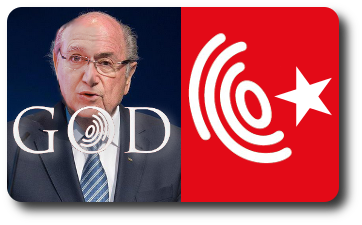
God and EPO
"System Battistelli" has been such an utter failure that the Office abandons it [1, 2, 3] (after spending 223 million euros on it and having created baseless patent monopolies that can cost Europeans billions of euros)


Summary: The race to the bottom (of patent quality) is proving to be a very costly one; there are more signs that even the management of the EPO belatedly recognises this

THREE years ago we published "The European Patent Office Suffers Quality Crisis, Finally (Belatedly) Agrees to Publicly Comment on It" and around the same time we also showed internal documents that speak of a crisis at the EPO. The word "crisis" being used by management wouldn't be unprecedented at all, albeit Mr. "Colgate Smile" António Campinos is trying to hide all this. That's apparently his chief role now.


Has the EPO fallen/succumbed to the quality levels of the U.S. Patent and Trademark Office (USPTO)? Maybe even lower than that? A couple of days ago Watchtroll published "Merck and Pfizer Downgrades on Patent Cliff Concerns Signal Importance of Patents to Pharma" (the typical alarmist nonsense from patent maximalists). Should we not be celebrating this? A boon for generics, surely...

Either way, in the wake of Alice and Mayo (SCOTUS), or 35 U.S.C. €§ 101, US patents became a lot harder to enforce in US courts. Not too surprisingly, the number of lawsuits has almost been halved. Will this crisis of confidence (in the legitimacy of patents) be coming to Europe? Has it come already? The other day we took note of the EPO's statement on "patents on plants and animals derived from conventional breeding," to borrow Ben Wodecki's framing of the subject in his new article, "EPO member states meet to discuss plant patent crisis," which we quote below:

Representatives from the 38 member states of the European Patent Office (EPO) have met to discuss the patentability of plants obtained by essentially biological processes following several high profile invalidation cases.

Representatives from the member states, along with the European Commission as an observer and the office of the EPO met to discuss the patentability of conventionally bred plants and animals.

More than 40 organisations had appealed to EPO president António Campinos in January calling for an end to all patents on plants and animals derived from conventional breeding.


This has meanwhile been pointed out by patent maximalists as well:

The European Patent Office and representatives of the 38 Member States organised a meeting last week of the Committee on Patent Law to discuss next steps following decision T 1063/18 of an EPO Board of Appeal on plant patentability. Representatives of the European Commission were present as observer.

In its landmark decision of 5 December 2018, the Board of Appeal decided that plants which are produced according to essentially biological processes need to be held patentable, despite EPO Guidelines which were introduced in 2017 to exclude them from patentability.


These patents never made any sense, not just as a matter of law but also a matter of common sense/intuition. Life and nature are not inventions. Neither is mathematics, yet the EPO keeps advocating/promoting software patents in Europe. Just before the weekend we saw this article titled "Global Artificial Intelligence Patent Survey" and the parts about the EPO are all buzzwords (the familiar ones):

Research and development conducted worldwide is currently driving the “Fourth Industrial Revolution” (“4IR”), which encompasses three major fields: (1) physical technologies, (2) biological technologies, and (3) digital technologies. [1,2]

Corresponding to the rise of 4IR digital technologies, the number of international artificial intelligence (“AI”) based patent filings has expanded rapidly over the last few years, mostly concentrated in the United States and Asia. [3] According to a 2016 study, approximately 75% of all AI-related patent publications in the world come from three jurisdictions: China, Japan, and the United States. [4] Although the majority of AI-related patents are filed in these countries, Europe is also seeing substantial increases in such patent filings.

[...]

AI-related patent applications in Europe grew at a 54% annualized rate from 2014 to 2017. [18] The European Patent Office (EPO) has expressed a dedication to developing examination practices which are friendlier to computer implemented inventions, including AI-related subject matter. For example, the EPO adopted a new approach to interdisciplinary software patent applications which can now be examined by a team of three examiners with diverse technical backgrounds. Additionally, the EPO aims to speed up examination according to a 12-18 month timeline from filing to either allowance or final rejection.

Furthermore, in May 2018, the EPO held a conference entitled “Patenting Artificial Intelligence” centering on the challenges and opportunities of patenting AI-related innovations. [19] Experts emphasized that AI-related applications in the EP should address technical considerations of the internal functioning of a computer, such as speed and/or computational load. [20]

[...]

As AI-based innovations become an ever-increasing presence in our daily lives, it appears inevitable that an expanding number of patent applications will be filed to protect such inventions. Certain international jurisdictions have been amenable to clarification and adjustment of their patent laws and examination procedures with respect to AI, while others have remained relatively unchanged. It is promising to see both the Japanese and European patent offices clarifying expectations and streamline examination procedures in these emerging technical areas. As US practitioners, it can only be hoped that the USPTO will establish similar initiatives to expedite and clarify AI-based patent prosecution as the 4IR marches forward.


The term "4IR" was promoted if not made up by the Battistelli regime, which had paid publishers to spread it worldwide. It keeps spreading.

We have more or less lost hope in justice from within the EPO because the topology of the Organisation is all messed up and the Office is in charge of everything, even judges. Yes, the Enlarged Board of Appeal too is still afraid of -- and thus dependent on -- corrupt officials at Office. That needs to change in order to improve the perceived legitimacy of boards' decisions.

Here's IP Kat taking note of the latest referral to the Enlarged Board of Appeal:

The issue of double-patenting has been considered before by the EBA, in G 1/05 and G 1/06. In these decisions the EBA proposed that the principle that double patenting should be prohibited given that an applicant "had no legitimate interest in proceedings that gave rise to the grant of a second patent in respect of the same subject-matter for which he already held a patent" (G 1/05, r. 13.4).

However, there are two situations where the issue of double patenting may arise - divisional applications and internal priority. In the latter case, it seems that an applicant may have a legitimate reason for the second patent, as this will have a later expiry date than the first (patent term being determined by filing date and not priority date).


As Eric then put it:


Board 3.3.01 has decided to refer a question to the Enlarged Board of Appeal, in connection with the issue of double-patenting. Decision T 318/14 is not published yet but the minutes are available on the EP register at https://register.epo.org/application?number=EP10718590&lng=en&tab=doclist

1. Can a European patent application be refused under Article 97(2) EPC if it claims the same subject-matter as a European patent granted to the same applicant which does not form part of the state of the art pursuant to Article 54(2) and (3) EPC?

2.1 If the answer to the first question is yes, what are the conditions for such a refusal and are different conditions to be applied where the European patent application under examination was filed: a) on the same date as, or b) as a European divisional application (Article 76(1) EPC) in respect of, or c) claiming the priority (Article 88 EPC) in respect of a European patent application on the basis of which a European patent was granted to the same applicant?

2.2 In particular, in the latter case, does an applicant have a legitimate interest in the grant of the (subsequent) European patent application in view of the fact that the filing date and not the priority date is the relevant date for calculating the term of the European patent under Article 63(1) EPC?


"May I add that the Board also considered the situation where two EP applications are filed on the same date by the same applicant," Eric later added. "This situation may also lead to a double-patenting objection (preliminary opinion of the board pt 5.2, and G-IV, 5.4 ). This corresponds to alternative a) of question 2.1."

Double patenting may seem attractive to the likes of Battistelli as that helps game (inflate) numbers. It's no secret that the EPO became a monopoly-printing fanatic rather than a proper, reserved, 'conservative' examination centre. The danger therein is that it harms the very consent from which the EPO derives its power/authority.

Worry not, however, as corporate media does not seem interested in covering any of this. The corporations it protects have a lot of patents and if the public found out about the underlying quality, it would diminish their over-inflated value.

Remember that the EPO repeatedly bribed the Financial Times and the Financial Times still reciprocates by rewarding patent maximalists. Days ago it published "Apply for new FT ranking: Europe’s leading patent law firms 2019" and spread this lie that we need patent lawyers for innovation ("Europe needs technology and patent lawyers," says the title). To quote:

The Financial Times is looking to identify leading European patent law firms which are securing patents and protecting European innovation.


What we see here is the press as enabler of abuse and aggression. There's also this new press release (paid) that speaks of another "EPO" in relation to US patent 10,207,922. In very general terms, we've found virtually no journalism about patents over the past week, just promotional 'articles' composed by law firms and not a word about software patents, patent quality, etc.

Recent Techrights' Posts

Things Will Only Get Better (as We Go Backwards)
It only gets better. If you go back in time.
UK High Court Shows SRA is Totally Useless in Curbing SLAPPs, This Has Impact on Our Reporting on the SRA Next Week
We'll carry on our coverage and soon finish the current series that so we can get on with more time-sensitive ones
 
Gemini Links 22/09/2026: Scout Night, Cybernetic Capitalism, and Thoughts on Companies Forcing People to Adopt Plagiarism Engines
Links for the day
Links 22/09/2026: "An Arsenal of Surveillance" and Slop Bots Suggest Starting Wars
Links for the day
SLAPP Censorship - Part 193 Out of 200: Breaks GNU and Linux, Tries to Silence Critics, Loses All Money, Looks for Microsoft Allies and Sponsors
The latest emotional knee-jerk reactions serve to confirm what we have long said
Over at Tux Machines...
GNU/Linux news for the past day
IRC Proceedings: Monday, September 21, 2026
IRC logs for Monday, September 21, 2026
Links 21/09/2026: "Lies of the Hey Hi (AI) Industry" and Solar Power Is Getting Cheap
Links for the day
Gemini Links 21/09/2026: Equinox and Beginner's Guide to Gemini
Links for the day
Links 21/09/2026: "Back On My Bicycle" and American Regime's War on Media Escalates Further
Links for the day
SLAPP Censorship - Part 192 Out of 200: The Hired Guns of Garrett and Graveley Sent Us USB Sticks (One to Me, One to My Wife) Showing Lozza Talking to Garrett About Censoring/Deplatforming Techrights the Same Time Graveley Was Copy-Pasting Garrett's Lawsuit
Next year we plan to bring this matter to the Court of Appeal
Linux Kernel Becoming a Slopfest - Part 6 - Seeing Who Contaminates Linux With Slop (And Also Admits It)
Today we begin looking at some culprits
2026: The Year Galleries Realised the Need to Flag or Cull Slop Images
Society needs to shun slopfarms, people who use LLM slop (for anything at all), companies that use bots (which they dub "agents"), and so-called 'coders' who volley garbage into project and software hubs
Software Freedom Day Celebrated in 5 or 6 Continent
Software Freedom Day (SFD) 2026 was big this year
SLAPP Censorship - Part 191 Out of 200: Garrett, Graveley and Lozza
They talk to and coordinate with one another
Over at Tux Machines...
GNU/Linux news for the past day
IRC Proceedings: Sunday, September 20, 2026
IRC logs for Sunday, September 20, 2026
Gemini Links 21/09/2026: Digital Hoarder, GTD, Minimalism vs Digital Minimalism, Rejection of LLMs
Links for the day
Links 20/09/2026: "Google Now Asking For Users’ Video Selfies" and Energy Prices Set to Rise
Links for the day
Enjoy the Giving/Sharing, Not Taking
We've long supported what we believed in, even with the little money we had
Links 20/09/2026: Amazon Layoffs, Flock 'Buyouts' (Silent Layoffs)
Links for the day
USCIS and Microsoft Rumours: Curbs on Lowering Salaries by Importing Cheaper Replacements?
It seems like Microsoft's mass layoffs and efforts to cheapen the workforce face obstacles
Gemini Links 20/09/2026: "Music While Working" and Radio Silence
Links for the day
Clownflare Data From Canada
We've like to think many people are attempting to install GNU/Linux over the weekend
SLAPP Censorship - Part 190 Out of 200: Plagiarism, Back Doors, and Sabotage of Linux
This can go on for a decade or longer
Linux Kernel Becoming a Slopfest - Part 5 - Kernel Dependency on Plagiarism Giant Microsoft is a Death Blow to Any Kernel
Microsoft is bringing copyright-infringing slop into Linux
GNU/Linux Has Grown a Lot Lately
Based on Clownflare
Over at Tux Machines...
GNU/Linux news for the past day
IRC Proceedings: Saturday, September 19, 2026
IRC logs for Saturday, September 19, 2026